Running Pace Calculator — Min/km, Finish Time & Pace Chart
Free running pace calculator for 5K, 10K, half marathon, and marathon. Get min/km or min/mile, your ...
Use Calculator →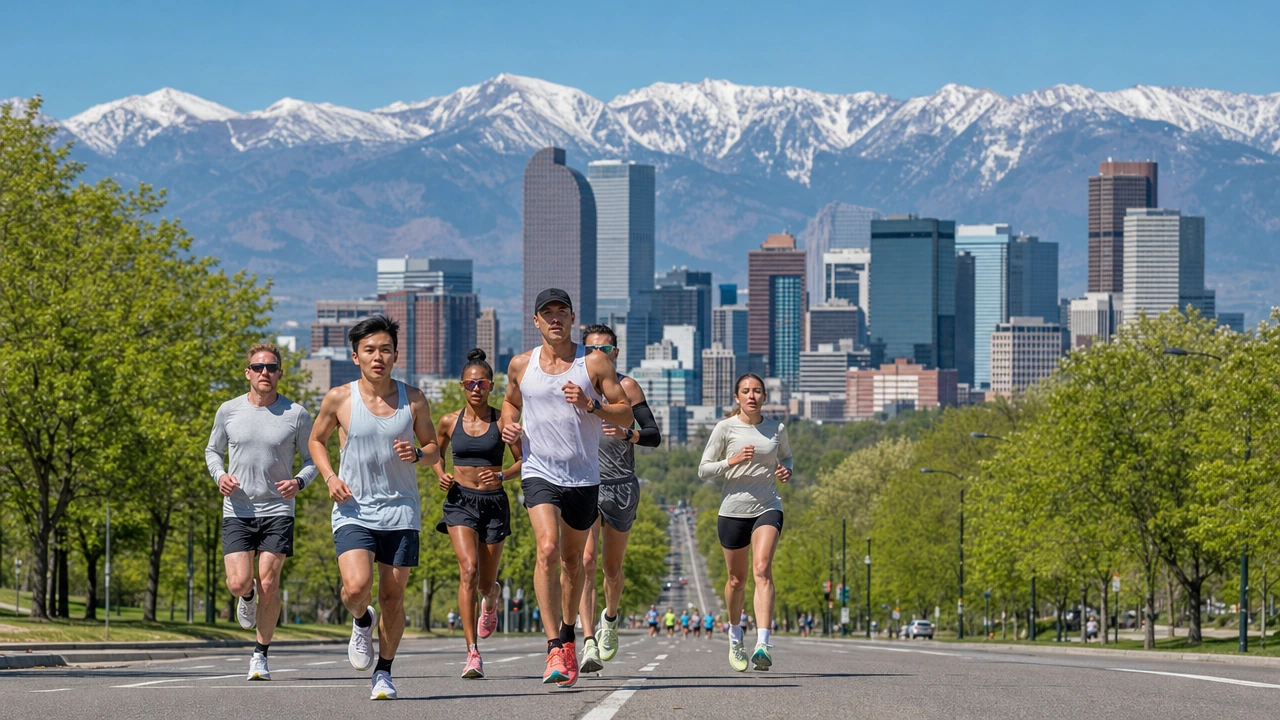
Want personality modes & weather integration? Try the full countdown experience
See entry dates for other marathons →
| Race | 2027 Denver Colfax Marathon - May 16 |
|---|---|
| City | Denver |
| Date | 2027-05-16 at 06:00 |
| Time Limit | 6 hours |
| Cutoff pace | 8:32/km |
| Course speed |
Challenging courseSpeed index 1.09 — median of the last 4 winners' times against the global same-year median. Winner times track elite fields and prize money, so this reads the course as a proxy, not a pure measurement. |
| Timezone | America/Denver |
| Official Site | Colfax Marathon |
| Registration | Register |
| Average Temperature | 12.2°C / 54°F |
|---|---|
| Humidity | 50% |
| Peak Wind | 20.3 km/h |
| Rain Chance | 41% |
| Typical Conditions | Cool, dry mid-May Denver morning — a crisp 6 a.m. start near 46°F / 8°C under thin, high-altitude blue sky, warming fast and with strong UV once the sun is up |
What to Prepare: The 6 a.m. start is chilly at altitude, so wear throwaway gloves and a long-sleeve you can shed by mile 6. The mile-high air is dry and the sun is intense once it clears the skyline — carry electrolytes, drink more than you would at sea level, and pack sunscreen and a visor.
Based on historical averages for race week. Use our Weather Score Calculator and What to Wear Guide for personalized advice.
Winds peaking around 20.3 km/h — the typical daily maximum for this date — can affect your pace by 5-15 seconds per kilometer in exposed stretches. Headwinds slow you down exponentially: a 20 km/h wind costs more than twice a 10 km/h wind.
Calculate your wind-adjusted pace →Based on 20 years of race-week weather (2005-2024), MERRA-2 reanalysis
| Cooler | Typical | Warmer | |
|---|---|---|---|
| Temperature | 5.5°C | 12.9°C | 18.2°C |
| Dew point | -4.2°C | 0.4°C | 4°C |
Data: NASA POWER (MERRA-2 reanalysis), NASA Langley Research Center
| Course Type | City point-to-loop |
|---|---|
| Elevation Gain | 211m |
| Terrain | Road and paved river trail (city avenues, lakeside paths, one fast downhill section) |
| Profile | An urban tour of Denver run at 5,280 ft (1,609 m) — one of the highest big-city marathons in the U.S., where the thin mile-high air is the real difficulty even though the road profile is moderate. The course starts and finishes in City Park beside Ferril Lake, heads west down Colfax Avenue (billed as one of America's longest commercial streets) past the State Capitol and Civic Center, ducks through Denver Fire Station No. 1, and follows the Cherry Creek and Platte River trails through Empower Field at Mile High — which runners pass twice. The middle miles loop around Sloan's Lake with downtown-and-mountain views, push west through Lakewood neighborhoods, then drop on a 'Screaming Downhill' stretch with panoramic Rocky Mountain skyline views before a riverside trek back to a City Park finish. Total elevation gain is modest at roughly 690 ft (211 m), but the altitude itself thins oxygen by around 17% versus sea level, so sea-level runners should arrive 2-3 days early, hydrate aggressively and pace conservatively. USATF-certified and a Boston qualifier, though the altitude keeps the BQ rate low (about 2.5% of finishers qualified in 2026). |
| Boston Qualifier | Yes — Check your BQ time |
Use our free training tools to get race-ready:
Free running pace calculator for 5K, 10K, half marathon, and marathon. Get min/km or min/mile, your ...
Use Calculator →Free printable pace band for marathon, half marathon, or custom distance. Choose even, negative, or ...
Use Calculator →7 AM race, wake at 3:45 AM? Enter the gun time; we work backward through meal, gear, bathroom, warm-...
Use Calculator →Enter temperature, wind, and rain to get specific clothing picks for head, torso, legs, hands, and f...
Use Calculator →How much will hills slow you down? Enter elevation gain, loss, and distance to see adjusted pace, di...
Use Calculator →Convert uphill or downhill running pace to flat-equivalent GAP in one click. Free grade adjusted pac...
Use Calculator →The 2027 Colfax Marathon is on Sunday, May 16, 2027, the centerpiece of the May 14-16 race weekend in Denver. The full marathon starts early at 6:00 a.m. Mountain Time in City Park, beside Ferril Lake. The early gun is deliberate: it gets runners moving before the mile-high sun and midday heat build, so plan to be at the start line in the dark.
This is the race's defining factor: Colfax is run at 5,280 feet (1,609 m) — exactly one mile above sea level — making it one of the highest big-city marathons in the U.S. The thinner air holds roughly 17% less oxygen than sea level, so sea-level runners almost always feel it. The race's own medical advice is to arrive 2-3 days early if you can, drink noticeably more water, go easy on alcohol, and start conservatively rather than chasing a sea-level pace.
Yes. The Colfax Marathon course is USATF-certified and a Boston Marathon qualifier, so a qualifying time run here counts toward Boston entry. That said, the altitude makes it a tough place to chase a fast time — only about 2.5% of finishers qualified for Boston in 2026 (3.6% in 2025), well below flat sea-level qualifier races. Use our Boston qualifying calculator to check your standard.
It is billed as the ultimate urban tour of Denver. Starting and finishing in City Park, the route runs west down Colfax Avenue past the State Capitol, threads through Denver Fire Station No. 1, passes through Empower Field at Mile High twice, and loops around Sloan's Lake with combined downtown-and-mountain views. There's a fast 'Screaming Downhill' descent through Lakewood late in the race before a riverside return. Total climb is modest at about 690 ft (211 m).
The full marathon has a 6-hour course time limit, an average of about 13:44 per mile (8:32 per km). Runners who fall behind that pace at checkpoints may be asked to stop or moved to the sidewalk for safety as roads reopen. If you're cutting it close, our pace calculator can help you plan a finishing pace with margin — and remember to add buffer for the altitude.
Registration is handled through the official site at runcolfax.org (powered by Race Roster) and typically opens in August the year before, with the lowest prices in the earliest pricing tier and the fee rising as the race fills. Exact 2027 prices had not been published as of mid-2026, so check the official registration page once it goes live and sign up early for the best rate.
Mid-May mornings in Denver are cool and dry — expect a start around 46°F (8°C) that warms quickly. Dress for the chilly 6 a.m. gun with throwaway gloves and a long-sleeve you can ditch by Sloan's Lake. Because the air is dry and the high-altitude sun is strong once it's up, pack sunscreen, a visor or hat, and plan to take in more fluids and electrolytes than you would at a sea-level race.
Nashville · 2027-04-24

Seattle · 2026-11-29

Las Vegas · 2027-04-03
Cleveland · 2027-05-16
Huntington Beach · 2027-02-07
Baltimore · 2026-10-17