How the Running Outfit Calculator Works
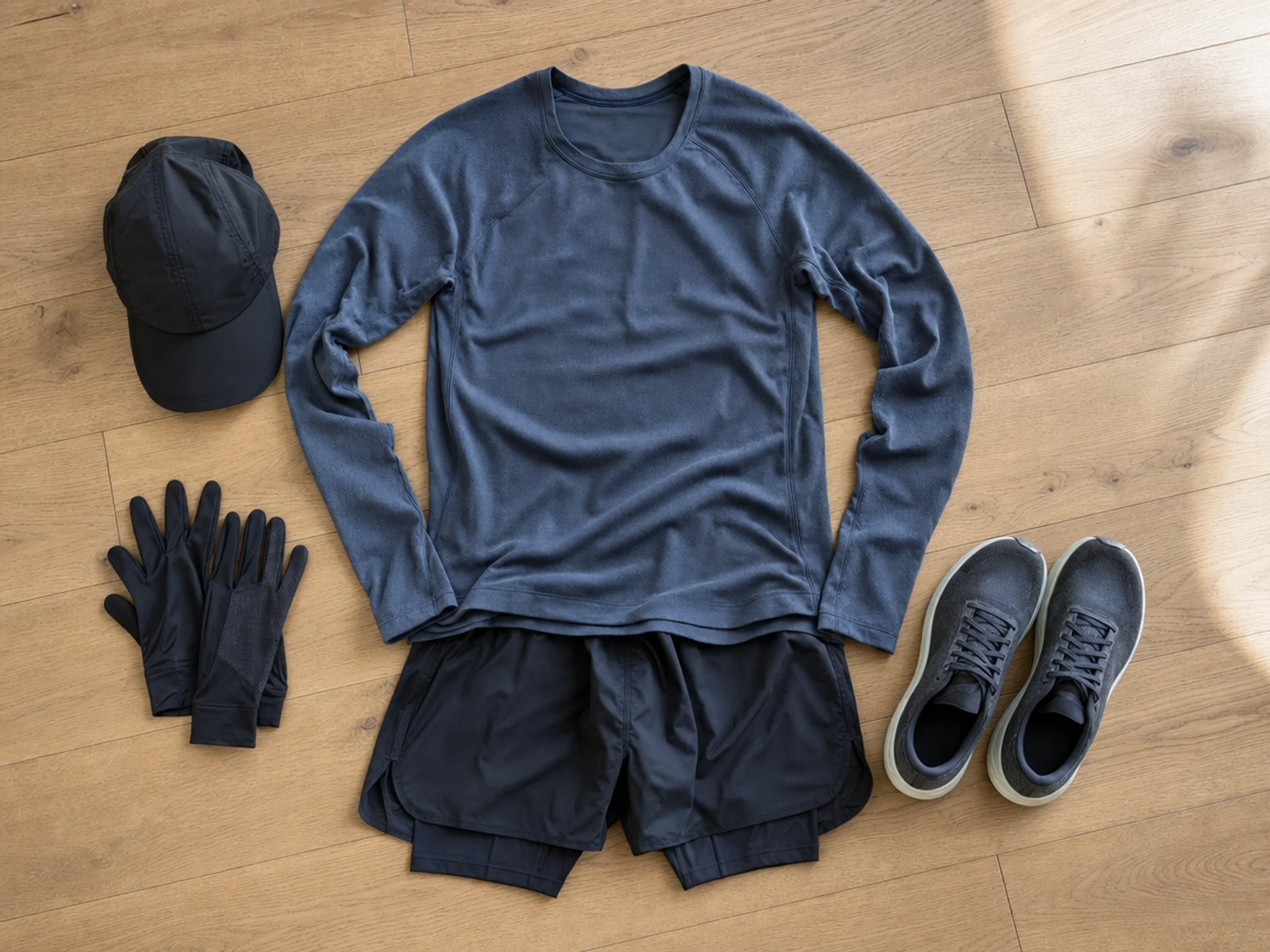
This calculator uses your local conditions to generate personalized clothing recommendations organized by body zone (head, torso, legs, hands, feet, and accessories):
- Temperature: Enter the current or forecasted temperature in Fahrenheit or Celsius. The calculator converts this to a runner-adjusted "feels like" temperature using the 15-20°F rule.
- Humidity, wind, precipitation and sky: Set each independently. Humidity drives a dew-point heat-safety check; wind feeds the NWS wind-chill formula; rain and snow add the right shells and traction; sun adds UV protection.
- Run intensity: Choose from easy run, tempo, race pace, or intervals. Higher intensity generates more body heat, shifting recommendations toward lighter layers.
- Time of day: Morning, midday, evening, or night. Night runs automatically add reflective vest and headlamp to the recommendation.
The output is a complete head-to-toe outfit with specific garment types for each body zone, so you never need to guess which combination of layers works together.
Temperature Zones and Layering Strategy
Running clothing needs fall into six feels-like zones — the ranges below are the runner-adjusted temperature after the 15-20°F warming offset, not the raw thermometer reading. Each requires a distinct layering approach:
- Extreme cold (below -7°C / 20°F): Three layers are mandatory. A thermal base, insulating mid-layer (fleece or soft shell), and windproof outer shell. Balaclava, insulated mittens with liner gloves, and merino wool socks. This is survival territory where exposed skin risks frostbite within minutes.
- Cold (2 to -7°C / 20-35°F): Two layers on the torso. A long-sleeve base layer with a light fleece. Fleece-lined tights, mid-weight gloves, and a fleece beanie.
- Cool (10-2°C / 35-50°F): A single long-sleeve tech shirt and standard running tights. Light gloves for the first mile. This is the comfort sweet spot where many runners do their best training.
- Mild (15-10°C / 50-60°F): Transition zone. A half-zip or short-sleeve shirt depending on intensity. Shorts become viable for faster efforts.
- Warm (21-15°C / 60-70°F): Singlet and shorts. Sun protection (cap, sunglasses) on clear days.
- Hot (above 21°C / 70°F): Minimal, loose-fitting mesh clothing in light colors. Cooling towel, mandatory hydration, and sun protection.
Common Dressing Mistakes Runners Make
Research consistently shows that overdressing is the most frequent mistake among runners. A study published in the Textile Research Journal found that excess layering during moderate-intensity exercise leads to excessive sweating, which wets inner layers and creates a cooling effect when the body slows down, increasing the risk of hypothermia in cold conditions and heat illness in warm ones.
Other common mistakes:
- Wearing cotton: Cotton retains moisture, weighs the runner down, and causes friction burns. Switch to polyester, nylon, or merino wool.
- Ignoring the wind: A 15 mph wind at 30°F feels about 11°F colder by the NWS wind-chill formula, and the gap widens as it gets colder — this calculator applies that formula from your wind input. Windbreakers weigh almost nothing and make a big difference.
- Skipping extremity protection: Up to 10% of body heat escapes through the head, and hands are among the first body parts to lose circulation. Gloves and a beanie can be tucked into a waistband if you warm up.
- Ignoring chafing prevention: Long runs in rain or heat dramatically increase skin friction. Apply anti-chafe balm to inner thighs, armpits, and nipple areas before every run over 10 km.