Running in Tokyo: Complete Guide for Runners (2026)
Where should you run in Tokyo? Explore the iconic Imperial Palace 5K loop, running stations with showers, riverside paths, and Tokyo Marathon lottery ...
Read City Guide →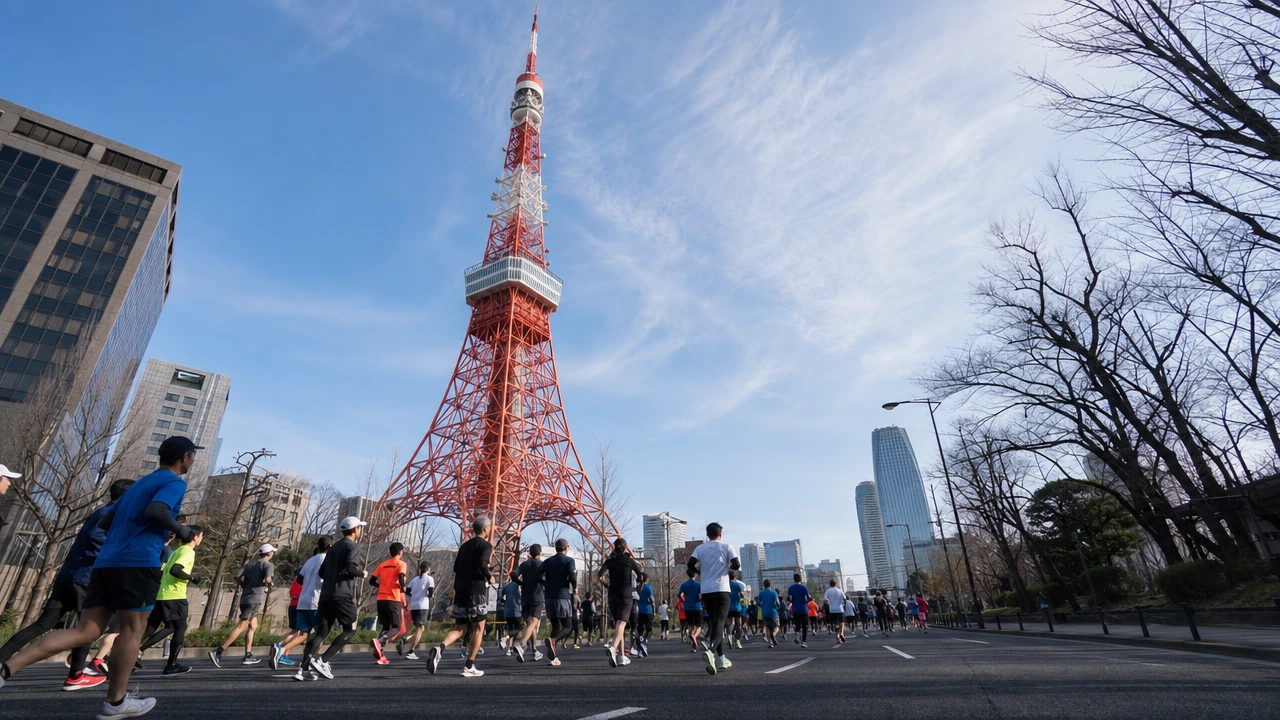
Want personality modes & weather integration? Try the full countdown experience
See entry dates for other marathons →
| Race | 2027 Tokyo Marathon - Mar 7 |
|---|---|
| City | Tokyo |
| Date | 2027-03-07 at 09:10 |
| Field Size | ~40,000 runners |
| Time Limit | 7 hours |
| Cutoff pace | 9:57/km |
| Course speed |
Fast courseSpeed index 0.89 — median of the last 4 winners' times against the global same-year median. Winner times track elite fields and prize money, so this reads the course as a proxy, not a pure measurement. |
| Timezone | Asia/Tokyo |
| Official Site | Tokyo Marathon Foundation |
| Fee trend | 2021 ¥16,5002024 ¥16,5002025 ¥16,5002026 ¥19,800(5-yr +20.0%)· above industry avg (+6.2% vs +4.8%/yr) |
| International | ¥34,500 · 1.7× domestic |
| Average Temperature | 8°C / 46°F |
|---|---|
| Humidity | 76% |
| Peak Wind | 23.5 km/h |
| Rain Chance | 38% |
| Typical Conditions | Cold and dry with occasional rain |
What to Prepare: Early March in Tokyo is usually fast and cool (start near 49F/9C), but the 2019 edition was cold, wet and windy near 43F with high-profile DNFs — pack for a cold, possibly rainy start and a long, chilly finish-chute walk.
Based on historical averages for race week. Use our Weather Score Calculator and What to Wear Guide for personalized advice.
Winds peaking around 23.5 km/h — the typical daily maximum for this date — can affect your pace by 5-15 seconds per kilometer in exposed stretches. Headwinds slow you down exponentially: a 20 km/h wind costs more than twice a 10 km/h wind.
Calculate your wind-adjusted pace →Based on 20 years of race-week weather (2005-2024), MERRA-2 reanalysis
| Cooler | Typical | Warmer | |
|---|---|---|---|
| Temperature | 4.8°C | 7.6°C | 12.5°C |
| Dew point | -1.3°C | 3.4°C | 9.2°C |
Recent actuals: 2024 5.9°C / 2025 11.5°C / 2026 10.6°C (morning avg)
Data: NASA POWER (MERRA-2 reanalysis), NASA Langley Research Center
| Course Type | Loop |
|---|---|
| Elevation Gain | 45m |
| Terrain | Road |
| Profile | Tokyo Marathon 2027 (Sunday, March 7, 2027) is the 20th-anniversary edition and the only World Marathon Major in Asia — a flat, fast, net-downhill course with brutal lottery odds (roughly 1 in 10) that often serves as a six-star runner's final star. |
| Boston Qualifier | Yes — Check your BQ time |
| Year | Finishers | vs prev. |
|---|---|---|
| 2021 | 18,272 | — |
| 2023 | 36,560 | +100.1% |
| 2024 | 35,443 | -3.1% |
| 2025 | 36,204 | +2.1% |
Runners who crossed the line, not the registered field size.
The Tokyo Marathon is one of the flattest courses among the World Marathon Majors. The full route runs an overall net downhill of about 125 ft (38 m). There are only a few bridges and small bumps between the start and finish, which is why it sits in the best-PB-potential tier of the Majors alongside Berlin, Chicago and London. One media analysis ranks it the fourth-fastest of the Majors and the fifth-fastest marathon in the world by course record.
The course you will run in 2027 is the same one in place since the 2017 redesign, which moved the finish to Gyoko-dori in front of Tokyo Station (Marunouchi) instead of the old Tokyo Big Sight finish. That change cut elevation and reduced turns, making the course markedly faster, and records have fallen repeatedly since. Tokyo is the only Japanese WMM course and the fastest major-eligible course in Japan: the men's course record is Benson Kipruto's 2:02:16 from 2024, and the women's record is now Brigid Kosgei's 2:14:29, set at the 2026 edition.
The route is a point-to-point with several out-and-back legs, starting in front of the Tokyo Metropolitan Government Building in Shinjuku and threading through Iidabashi, Kanda, Ueno, Nihonbashi, Asakusa, Ryogoku, Ginza and Shinagawa before finishing at Tokyo Station. It runs almost entirely along Tokyo's wide arterial avenues, so crowding eases once the field spreads out.
Almost all of the course's net descent is front-loaded. The opening of the race drops roughly 30 m (about 100 ft) in the first three miles (~5 km) as you leave the high-rise start zone in Shinjuku. It feels effortless, and that is exactly the trap: with adrenaline and a downhill grade, it is easy to run the first 5 km far faster than your goal pace.
Most experienced runners treat the opening section as a place to hold back, not attack. The descent gives you free speed whether you push or not, so the smart move is to let the hill do the work and keep effort controlled. Banked time spent here is paid back with interest over the flat, exposed middle miles, where there is no more downhill to coast on. If you run this race for a personal best, your discipline in the first 5 km matters more than almost any other single stretch.
After the opening descent the profile flattens to pancake-flat, broken only by a couple of bridge crossings, such as Kuramae Bridge around the 17-20 km mark. One bridge near mile 17.2 has roughly a 3% grade, gaining nearly 17 ft in a tenth of a mile. These are short, sharp bumps rather than real hills, but on tired legs they register.
Tokyo's layout folds back on itself at three principal turnaround pivots, and each one is as much a mental test as a physical one. The first is the Asakusa turn near Kaminarimon and Senso-ji, around mile 11.4 (roughly 18-19 km), a near 180-degree turn that can break your rhythm. Slow into it smoothly rather than braking hard, to spare your ankles and hips.
The second is the Monzen-Nakacho out-and-back to the Tomioka Hachimangu turnaround at 23.95 km. Here you will see runners coming the other way, which cuts both ways: it can feel deflating if you are struggling, or energizing if you are reeling competitors in. The third pivot is the Shinagawa out-and-back to the Tamachi Station turnaround at 37.5 km, deep in the race where the back-and-forth can feel longest.
Knowing the turnarounds are coming helps you ride the psychology instead of being surprised by it. Treat each oncoming stream of runners as a chance to do quick math on your own position, and use the turns themselves as natural cues to reset your form and effort.
Tokyo enforces a 7-hour overall limit on gun time. Because the clock starts at the 9:10 a.m. gun rather than when you cross the line, runners in later corrals effectively get less than the full seven hours, around 6.5 hours by some reports. The cutoff is policed by a series of eight strict intermediate checkpoint gates with fixed closing times along the course; runners who fail to pass a gate by its closing time are asked to stop and are directed off-course. This is a real sweep, not a formality, so back-of-pack runners must respect the intermediate clock, not just the final one.
The finish is in front of Tokyo Station on Gyoko-dori Avenue, in the Marunouchi district. The finish-chute area is restricted to runners and staff only, so families cannot meet you at the line. After crossing you walk roughly another kilometer through the chute to collect your finisher's medal, water, Pocari Sweat, a foil blanket, goodies and the hooded finisher's poncho. The walk is long, you will get cold, and phone signal in the finish area is unreliable, so agree on a designated meeting point in advance.
The winning template for Tokyo is simple to state and hard to execute: control the downhill, then run even effort on the flat. Set a realistic goal pace before race day and refuse to chase the free speed of the first 5 km. A pace calculator helps you commit to splits, and a finish-time calculator lets you sanity-check whether your goal sits comfortably inside the 7-hour gun-time limit and the eight intermediate gate closures.
Fueling is straightforward because Tokyo is generous on course. There are roughly 15 aid stations, the first at 5 km and then every 2-3 km, with water and Pocari Sweat at all of them. The branded OMOTENASHI AID adds bananas, buns, plums, tomatoes and local treats like ningyo-yaki and rice crackers further along. Note the rules: personal water and food are banned through security unless sealed and 250 ml or less in a paper-pack or pouch, and hydration packs must go through screening empty and be filled afterward. Plan a carbohydrate strategy in advance with a carb-loading calculator rather than relying on improvisation.
Weather usually favors a fast day. Nine-year race-day averages show a high of 56F/13C, a low of 43F/6C and a start temperature near 49F/9C, typically partly cloudy. But it can turn: the cold, wet 2019 edition ran around 43F with persistent rain and gusty wind and produced high-profile DNFs. Pack for a cold, possibly wet start and a long, chilly finish-chute walk. If you are chasing a fast time, Tokyo rewards the patient runner who treats the Shinjuku descent as a gift to be saved, not spent.
Arriving early? Explore daily running routes and local tips.
Where should you run in Tokyo? Explore the iconic Imperial Palace 5K loop, running stations with showers, riverside paths, and Tokyo Marathon lottery ...
Read City Guide →Use our free training tools to get race-ready:
Free running pace calculator for 5K, 10K, half marathon, and marathon. Get min/km or min/mile, your ...
Use Calculator →Free printable pace band for marathon, half marathon, or custom distance. Choose even, negative, or ...
Use Calculator →7 AM race, wake at 3:45 AM? Enter the gun time; we work backward through meal, gear, bathroom, warm-...
Use Calculator →London ~1.5%, Chicago ~35%, Berlin ~30%, Tokyo ~10%, NYC ~1-3% (2026 ballots) — real odds and wait t...
Use Calculator →Enter temperature, wind, and rain to get specific clothing picks for head, torso, legs, hands, and f...
Use Calculator →Free running shoe finder quiz. Answer 6 questions, get 3 spec-matched picks from 15 brands (155 SKUs...
Use Calculator →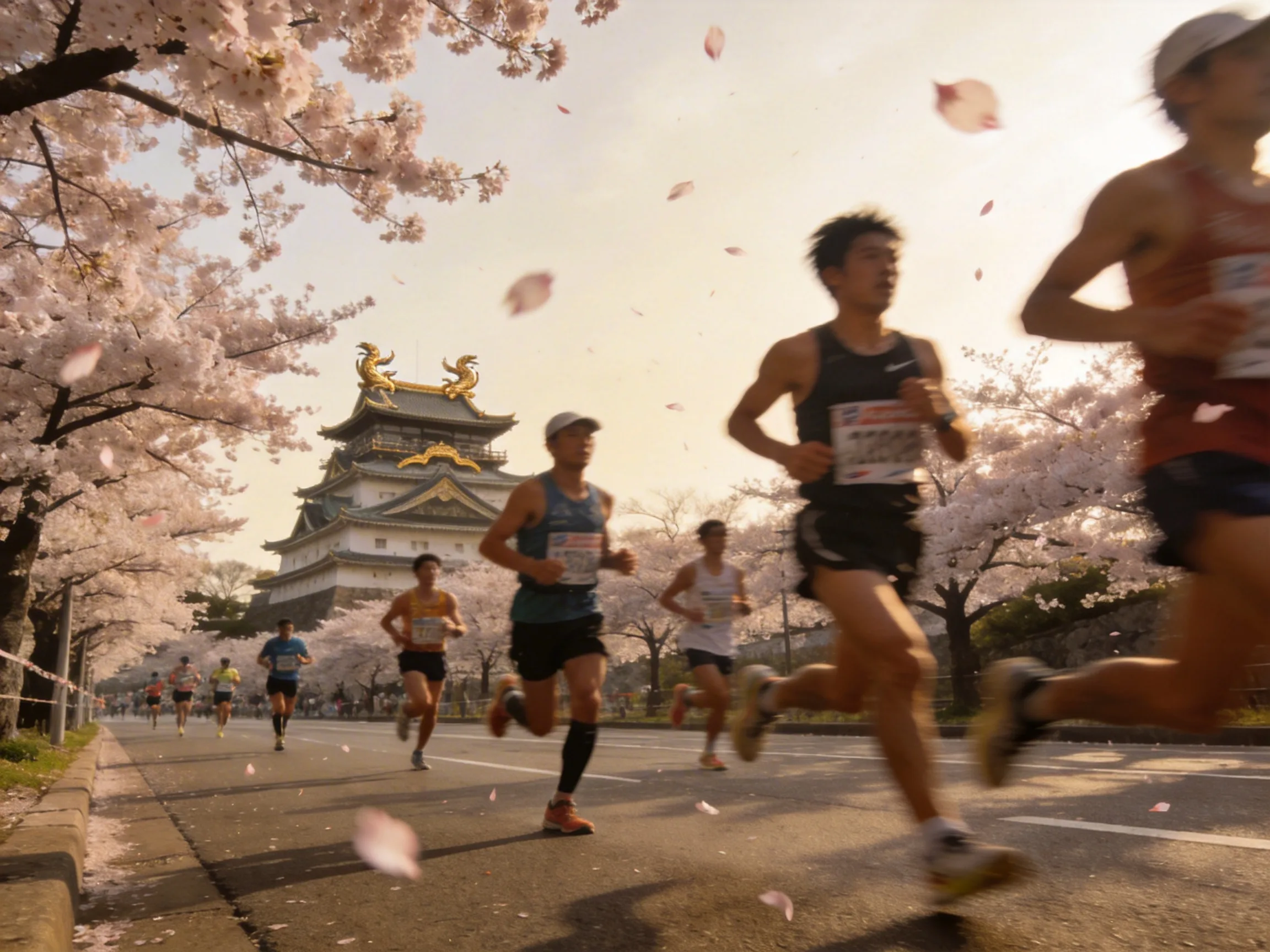
Nagoya · 2027-03-14
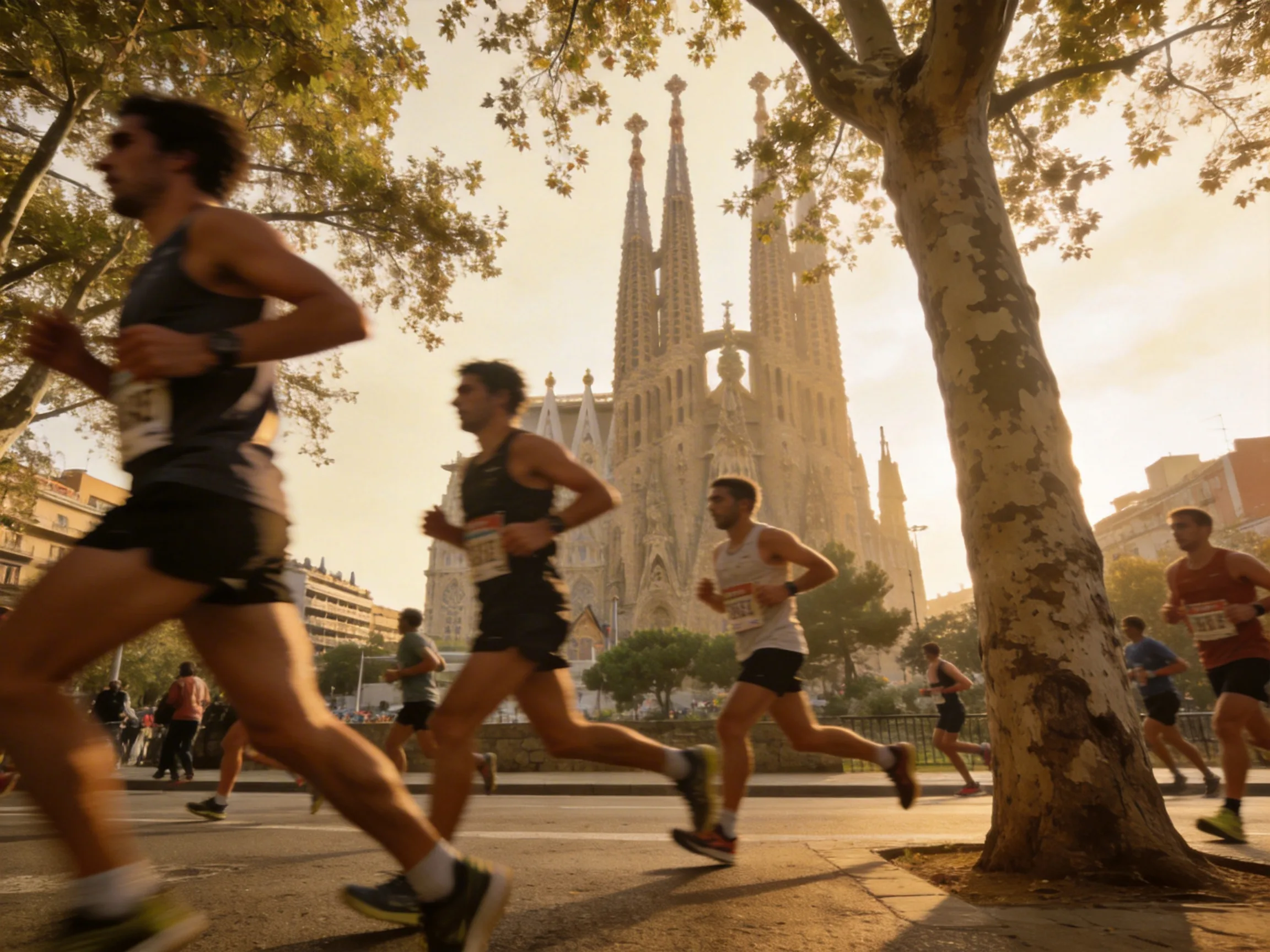
Barcelona · 2027-03-14
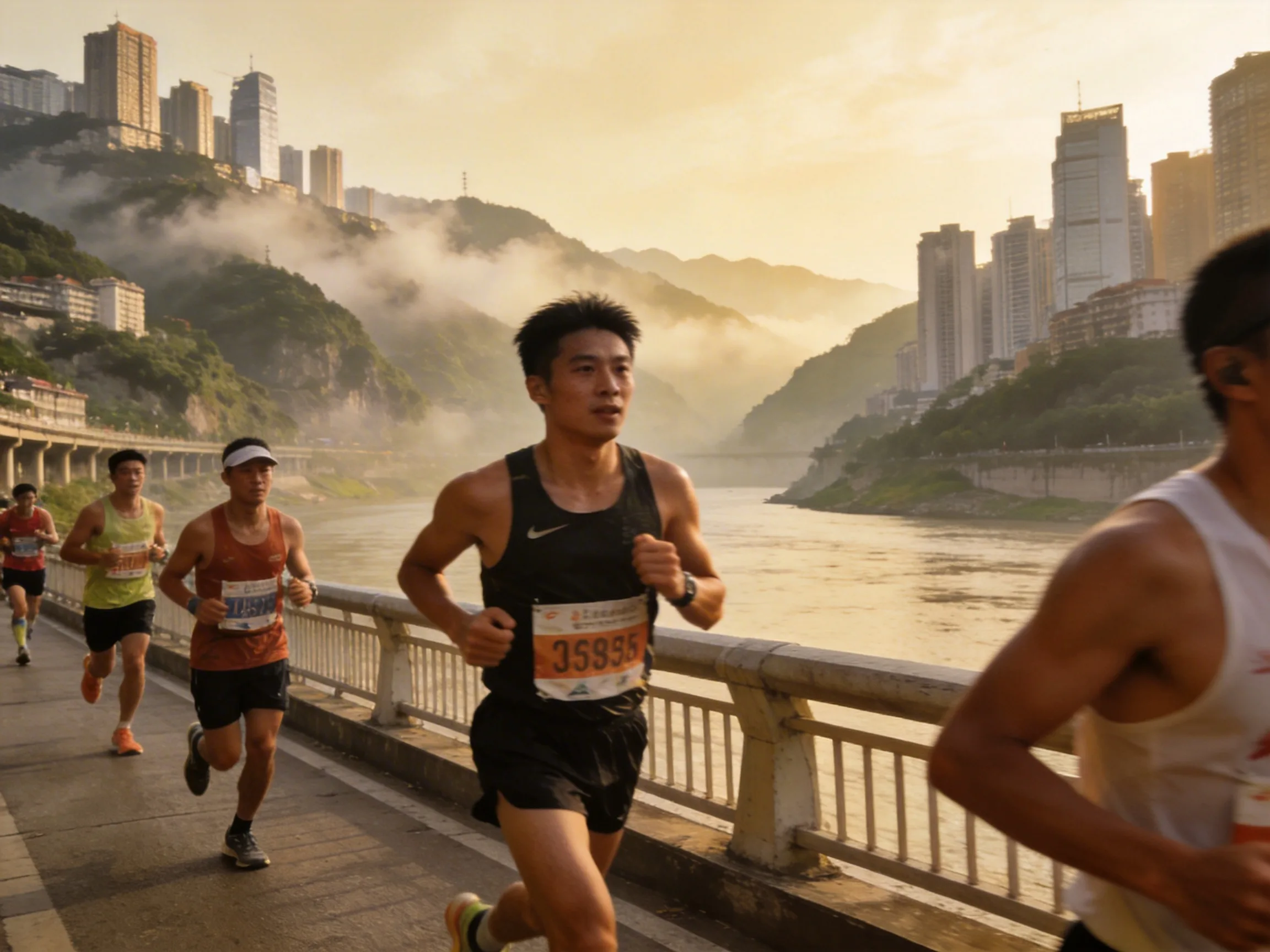
Chongqing · 2027-01-10
Los Angeles · 2027-03-07
Wuxi · 2027-03-28
Manchester · 2027-04-18