Seoul Running Routes: Han River 100km, Bukhansan & 5 Loops
100km Han River path, Bukhansan 836m trails, Seoul Flyers crew schedules, yellow dust March-May caveat, and the FCFS sub-5h Seoul Marathon entry rules...
Read City Guide →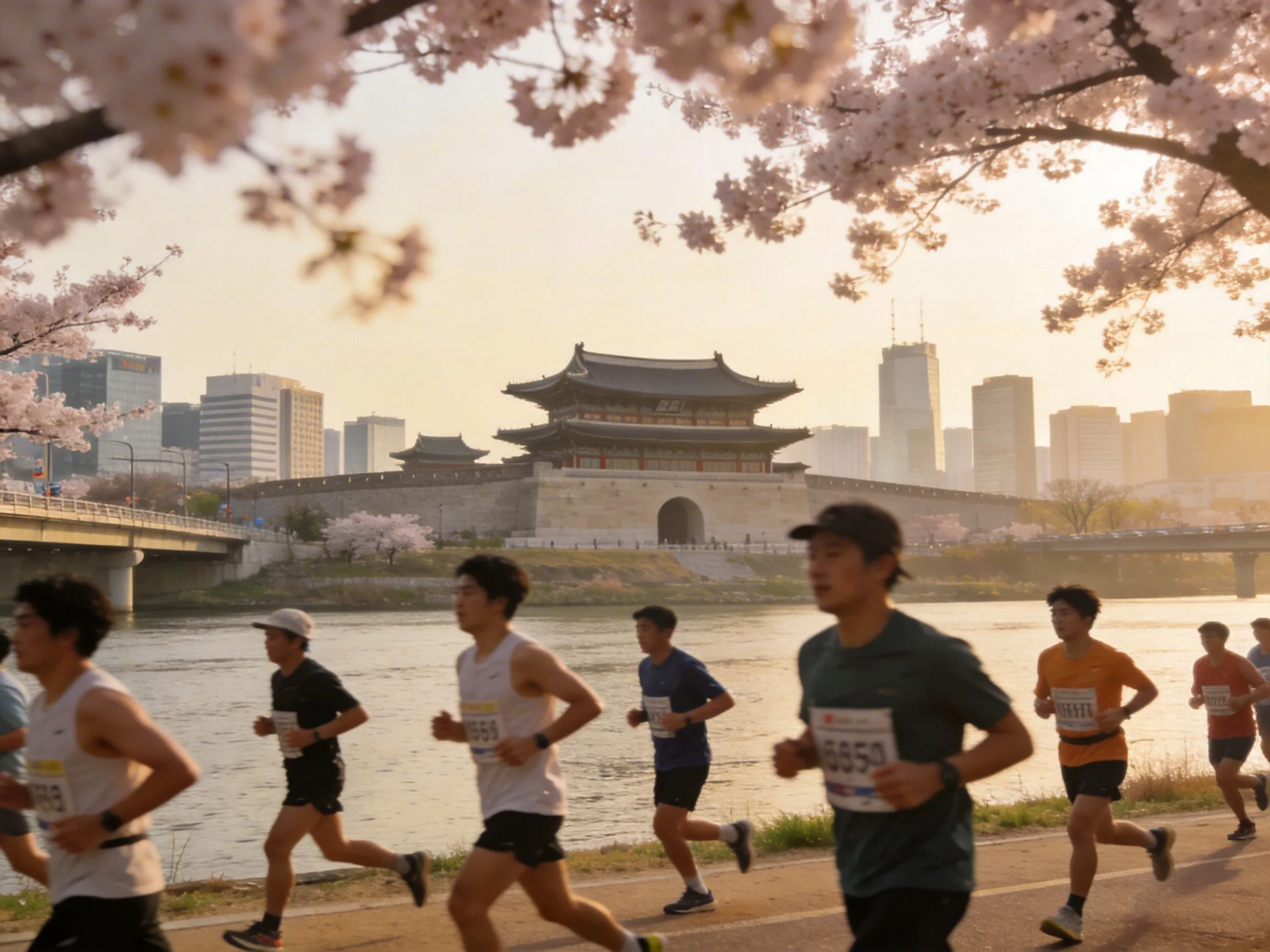
Want personality modes & weather integration? Try the full countdown experience
See entry dates for other marathons →
| Race | 2027 Seoul Marathon - Mar 21 |
|---|---|
| City | Seoul |
| Date | 2027-03-21 at 07:30 |
| Field Size | ~20,000 runners |
| Time Limit | 5 hours |
| Cutoff pace | 7:07/km |
| Course speed |
Fast courseSpeed index 0.92 — median of the last 4 winners' times against the global same-year median. Winner times track elite fields and prize money, so this reads the course as a proxy, not a pure measurement. |
| Timezone | Asia/Seoul |
| Official Site | Dong-A Ilbo |
| Average Temperature | 4°C / 39°F |
|---|---|
| Humidity | 74% |
| Peak Wind | 21.6 km/h |
| Rain Chance | 21% |
| Typical Conditions | Cold and dry, late winter conditions |
What to Prepare: March in Seoul averages 10°C high / 3°C low, but the 7:30 AM start often launches in 2-4°C with a westerly headwind on Jamsil Bridge at 34-35K. Pack throw-away gloves, arm sleeves, and a disposable poncho. 2026 was favourable; 2025 was notably cold and wet — multiple race reports cited drizzle near the start.
Based on historical averages for race week. Use our Weather Score Calculator and What to Wear Guide for personalized advice.
Winds peaking around 21.6 km/h — the typical daily maximum for this date — can affect your pace by 5-15 seconds per kilometer in exposed stretches. Headwinds slow you down exponentially: a 20 km/h wind costs more than twice a 10 km/h wind.
Calculate your wind-adjusted pace →Based on 20 years of race-week weather (2005-2024), MERRA-2 reanalysis
| Cooler | Typical | Warmer | |
|---|---|---|---|
| Temperature | 0.3°C | 4°C | 7.6°C |
| Dew point | -5.8°C | -0.5°C | 4.1°C |
Data: NASA POWER (MERRA-2 reanalysis), NASA Langley Research Center
| Course Type | Point-to-point |
|---|---|
| Elevation Gain | 93m |
| Terrain | Road |
| Profile | Point-to-point from Gwanghwamun Plaza through Sungnyemun, Cheonggyecheon, DDP, Heunginjimun, Children's Grand Park, and Seoul Forest, finishing inside Jamsil Olympic Stadium (1988 Olympics venue). Mostly flat with 93m total elevation gain — Jamsil Bridge at 34-35K is the one significant climb. Asphalt road, broad straight avenues throughout. |
| Boston Qualifier | Yes — Check your BQ time |
The Seoul Marathon (officially the Dong-A Marathon) is one of the world's oldest annual marathons, first run in 1931 and second only to Boston (1897) among continuously running races. The 2026 edition was the 96th Dong-A Marathon and produced the fastest race in event history: Ethiopia's Haftu Teklu won in 2:04:23, one second ahead of compatriot Getaneh Molla, with all five men in the top five running under the previous course record of 2:04:43. On the women's side, Haven Hailu Desse (ETH) ran 2:19:09.
Seoul has held the World Athletics Platinum Label for seven consecutive years and is Asia's first World Athletics Heritage event — the highest non-Major credential a road race can hold. The total field is capped at 40,000 (20,000 marathon bibs + 20,000 10K bibs); 2026 drew 6,424 international entries (+70% year-on-year). Unlike the Abbott Major lottery races, Seoul uses first-come-first-served registration plus a sub-4:59:59 marathon finish certificate from a race held between 1 January 2024 and 30 November 2026. Korean domestic bibs go in minutes across timed group waves; the separate overseas quota lasts longer. Overseas entry for 2027 opened on 1 September 2026 at USD 150 (10K USD 100) through en.dongma.club, worldsmarathons.com and runnet.jp, and full-marathon places were still on sale a week later. See our Seoul running guide for training-week context and the city's 100km Han River path system.
The gun fires at 7:30 AM in Gwanghwamun Plaza, with Gyeongbokgung Palace as the backdrop. The first 5K rolls gently downhill past Sungnyemun Gate and into the city core. Korean wave/corral enforcement is strict — pacing groups are honest and the field flows cleanly, a notable contrast with many Asian races that allow corral hopping. From 5K to 25K the route threads Cheonggyecheon stream, Dongdaemun Design Plaza, Heunginjimun Gate, and Seoul Children's Grand Park — broad straight avenues, mostly flat, well-supported with aid stations every 5K (water + Pocari Sweat) and sponge stations from 7.5K onward. Energy gels are handed out at 20K, 30K, and 35K; a banana station appears at 30K.
The one trap on this half is a focus dip around 14-16K in the narrower Cheonggyecheon section — multiple race reports cite losing rhythm here as the corridor tightens and the field stretches. Discipline pays: Seoul rewards even pacing far more than banking time, and the hardest section is still 20K ahead. Use our pace calculator to lock down 5K splits and resist the temptation to chase a fast first-half PB.
Kilometres 25-33 follow long straights along the river approach toward Jamsil. Crowd density drops — Seoul's spectator culture is notably sparser than Tokyo or Boston, more a serious-runner's race than a festival — and this stretch is the psychological grind. The route is fast, but mentally exposed; pacing groups fragment, and you will see the field stretch out.
Then comes the Jamsil Bridge crossing at 34-35K — the single defining moment of the race. The bridge climbs gradually but at the worst possible kilometre, and the exposed deck takes a sustained westerly headwind down the Han River. Race reports across Japanese, Korean, Chinese, and English communities consistently describe this section as the hardest — most cite the headwind on the exposed deck and a noticeable number of runners walking up the bridge. In cold-weather years (2025 was cold and wet), the wind chill on the bridge is brutal. Once over the deck, the final 5K descends into Jamsil Sports Complex — the 1988 Olympic main stadium — with wide, supportive streets and a stadium-finish straight inside the historic arena.
2026 race-day conditions were favourable (typical March: 10°C high / 3°C low, light wind), and the elite times reflected that. Citizen runners reported clean aid station execution, banana support at 30K, and accurate net-time scoring (gun time is not used — a Korean convention worth knowing for pacing plans). The course's PB reputation is earned, but it is flat-with-one-bridge, not pancake flat — anyone who calls Seoul a "fully flat course" has not run the Jamsil crossing.
Three takeaways for the March 21, 2027 edition:
1. Verify your qualifying certificate now. Sub-5:00 full / sub-2:12 half / sub-1:00 10K within the past two years, with your English (Romanised passport) name on the certificate. International registration historically opens around July 1, 10:00 KST, and bibs are gone within minutes — late certificates do not help.
2. Train for the bridge, not the average. Long-run finishers should include 4-6K of slight uphill + wind exposure in the final third of weekly long runs through February. Pack arm sleeves and light gloves — even "warm" March days dip below 5°C at the 7:30 start. Run our finish-time calculator with a 2-3% time penalty for the bridge segment.
3. Book your hotel near Jamsil Olympic Stadium, not Gwanghwamun. The finish-area subway connection (Lines 2 & 8) is two minutes from the stadium exit — by far the easiest post-race transit of any Asian marathon major, and 100m to a Jamsil-area hotel beats the post-marathon trip back into central Seoul. Use our marathon finder to compare Seoul with other March Asian races (Tokyo Mar 7, Osaka late February) for season planning.
Arriving early? Explore daily running routes and local tips.
100km Han River path, Bukhansan 836m trails, Seoul Flyers crew schedules, yellow dust March-May caveat, and the FCFS sub-5h Seoul Marathon entry rules...
Read City Guide →Use our free training tools to get race-ready:
Free running pace calculator for 5K, 10K, half marathon, and marathon. Get min/km or min/mile, your ...
Use Calculator →Free printable pace band for marathon, half marathon, or custom distance. Choose even, negative, or ...
Use Calculator →7 AM race, wake at 3:45 AM? Enter the gun time; we work backward through meal, gear, bathroom, warm-...
Use Calculator →Enter temperature, wind, and rain to get specific clothing picks for head, torso, legs, hands, and f...
Use Calculator →Free running shoe finder quiz. Answer 6 questions, get 3 spec-matched picks from 15 brands (155 SKUs...
Use Calculator →Free marathon predictor — convert your 5K, 10K, or half marathon time into race-day estimates from R...
Use Calculator →Overseas registration is already open. It started at 10:00 KST on 1 September 2026, and full-marathon places were still on sale when we checked a week later on 8 September. Race day is Sunday, 21 March 2027. Entry costs USD 150 for the marathon and USD 100 for the 10K, and it is first-come-first-served, not a lottery. The marathon requires a finish certificate of 4:59:59 or faster on net time, from a race held between 1 January 2024 and 30 November 2026 (see next FAQ); the 10K needs no qualifying time. The organiser lists three entry channels: en.dongma.club, worldsmarathons.com and runnet.jp. Korean domestic entry closed after its 1-2 June 2026 first-come window. Overseas runners must collect the race pack in person at the Seoul Marathon Expo before race day — no proxy pickup.
Unlike Boston's age-graded BQ, Seoul asks for one thing: proof you have already finished a marathon. The 2027 rule is a certificate showing 4:59:59 or faster on net time, from a race held between 1 January 2024 and 30 November 2026. A half-marathon or 10K time does not substitute. The certificate must show your English (Romanised passport) name and is uploaded during registration, with your passport number. The 10K has no record requirement — any time you submit is used only to assign your start group. This is a finisher-grade filter, not an elite one, but it is enforced. Use our finish-time calculator to plan a qualifying tune-up race.
Yes — Seoul is genuinely PB-friendly. The course has 93m total elevation gain on broad, straight downtown avenues, and the elite course record fell in 2026 to 2:04:23 (Haftu Teklu, ETH) — the fastest Seoul Marathon in 95 years, with all five top-five men under the previous record. The one significant climb is Jamsil Bridge at 34-35K, a gradual uphill plus exposed Han River headwind that costs most age-group runners 30-60 seconds. Important: do not confuse the March Seoul Marathon (this race, mostly flat) with the November JTBC Seoul Marathon, which has rolling hills and is sometimes compared to Boston in elevation.
Mid-March in Seoul typically runs 10°C high / 3°C low with light wind — close to textbook ideal marathon weather. However, the 7:30 AM start often launches in the 2-4°C range, and the Jamsil Bridge crossing at 34-35K catches a westerly headwind off the Han River. 2026 was favourable; 2025 was notably cold and wet — multiple race reports cited drizzle and near-freezing start temperatures. Also flag the yellow dust (황사) season runs March-May in Korea — check the PM2.5 forecast in the week before the race. Pack throw-away gloves, arm sleeves, and a disposable poncho.
Start: Gwanghwamun Plaza in central Seoul, with Gyeongbokgung Palace as backdrop. Finish: inside Jamsil Olympic Stadium — the main stadium of the 1988 Summer Olympics, in southeast Seoul. Bib pickup is only at the pre-race expo with passport and confirmation email (no proxy pickup allowed). Bag drop is at the start area; bags are bussed to the finish. Subway Lines 2 and 8 stop directly at Jamsil Station, two minutes from the stadium exit — by far the easiest finish-line transit of any Asian marathon major.
No. The current Abbott World Marathon Majors are seven: Tokyo, Boston, London, Berlin, Chicago, New York, and Sydney (joined 2025). The current WMM candidates are Sanlam Cape Town Marathon and Shanghai Marathon — Seoul is not on the candidacy track. However, Seoul holds the World Athletics Platinum Label (seven consecutive years) and is Asia's first World Athletics Heritage event, which is the highest non-Major credential a road race can hold. For runners chasing the Six/Seven Stars, Seoul is a complementary fast race — not part of the medal series.
Yes — Seoul is one of Asia's easiest cities to combine with a marathon trip. Both Incheon (ICN) and Gimpo (GMP) airports connect to central Seoul by AREX express train (45-60 min). Plan to arrive at least 2 days before the race to clear jet lag — visit the expo Friday or Saturday for bib pickup. The finish inside Jamsil Olympic Stadium pairs naturally with a Jamsil-area hotel for instant post-race recovery; central Gwanghwamun hotels (near the start) are also walkable to Cheonggyecheon, DDP, and Gyeongbokgung for sightseeing. See our Seoul running guide for shake-out routes (Han River 100km path, Namsan summit loop), recommended running shops (Goodrunner in Seongdong), and pre-race carbo-loading meals.
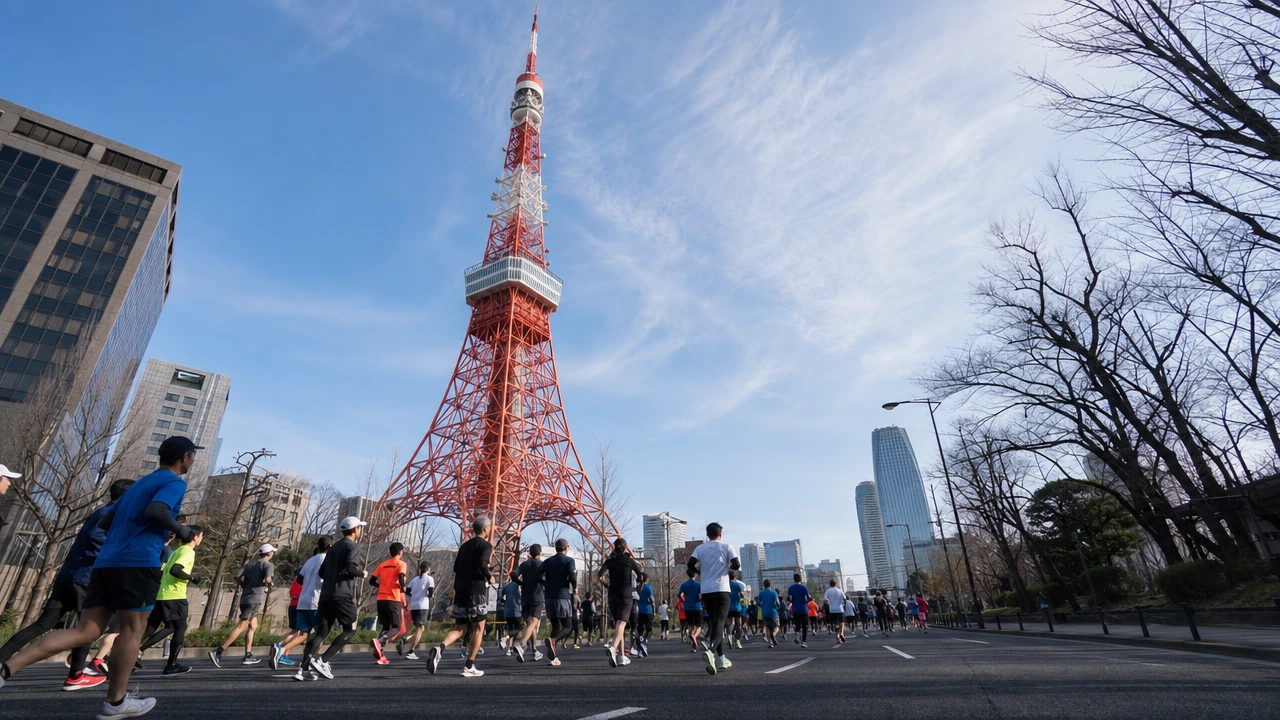
Tokyo · 2027-03-07
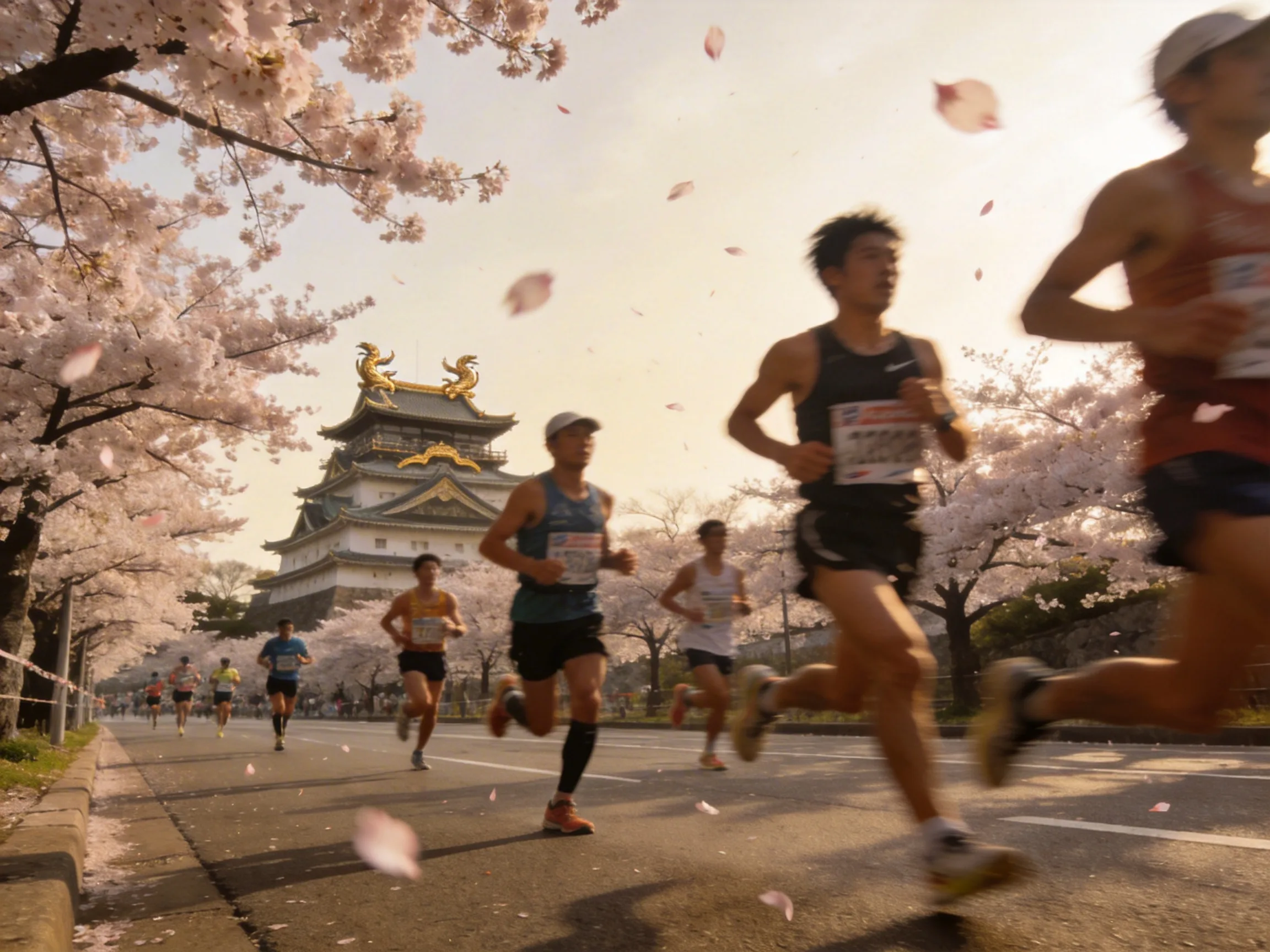
Nagoya · 2027-03-14
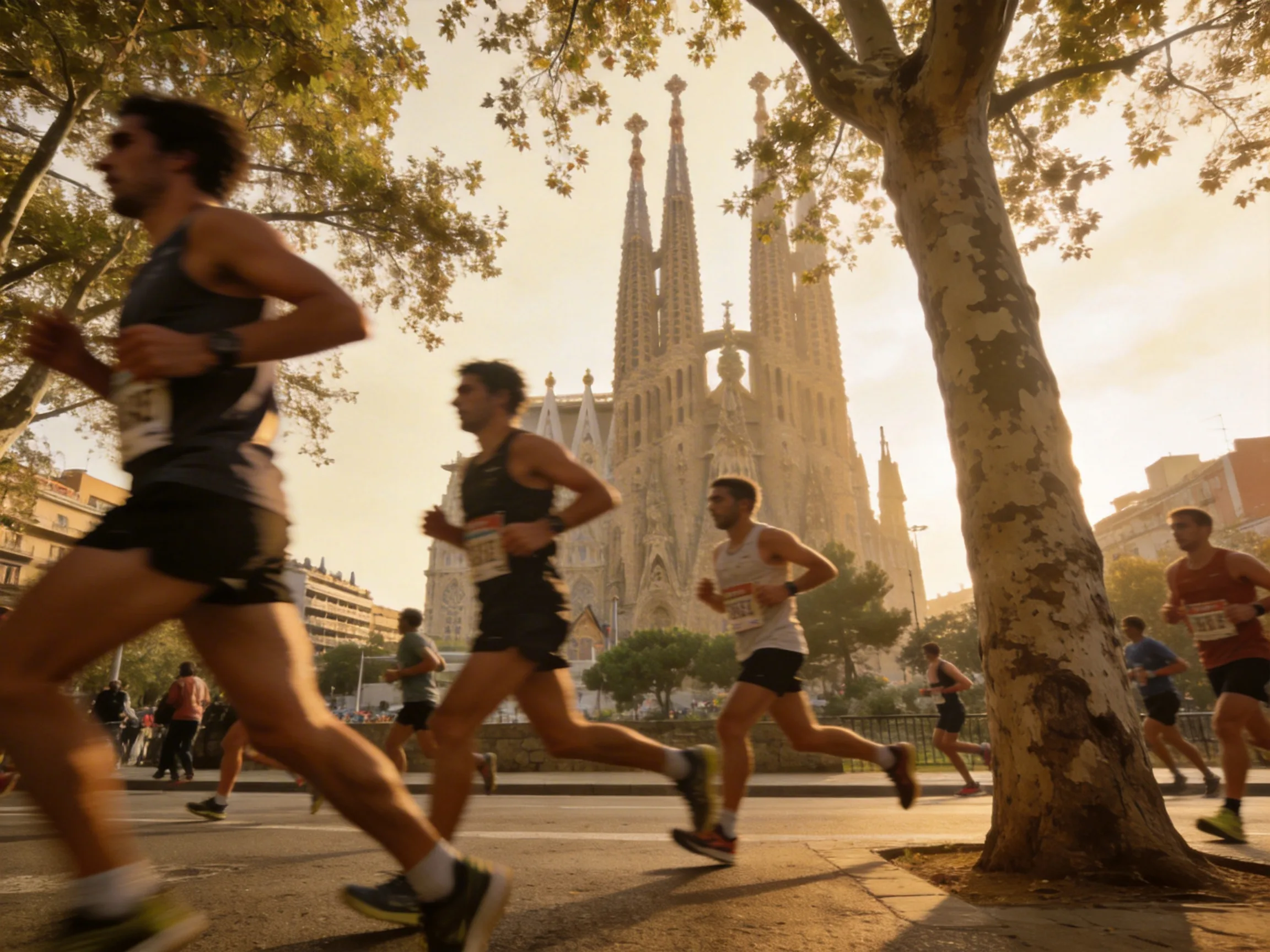
Barcelona · 2027-03-14
Chongqing · 2027-01-10
Los Angeles · 2027-03-07
Wuxi · 2027-03-28