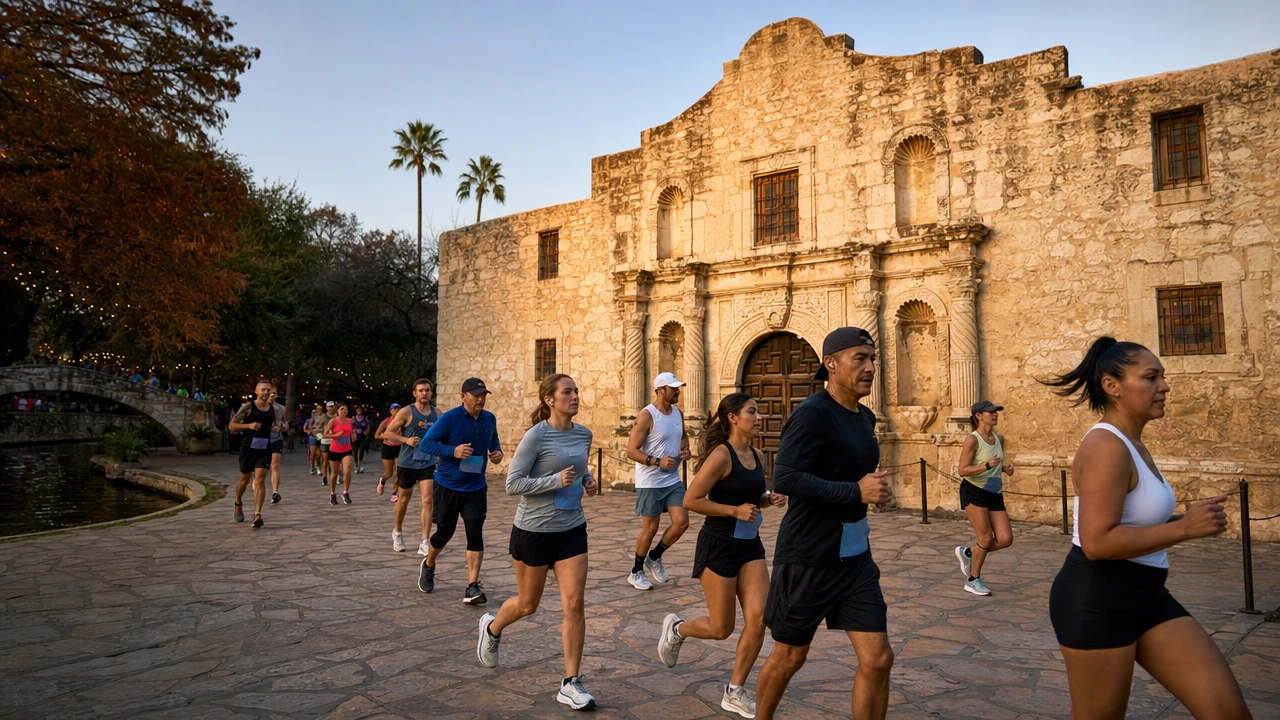
San Antonio
2026 San Antonio Marathon
Registration open
3,335 runners
Rolling
BQ-eligible
View race →
Texas runs its marathons in winter — flat, fast Houston in January plus rolling Dallas and San Antonio in December, all in mild 40s-to-60s air. All three are listed below in date order — pick yours.
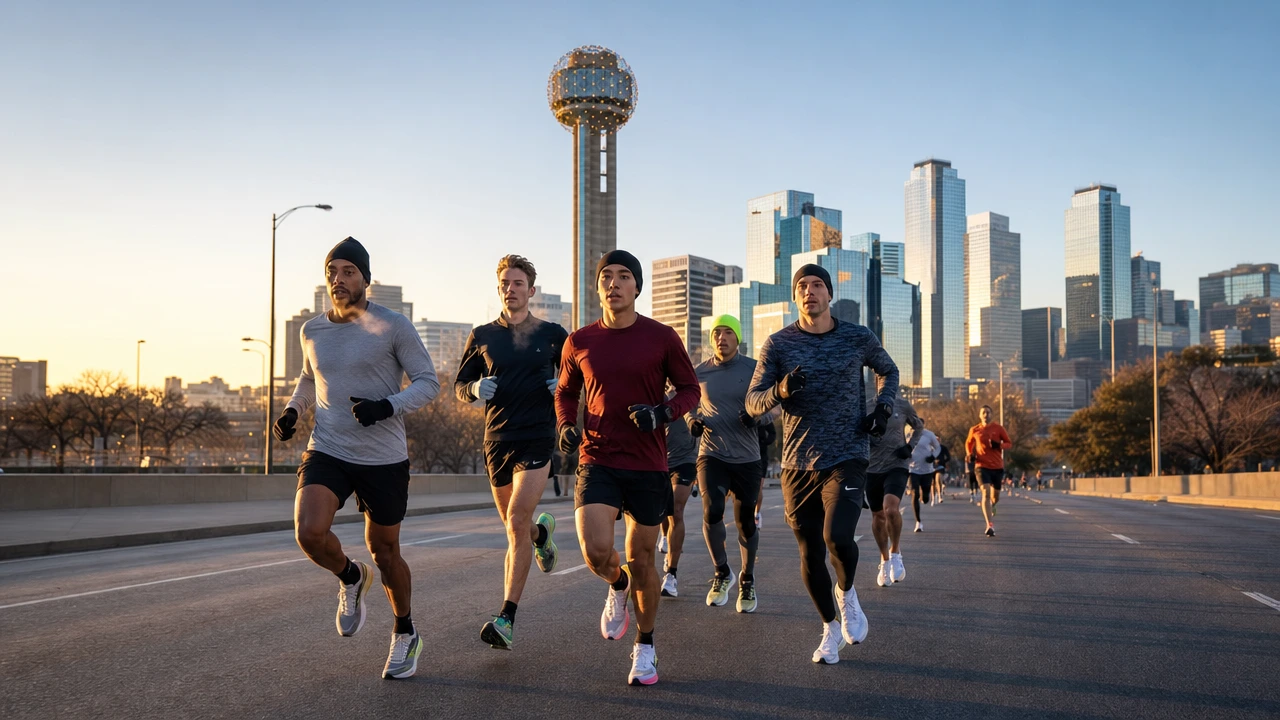



Winter window. Texas runs a short, concentrated season from December to mid-January, once the brutal summer humidity backs off and highs settle into the 40s-to-60s Fahrenheit. The headliner is flat, fast Houston, a single-loop downtown course (about 20 m of total climb) that has hosted the U.S. Olympic Trials; December brings the landmark-and-lake Dallas course with its real rolling climbs, and a San Antonio date a week earlier.
Match it to your day. Chasing speed and a Boston qualifier points you to Houston — one of the flattest big-city profiles in the country; a tougher scenic course or a year-end finish points to Dallas or San Antonio. All three are BQ-eligible, so check your target with the Boston Qualifying calculator and model your race-day splits with the pace calculator.
Weather is the wild card behind the mild averages, so pack layers and watch the final-week forecast. Each card above shows a live countdown, field size and course profile, all checked against official race sources — see the flat-course guide for how Houston stacks up nationally.
The Chevron Houston Marathon is the largest and most prestigious, with a field of roughly 8,000 marathoners on January 17. Its flat downtown loop and history of hosting the U.S. Olympic Trials make it the headline race of the Texas season. The BMW Dallas Marathon is the next biggest with a field around 3,800.
Houston is the clear choice for a PR or a qualifying attempt. Its flat, single-loop course — only about 20 m of total elevation gain — is regularly ranked among the fastest winter marathons in the United States, and the cool mid-January air helps. Dallas (about 257 m of gain), by contrast, has genuine rolling climbs through miles 6 to 7 and again near miles 20 to 21, so it runs slower. All three Texas races are Boston-qualifying eligible; confirm your standard with the Boston Qualifying calculator.
The season is compact, running from early December through mid-January to take advantage of Texas's mild winter, when daytime highs typically settle into the 40s-to-60s Fahrenheit. San Antonio comes first on December 6, then BMW Dallas on December 13, and Houston caps it on January 17. Mild averages still hide swings, so pack layers and watch the final-week forecast.
None of the Texas marathons use a lottery; entry is straightforward online registration. Houston's high demand means its remaining spots are open registration that sells out at capacity once guaranteed and qualifier entries fill, so register early and check the official site for the window. Dallas and San Antonio are first-come, first-served and rarely sell out far in advance.
For a forgiving debut, Houston is the most beginner-friendly of the three: a flat single loop, strong crowd support downtown and the largest field, so you are never running alone. Dallas and San Antonio are smaller and have more rolling terrain. See the beginner guide for how they compare nationally, and build up with a training plan.
Yes — every Texas marathon weekend pairs the full with shorter options. Houston runs the Aramco Houston Half Marathon alongside the full on the same morning, with a 5K the day before; Dallas adds a half marathon, 10K, 5K and a 50K ultra; and San Antonio offers a half marathon and 5K. If you are not ready for 26.2, the half is the natural step down — predict your finish with the finish-time calculator.