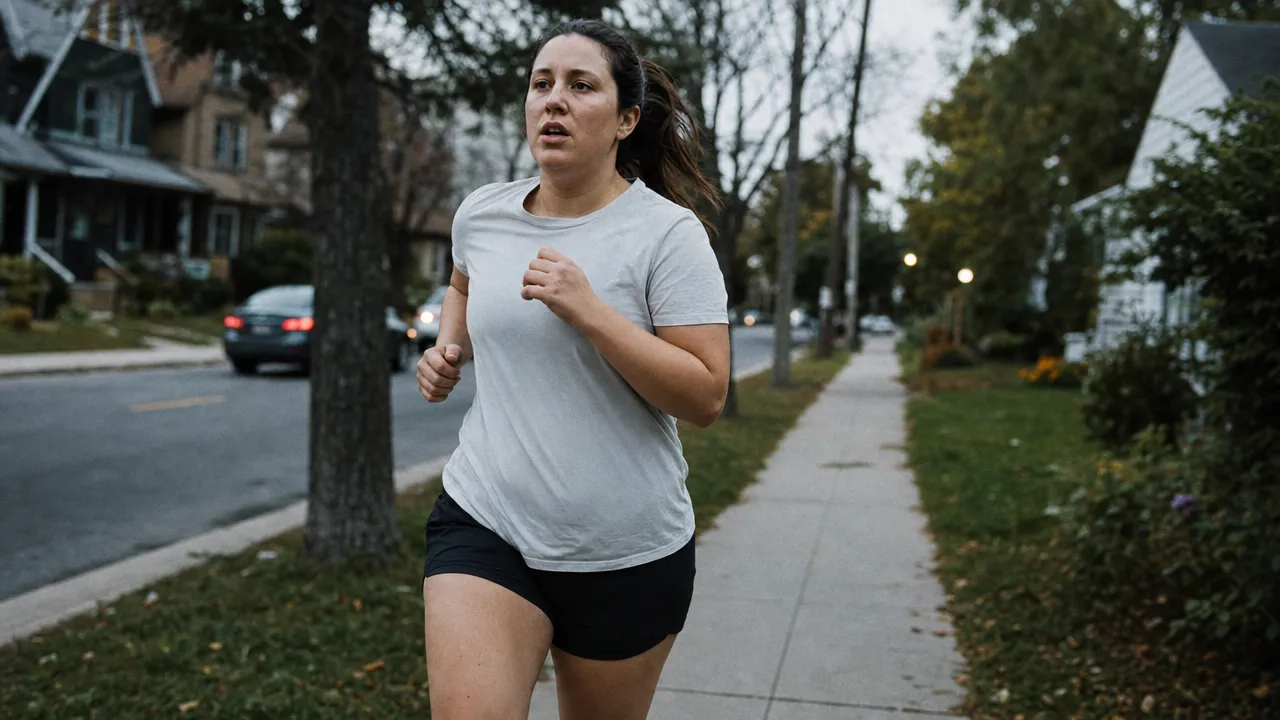
How to Start Running — 8-Week Beginner Plan (Walk to 5K)
Most new runners quit within 6 weeks. This free 8-week walk-to-5K plan fixes that: run/walk intervals 3 days a week, plus the 5 mistakes beginners make.
Key Takeaways
- Consistency beats intensity — Running 3 times per week for 8 weeks builds a lasting habit; ambitious daily training leads to burnout and injury within 6 weeks for most beginners.
- Walk breaks are a strategy, not a failure — Run-walk intervals reduce impact forces by 30% and allow beginners to cover more distance with significantly lower injury risk than continuous running.
- Connective tissue needs 8-12 weeks — Your heart adapts in weeks, but tendons and ligaments need 2-3 months to handle running impact; the graduated C25K approach respects this biological timeline.
- Conversational pace is the correct pace — If you cannot speak in full sentences while running, you are going too fast; slowing down is the most effective thing a beginner can do.
- The goal is habit, not fitness — Your first 8 weeks build the neural and structural foundation; speed and distance improvements come naturally once consistent running becomes automatic.
Why Running Is the Best Exercise You Can Start Today
Running is the most accessible form of cardiovascular exercise on the planet. You need no gym membership, no specialized equipment beyond a decent pair of shoes, and no prior athletic background. A landmark 2014 study in the Journal of the American College of Cardiology found that running even 5-10 minutes per day at slow speeds was associated with significantly reduced all-cause mortality — a 30% reduction compared to non-runners, and a 45% reduction in cardiovascular mortality.
Yet despite its simplicity, most new runners quit within the first six weeks. The reason is not lack of motivation — it is a lack of structure. Beginners almost universally make the same mistake: they run too fast, too far, too soon. This guide provides the evidence-based framework to avoid that trap and build a running habit that lasts.
Before Your First Run: Essential Preparation
Shoes Matter More Than Anything Else
Visit a specialty running store for a basic gait analysis. You do not need the most expensive shoe — you need one that fits well and feels comfortable during a 10-minute jog. Replace running shoes every 400-800 km (250-500 miles). A poor-fitting shoe is the most common correctable cause of beginner running injuries.
Health Screening
If you are over 40, have not exercised in over a year, or have any cardiovascular risk factors, consult a physician before starting. For most healthy adults under 40, you can begin a walk-run program safely without medical clearance.
Setting Realistic Expectations
Your cardiovascular system adapts to running within 2-4 weeks. Your muscles adapt within 4-8 weeks. But your tendons, ligaments, and bones require 8-12 weeks to fully adapt to the impact forces of running. This mismatch is why the run-walk approach works — it gives your slowest-adapting tissues time to catch up. Use the Training Start Date Calculator to plan your timeline toward a specific goal.
The Couch to 5K Progression: Your First 8 Weeks
The Couch to 5K (C25K) program is the most researched and validated beginner running program. Research consistently shows that a structured, progressive approach helps novice runners build fitness while managing injury risk. Here is an evidence-based 8-week progression:
Weeks 1-2: Walk-Run Introduction
- Frequency: 3 days per week with at least one rest day between sessions
- Session: 5 min walk warm-up → Alternate 60 seconds running / 90 seconds walking × 8 sets → 5 min walk cool-down
- Total running time: 8 minutes per session
- Effort: You should be able to speak in complete sentences while running. If you cannot, slow down.
Weeks 3-4: Building Confidence
- Session: 5 min warm-up → Alternate 90 seconds running / 90 seconds walking × 8 sets → 5 min cool-down
- Total running time: 12 minutes per session
- Key milestone: By the end of Week 4, attempt one 5-minute continuous run within your session
Weeks 5-6: Extending Run Intervals
- Session: 5 min warm-up → Alternate 3 minutes running / 1 minute walking × 6 sets → 5 min cool-down
- Total running time: 18 minutes per session
- Key milestone: Complete one 8-minute continuous run during Week 6
Weeks 7-8: Continuous Running
- Session: 5 min warm-up → 20-25 minutes continuous running → 5 min cool-down
- Total running time: 20-25 minutes per session
- Key milestone: Complete a 5K (3.1 miles) at any pace — walking breaks are perfectly acceptable
Use the Pace Calculator to understand your target pace and estimated finish times. Track your distance with the Steps to Distance Calculator if you prefer step-counting.
The 5 Most Common Beginner Mistakes
1. Running Too Fast
The most pervasive beginner error. New runners equate running with sprinting. Your easy running pace should feel embarrassingly slow — a pace at which you can hold a full conversation. For most beginners, this means 7:00-9:00 min/km (11:00-14:30 min/mile). Use the Heart Rate Zone Calculator to find your Zone 2 range, where most of your running should occur.
2. Skipping Rest Days
Enthusiasm is a double-edged sword. Running every day as a beginner overwhelms your connective tissues. Research on novice runners suggests that increasing training frequency too quickly tends to raise injury risk. Three to four days per week is optimal for the first 3 months.
3. Ignoring Pain
Muscle soreness after the first few runs is normal. Sharp, localized pain is not. A pain that worsens during a run, persists for more than 48 hours, or affects your walking gait requires rest and potentially medical evaluation. The phrase "no pain, no gain" does not apply to running — it leads directly to stress fractures, shin splints, and plantar fasciitis.
4. Neglecting Warm-Up and Cool-Down
A 5-minute brisk walk before running increases blood flow to muscles and reduces injury risk. A 5-minute walk after running helps clear metabolic waste. Static stretching is best done after running, not before. Dynamic movements (leg swings, high knees, butt kicks) are appropriate pre-run.
5. Comparing Yourself to Others
Every runner was once a beginner. Social media and running apps create the illusion that everyone else is faster. Your only meaningful comparison is with your past self. Progress in running is measured in months and years, not days.
Building the Running Habit: Psychology and Consistency
Research on habit formation (Lally et al., 2010) shows that a new behavior takes an average of 66 days to become automatic. For running, this means committing to roughly 8-10 weeks of consistent practice before it feels natural. Strategies that work:
- Schedule runs like appointments: Block specific days and times in your calendar. Treat them as non-negotiable.
- Lay out clothes the night before: Reducing friction between intention and action is the single most effective behavior change technique.
- Find a route you enjoy: Scenic routes increase adherence. If your route is boring, you will find excuses to skip.
- Track progress visually: A simple calendar where you mark completed runs creates a powerful chain effect — you will not want to break the streak.
- Join a running group: Social accountability increases adherence by up to 50% in exercise programs.
Read the Running Form Guide to develop efficient biomechanics from the start.
Nutrition Basics for New Runners
Beginner runners do not need complex nutrition strategies. The fundamentals:
- Hydration: Drink water throughout the day. For runs under 45 minutes, water before and after is sufficient — you do not need sports drinks.
- Pre-run fuel: A light snack 60-90 minutes before running (banana, toast, small energy bar). Avoid high-fiber and high-fat foods that can cause GI distress.
- Post-run recovery: A meal or snack containing both protein and carbohydrates within 60 minutes of finishing. This accelerates glycogen replenishment and muscle repair.
- Calories: A 30-minute easy run burns approximately 250-400 calories depending on body weight and pace. Use the Running Calorie Calculator for personalized estimates.
When to Progress Beyond Beginner
You are ready to move beyond the beginner phase when you can comfortably:
- Run 30 minutes continuously 3 times per week
- Complete a 5K without walking breaks
- Recover within 24 hours of an easy run with no lingering soreness
- Maintain a conversational pace throughout your run
Once you reach this point — typically 8-12 weeks — you can begin introducing variety: longer runs, gentle hill work, or your first structured speed session. Use the Training Plan Calculator to design your next phase, and consider exploring the Aerobic Base Building Guide to understand why easy running remains the foundation of all future training.
Sources & References
- (2008). No Effect of a Graded Training Program on the Number of Running-Related Injuries in Novice Runners: A Randomized Controlled Trial. American Journal of Sports Medicine.
- (2016). Running-Related Injury Prevention through Barefoot Adaptations and Gait Retraining. Medicine and Science in Sports and Exercise.
- (2016). The NLstart2run Study: Training-Related Factors Associated with Running-Related Injuries in Novice Runners. Journal of Science and Medicine in Sport.
- (2012). Walk-Run Training Improves Outcomes in Community-Based Running Programs. Journal of Sport and Health Science.