Norwegian Singles Method: How to Run the Workouts
Norwegian Singles uses one controlled workout per quality day. See a 51-minute example, how to adapt your week, and a common pacing mistake.
Key Takeaways
- Single means one quality session that day. The work stays below your upper lactate threshold; it is not an all-out interval session.
- The aim is a repeatable week. Leave enough in reserve to keep the next easy run easy. Three quality days are not a starting requirement.
- Replace a workout before adding one. Use current fitness, keep your rest days, and reduce the session if effort keeps climbing.
What is Norwegian Singles?
Norwegian Singles puts one controlled interval session on a quality day, rather than threshold sessions both morning and evening. Other runs stay easy. “Single” does not mean running once a week.
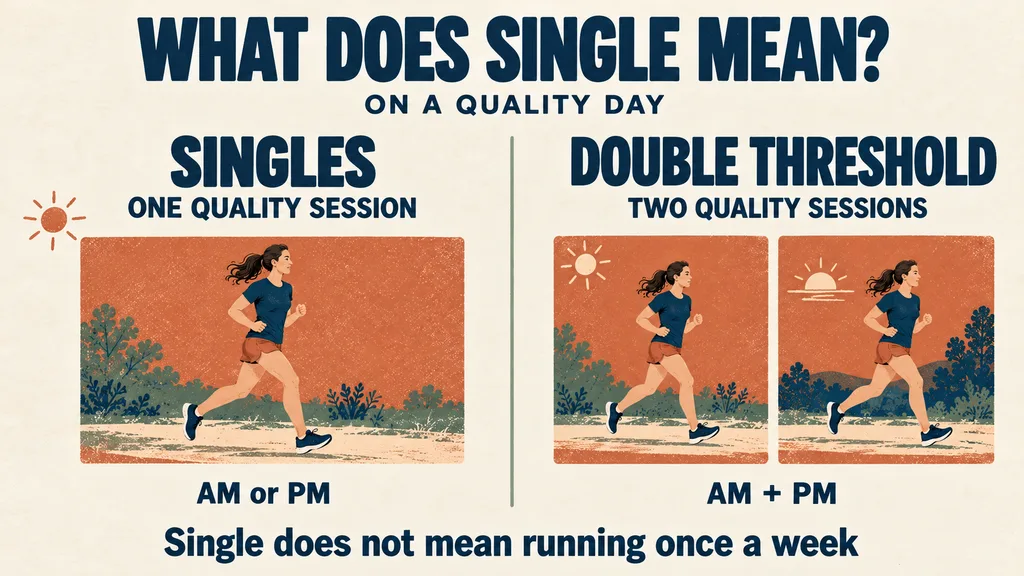
The work is sub-threshold: below the upper lactate threshold, where lactate becomes harder to keep stable as intensity rises. Finish with something left. It is different from the harder Norwegian 4×4 workout.
Why leave something in reserve?
The aim is a week you can repeat. A fast Tuesday is less useful if it costs you Thursday's run. Controlled work and short breaks help you avoid turning every session into a race.
Evidence and limits
Casado's 2023 review explains the elite training background; a 2024 study of coaches' practice describes controlled, rather than exhaustive, intervals. Neither proves recreational Singles is better than other sensible plans or prevents injury. Workout examples are practical guidance, not trial-tested prescriptions.
The practical method is described in the Norwegian Singles community guide; this is a practice source, not a clinical trial.
How do you fit it into your running?
Change one existing session first
| Your current week | First change to consider |
|---|---|
| Easy running is still irregular | Build a consistent easy routine first; do not copy three quality days. |
| One established quality session | Replace that session. Keep running days and weekly time unchanged initially. |
| Two quality sessions plus a hard long run | Choose one session to replace. The hard long run already counts as demanding work; do not add more. |
This is a way to review your current plan, not a new weekly prescription. If you need the first step, use the aerobic base guide.
One controlled session
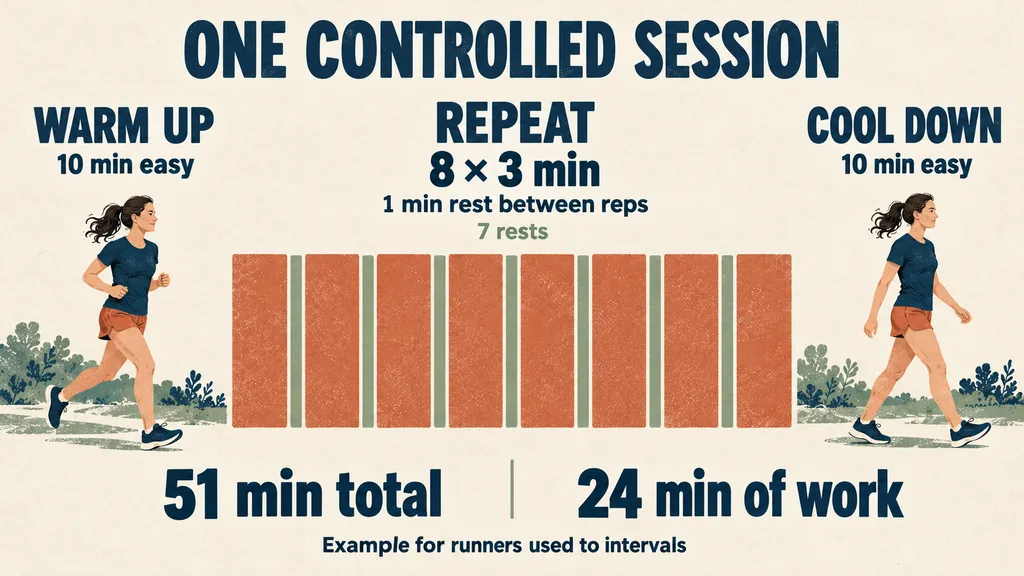
For runners already used to intervals: reduce the repetitions to fit your current training.
- Jog easily for 10 minutes.
- Run 8 × 3 minutes. Current 12–15 km race-equivalent pace is a starting estimate; begin at the slower end.
- Take 1 minute between reps: seven breaks, standing, walking or jogging very slowly.
- Jog easily for 10 minutes to finish.
51 minutes total; 24 minutes of work. A recent result can help estimate paces with the race equivalence tool, but the estimate cannot confirm you are below threshold. Slow down or stop early if effort keeps rising or finishing requires a race effort.
Record how the session felt and whether your next run is normal. The training load tool helps keep a record; its score does not establish recovery. If fatigue disrupts the next session, use easy running or rest.
Sources & References
- (2026). Implementing the Method — Norwegian Singles. Norwegian Singles community guide.
- (2023). Does Lactate-Guided Threshold Interval Training within a High-Volume Low-Intensity Approach Represent the Next Step in the Evolution of Distance Running Training?. International Journal of Environmental Research and Public Health.
- (2024). Training Session Models in Endurance Sports: A Norwegian Perspective on Best Practice Recommendations. Sports Medicine.