Running Pace Calculator — Min/km, Finish Time & Pace Chart
Free running pace calculator for 5K, 10K, half marathon, and marathon. Get min/km or min/mile, your ...
Use Calculator →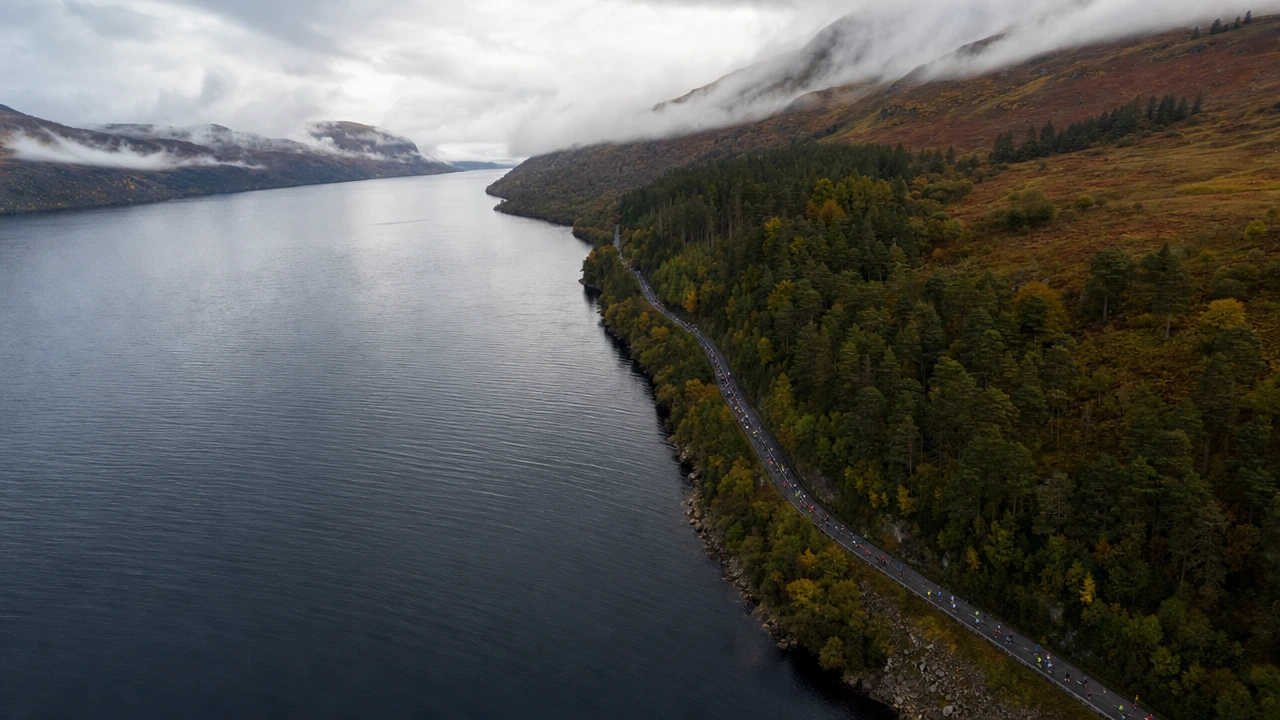
Want personality modes & weather integration? Try the full countdown experience
See entry dates for other marathons →
| Race | 2027 Loch Ness Marathon - Sep 26 |
|---|---|
| City | Inverness |
| Date | 2027-09-26 at 10:00 |
| Field Size | ~3,000 runners |
| Time Limit | 7 hours |
| Cutoff pace | 9:57/km |
| Course speed |
Typical paceSpeed index 1.04 — median of the last 5 winners' times against the global same-year median. Winner times track elite fields and prize money, so this reads the course as a proxy, not a pure measurement. |
| Timezone | Europe/London |
| Official Site | Baxters Loch Ness Marathon (Caledonian Concepts / High 5 Events) |
| Average Temperature | 9.6°C / 49°F |
|---|---|
| Humidity | 90% |
| Peak Wind | 28.1 km/h |
| Rain Chance | 61% |
| Typical Conditions | Cool, often grey and showery Highland autumn. Race-day temperatures usually sit around 8-14°C, with high humidity, brisk wind off the loch and a real chance of rain — late September is one of the wetter spells in Inverness. |
What to Prepare: Pack waterproof layers and expect changeable weather. The moorland start is exposed and cold while you wait, so bring a throwaway top layer to discard before the gun and gloves for the early miles.
Based on historical averages for race week. Use our Weather Score Calculator and What to Wear Guide for personalized advice.
Winds peaking around 28.1 km/h — the typical daily maximum for this date — can affect your pace by 5-15 seconds per kilometer in exposed stretches. Headwinds slow you down exponentially: a 20 km/h wind costs more than twice a 10 km/h wind.
Calculate your wind-adjusted pace →Based on 20 years of race-week weather (2005-2024), MERRA-2 reanalysis
| Cooler | Typical | Warmer | |
|---|---|---|---|
| Temperature | 6.7°C | 9.7°C | 12.7°C |
| Dew point | 4.8°C | 8°C | 11.3°C |
Data: NASA POWER (MERRA-2 reanalysis), NASA Langley Research Center
| Course Type | Point-to-point |
|---|---|
| Elevation Gain | 310m |
| Terrain | Road |
| Profile | Net-downhill overall but genuinely undulating, with notable climbs around mile 6 and a testing rise near mile 18 before the run into Inverness. |
| Boston Qualifier | Yes — Check your BQ time |
Use our free training tools to get race-ready:
Free running pace calculator for 5K, 10K, half marathon, and marathon. Get min/km or min/mile, your ...
Use Calculator →Free printable pace band for marathon, half marathon, or custom distance. Choose even, negative, or ...
Use Calculator →7 AM race, wake at 3:45 AM? Enter the gun time; we work backward through meal, gear, bathroom, warm-...
Use Calculator →Enter temperature and humidity to calculate dew point and its impact on your running pace. 7-zone ch...
Use Calculator →How much does a headwind actually slow you down? This free calculator turns wind speed and direction...
Use Calculator →How much will hills slow you down? Enter elevation gain, loss, and distance to see adjusted pace, di...
Use Calculator →The 2027 Baxters Loch Ness Marathon is on Sunday 26 September 2027, confirmed by the organisers. The River Ness 10K and 5K take place the same day, with the finish festival in Inverness.
Yes. Early bird entry opened on 27 September 2026 — race day of the 2026 edition — through the "Enter Now" button on the official site (booking runs on Let's Do This). Entry is first-come, first-served with no ballot, and runners must be 18 or over on race day.
Do not wait for a late decision: general entry for the 2026 race had sold out by 1 April 2026 — the fastest sell-out in the event’s history — after which the only way in was a charity place. Check the official entry page for the current early bird fee before you book.
It is a point-to-point course. Runners are bussed from Inverness out to a moorland start on the high ground above Loch Ness, then run north along the south-eastern shore of the loch, cross the River Ness and finish in the centre of Inverness. The loch views dominate the middle of the race before the urban finish.
Not really. The course is net-downhill overall, which sounds fast, but it is undulating Highland terrain with a testing climb around mile 18. Treat it as a scenic, bucket-list race rather than a flat time-trial: run by effort and use a pace calculator to plan conservative early miles.
Around 310 m (roughly 1,020 ft) of total ascent over 26.2 miles, despite the net drop from start to finish. The biggest efforts come near mile 6 and again near mile 18. Study the climbs in advance with an elevation profile tool so the late hill does not catch you out.
There is no parking at the start. Every marathon runner takes a coach from Inverness Ice Centre on Bught Drive to the remote moorland start line. The 2026 race started at 10:00; confirm the 2027 timings in the event guide nearer race day. Allow time for bag drop and the coach transfer, and dress warmly for the exposed wait.
The official cut-off is 7 hours (17:00 for the 2026 race’s 10:00 start). If you expect to take longer than 6 hours 30 minutes, the organisers ask you to use the pavement through Inverness, as roads on the final 3 miles start to reopen from 16:30. A sweep bus follows the back of the field.
Late September in the Highlands is cool and changeable. Expect roughly 8-14°C, high humidity, wind off the loch and a real chance of rain. It is generally good running weather, but prepare for grey, showery conditions and a cold wait at the exposed start.
Chester · 2026-10-11

Newport · 2027-04-18
Belfast · 2027-05-02

Cincinnati · 2027-05-02

Eugene · 2027-04-25

Dallas · 2026-12-13