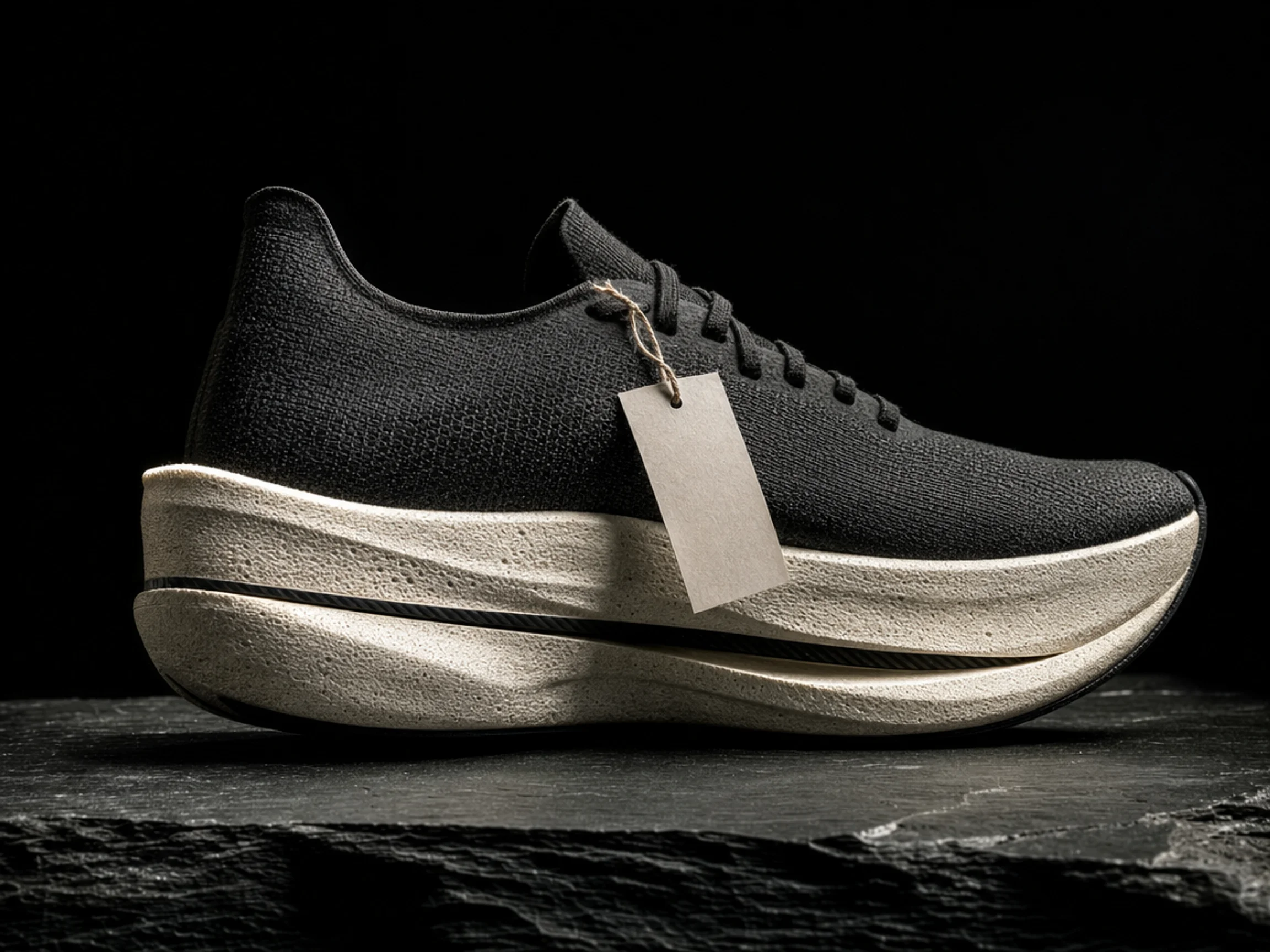
Carbon Plate Shoe ROI — Is a $300 Vaporfly Worth It?

Carbon Plate Shoe ROI — Is a $300 Vaporfly Worth It?

Cost-per-second-saved math for carbon racing shoes, calibrated by marathon time. Sub-4 runners racing once a year can't justify $300 — get the honest number.

HH:MM:SS — your most recent marathon finish or realistic goal
Marathons + half-marathons + key tempo races where you'd wear them
Industry default 7 (300 km / 42.2 km). Lower if you also use them for training.

How the Carbon ROI Calculator Works

This tool answers a simple question with honest math: given your marathon time, how much are you actually paying per second of time savings from a carbon plate shoe?

The calculation chain:

  1. Time saved per race = your current marathon time × 4% (Hoogkamer 2018)
  2. Races per shoe = 300 km lifespan ÷ 42.195 km marathon ≈ 7 races
  3. Total seconds saved = 7 × time saved per race
  4. Cost per second = shoe price ÷ total seconds saved

The verdict tier maps cost-per-second to whether the purchase is rational for your context. We don't tell you what to do — we give you the number, and you decide whether saving X seconds is worth $Y to you. Some runners will pay any price for a sub-3 finish; others would rather spend on coaching. Both choices can be defensible.

For deeper context on whether carbon shoes match your pace, see our Carbon Plate Truth for Non-Elite Runners guide. Once the math says yes, browse spec-matched carbon-plate racers across 14 brands.

The Science Behind the Math

The 4% improvement figure comes from Hoogkamer, Kipp, Frank, Farina, Luo, & Kram (2018), published in Sports Medicine. Their lab study compared the Nike Vaporfly 4% prototype against two control shoes (Nike Zoom Streak 6 and Adidas Adios Boost 2) using elite-level runners on treadmills. Average running economy improvement: 4.0% (range 1.6-7.7%).

Critical caveats:

  • The Hoogkamer subjects were sub-elite runners (sub-31 minute 10K times). Performance benefit scales down as ground contact time increases (slower runners get less benefit).
  • Whiting et al. (2022) in Medicine & Science in Sports & Exercise examined non-elite runners (3:30-4:00 marathon times) and found smaller, more variable improvements (~2.5% on average, with some subjects showing zero benefit).
  • The improvement applies to running economy (oxygen cost), not directly to race times. Real-world race time improvement is often 1-2% lower than the lab economy gain due to fatigue, heat, fueling, and pacing factors.

This calculator uses the optimistic 4% number to give you the best-case scenario. If you're a 4+ hour marathoner, mentally adjust the cost-per-second upward by ~50% to reflect your likely real-world economy benefit.

How to Read the Verdict Tier

The verdict tier translates the cost-per-second number into a recommendation:

  • Excellent value (under $0.20/sec) — Super shoes are an obvious buy. You race frequently enough and fast enough that the time savings amortize cheaply. This tier typically requires sub-3:30 marathon times AND 4+ races per year.
  • Reasonable ($0.20-$0.80/sec) — Solid investment for serious recreational marathoners. The shoes will pay back across multiple races and key workouts. Most 3:00-3:45 marathoners with 2-3 races per year land here.
  • Questionable ($0.80-$3.00/sec) — Stop and think. The seconds saved are real but expensive. You're often better served by spending the same money on coaching, a race entry to a destination marathon, or upgrading multiple components of your gear (GPS watch + nutrition + recovery tools).
  • Absurd (over $3.00/sec) — Almost always indicates a casual runner who races rarely. The math says the carbon shoe is irrational; the only justification is psychological or aspirational. That's fine if you know that's what you're buying — but don't pretend it's a performance investment.

For ongoing tracking of your shoe value, see our Shoe Cost Per Mile Calculator and Shoe Mileage Tracker.

Sources & References

  1. Hoogkamer, W., Kipp, S., Frank, J.H., Farina, E.M., Luo, G., & Kram, R. (2018). A Comparison of the Energetic Cost of Running in Marathon Racing Shoes. Sports Medicine.
  2. Hoogkamer, W., Kipp, S., & Kram, R. (2019). The biomechanical differences between running with and without a carbon-fiber-plated racing shoe. International Journal of Sports Physiology and Performance.
  3. Whiting, C.S., Allen, S.J., Brett, B., et al. (2022). The effect of carbon-plate footwear on running performance in non-elite runners. Medicine & Science in Sports & Exercise.

Frequently Asked Questions

Are carbon plate shoes worth it for slow runners?

Short answer: increasingly no as pace slows. Hoogkamer et al. (2018) documented ~4% running economy improvement at elite paces (14-18 km/h). Lab follow-ups tracked benefit decay with pace: only 1.4% at 3:30 marathon pace, 0.9% at 4:12 marathon pace. A sub-3 marathoner saves ~7 minutes per race; a 5-hour marathoner saves closer to 5 minutes. Combined with the fact that slower runners typically race fewer marathons per year, cost-per-second-saved frequently lands in the "questionable" or "absurd" tier for casual runners. This calculator does the honest math for your specific pace and race frequency.

How is cost per second saved calculated?

We take Hoogkamer 2018's 4% running economy improvement, multiply it by your current marathon time to get seconds saved per race, then multiply by races your shoe can survive (industry standard: ~7 races per 300 km super shoe lifespan). Total seconds saved over the shoe's useful life ÷ shoe price = cost per second saved. We use Hoogkamer 2018 as the upper bound; Whiting 2022 found smaller improvements (~2.5%) for non-elite runners, so real-world savings may be lower.

What's a reasonable cost per second?

From this calculator's tier system: Excellent (under $0.20/sec) — competitive runners with multiple races per year and fast times. Reasonable ($0.20-$0.80/sec) — most serious recreational marathoners. Questionable ($0.80-$3/sec) — typical for casual runners; consider whether the time savings actually matters to you. Absurd (over $3/sec) — usually slow runners who race rarely; the money is better spent on coaching or race entry fees.

Does the 4% economy improvement apply to slower runners?

Not directly. Hoogkamer 2018 tested elite-level runners. Whiting et al. (2022) examined non-elite runners and found smaller, more variable improvements (1-3%). The slower your pace, the longer your ground contact time, which reduces the carbon plate's lever-effect benefit. This calculator uses the optimistic 4% as the upper bound — if you're a 5-hour marathoner, your real savings may be closer to 2-3%, making the cost-per-second math even harsher.

How long do carbon plate shoes last?

Industry consensus: 200-400 km of racing use. The PEBA foam (Nike ZoomX, Adidas Lightstrike Pro, etc.) loses energy return faster than traditional EVA. Most pros retire their carbon shoes after 5-7 marathon-distance efforts. We use 300 km as the calculator default, equivalent to ~7 marathons. If you also use them for tempo workouts, that count drops fast — which means cost per second worsens. Reserve carbon shoes strictly for races and key sessions.

Should I use carbon shoes for training too?

Generally no. Three reasons: (1) The 4% benefit is most measurable at race-day intensity — easier paces don't extract the full advantage. (2) Each training km eats into the shoe's limited lifespan, making the cost-per-race much worse. (3) Carbon plates can mask developing strength imbalances, since they reduce the eccentric load on calves and hamstrings. Use a separate lightweight trainer for tempo/intervals; reserve carbon for races.

What if I race in carbon shoes once a year?

Then the cost per second saved is brutal. A $300 shoe used in only 1 marathon saves you ~7 minutes (sub-3 runner) or ~12 minutes (5h runner) — but you've spent the entire $300 to extract those savings. That's $0.71-$1.20 per second saved. For most occasional racers, that money is better spent on a race coach, structured training plan, or extra race entries. Carbon shoes only make economic sense if you race frequently or if breaking a specific time barrier is uniquely valuable to you.

References 3 peer-reviewed sources
  1. Hoogkamer, W., Kipp, S., Frank, J.H., Farina, E.M., Luo, G., & Kram, R. (2018). A Comparison of the Energetic Cost of Running in Marathon Racing Shoes. Sports Medicine.
  2. Hoogkamer, W., Kipp, S., & Kram, R. (2019). The biomechanical differences between running with and without a carbon-fiber-plated racing shoe. International Journal of Sports Physiology and Performance.
  3. Whiting, C.S., Allen, S.J., Brett, B., et al. (2022). The effect of carbon-plate footwear on running performance in non-elite runners. Medicine & Science in Sports & Exercise.