How the Shoe Rotation Planner Works
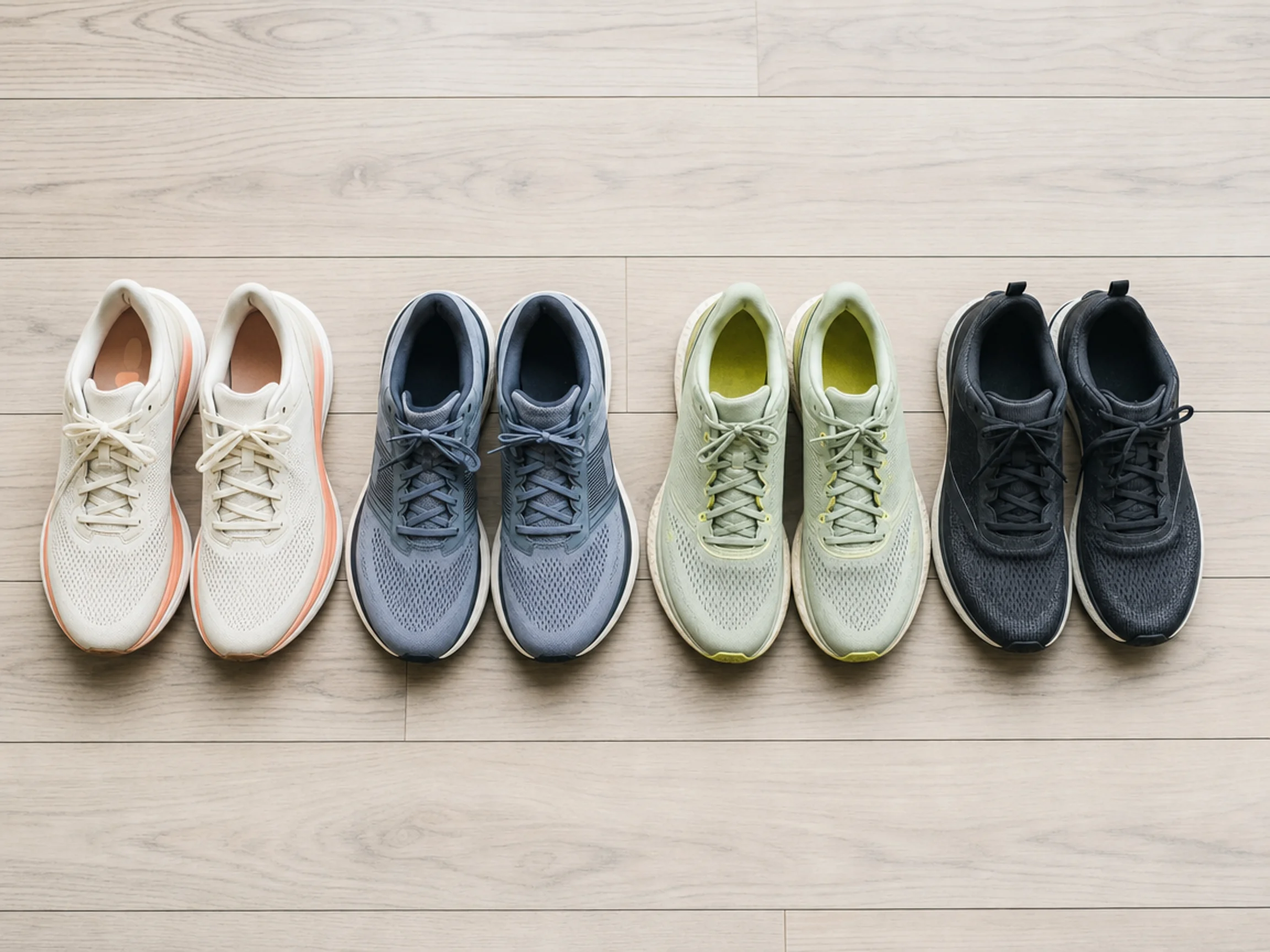
The RunDida Shoe Rotation Planner analyzes your weekly mileage, training mix, running surface, body weight, and budget to recommend a personalized multi-shoe rotation. The algorithm assigns shoe categories based on your training distribution: daily trainers for easy runs, speed shoes for tempo and interval sessions, long run shoes for sustained efforts, recovery shoes for post-hard-effort days, and trail shoes if you run off-road.
Shoe lifespan calculations use industry-standard mileage ranges for each category, adjusted by a body weight multiplier. Heavier runners compress midsole foam faster, so the planner reduces expected lifespan by 10-20% for runners over 75 kg. Lighter runners under 60 kg receive a 10% lifespan bonus. These adjustments ensure realistic replacement timelines.
The cost analysis multiplies your replacement frequency by price ranges for your selected budget tier. Speed shoes with carbon plates carry a 30% price premium in the calculation, reflecting real market pricing. The weekly assignment plan maps each day of the week to the optimal shoe based on a standard training structure, which you can adapt to your own schedule.
By rotating shoes strategically, you reduce cumulative stress on any single pair, extend the useful life of each shoe, and match the mechanical properties of each shoe to the specific demands of each workout type. For a deeper dive into choosing the right shoes for each slot in your rotation, read our Complete Guide to Choosing Marathon Running Shoes.
The Science Behind Shoe Rotation and Injury Prevention
A landmark 2015 prospective study by Malisoux et al., published in the Scandinavian Journal of Medicine & Science in Sports, tracked 264 recreational runners over 22 weeks and found that runners who used multiple pairs of running shoes had a 39% lower risk of running-related injury compared to single-pair runners, after adjusting for training volume, experience, and previous injuries.
The proposed mechanism is variation in mechanical loading. Different shoe designs alter ground reaction forces, foot strike patterns, and muscle activation sequences. By alternating shoes, runners distribute stress across a wider range of tissues rather than repeatedly loading the same structures. This aligns with the concept of tissue load management, a foundational principle in sports medicine championed by researchers like Tim Gabbett.
Midsole foam recovery is another critical factor. EVA and TPU foams used in running shoes exhibit viscoelastic creep — they compress under sustained loading and require time to return to their original shape. Research by Sun et al. (2020) in the Journal of Sports Sciences demonstrated that midsole cushioning properties degrade measurably after a single run and require 24-48 hours for full recovery. Running on incompletely recovered foam reduces shock absorption and increases transmitted impact forces to the musculoskeletal system.
For heavier runners, the relationship between body mass and shoe degradation is approximately linear. Each footstrike generates ground reaction forces of 2.0-2.5 times body weight during running. A runner weighing 90 kg produces peak forces of 180-225 kg per step, compared to 120-150 kg for a 60 kg runner. Over a typical 10 km run of approximately 8,000 steps, this difference accumulates to thousands of kilograms of additional force passing through the midsole foam, accelerating material fatigue and permanent deformation.
Rotation Strategies by Race Goal
The ideal rotation size scales with your training goal. Short-distance runners need fewer pairs; marathon and ultra runners benefit from three or four. Match the rotation structure to the demands of the distance you are preparing for.
5K and 10K Runners
Shorter races train at higher average intensities with lower weekly mileage (25-45 km per week typically). A 2-shoe rotation covers most needs: a cushioned daily trainer handling 65-75% of weekly mileage for easy runs, plus a lightweight trainer or racing flat for tempo runs, intervals, and race day. If you race frequently — monthly 5K/10K events — a dedicated race-day shoe extends this to three pairs so your racer stays fresh.
Half Marathon Training
Half marathon blocks usually push weekly mileage into the 40-65 km range, which justifies a 3-shoe rotation. Add a long run shoe — typically max-cushion — to the daily trainer plus speed shoe combination. The extra underfoot material on runs exceeding 90 minutes reduces accumulated impact on joints and connective tissue. For the full training structure, see our half marathon training guide.
Marathon Training
Marathon training typically uses a 3-4 shoe rotation. A representative structure: (1) daily trainer for 65-75% of mileage, (2) lightweight trainer or super shoe for marathon-pace workouts, (3) max-cushion long run shoe for 30-35 km long runs, (4) optional: dedicated race shoe if different from your tempo shoe. This structure delivers the full 39% injury-reduction effect from Malisoux 2015 while spreading $300-500 of annual footwear spend across multiple pairs that each last longer due to rotation. See our first marathon training guide for how footwear fits into the broader plan, and Carbon Plate Truth for whether a super shoe belongs in your rotation.
Ultra and Trail
Ultra and trail runners need trail-specific shoes with aggressive outsoles, rock plates for technical terrain, and in some cases gaiter attachments. A typical ultra rotation: (1) trail daily trainer for weekday runs and easier terrain, (2) max-cushion trail shoe for long efforts and race day, (3) road shoe for recovery runs on pavement. The trail-to-road split matters — trail outsoles wear 2-3x faster on concrete than on dirt, so running trail shoes on urban surfaces burns through expensive lugs quickly.
Heavier Runners (85 kg+)
Runners over 85 kg compress midsole foam faster and benefit from slightly larger rotations even at lower mileage. Adding a max-cushion option earlier — even at 30-40 km/week — reduces accumulated impact on long efforts. Check annual cost calculations carefully: replacement frequency increases 15-20% for heavier runners, so budgeting for 3 pairs a year per slot rather than 2 is realistic. Use the Shoe Mileage Tracker to catch foam fatigue before it reaches the point where cushioning loss becomes injury risk.
Three Concrete Rotation Templates
Abstract principles are useful but concrete templates are faster to apply. Below are three rotations tuned to different runner profiles. Each template lists the slot, a price band, a representative annual cost, and typical mileage allocation. Use them as starting points, then personalize with the planner above.
Beginner Rotation — 2 Pairs
For runners covering 25-40 km/week with simple training (easy runs plus one quality session):
- Primary daily trainer ($100-140): handles 70-80% of weekly mileage. Representative models: Nike Pegasus, ASICS Cumulus, Brooks Ghost, HOKA Clifton.
- Lightweight trainer ($90-130): used for the weekly tempo or fartlek session, plus the occasional 5K or 10K race. Representative models: Saucony Kinvara, New Balance Rebel, ASICS Noosa Tri.
Annual cost estimate: $200-270. Replacement schedule: daily trainer every 5-6 months, lightweight every 8-10 months. Total of 3-4 shoes per year.
Intermediate Rotation — 3 Pairs
For runners covering 50-80 km/week training for half marathons or marathons:
- Daily trainer ($110-150): ~60% of mileage.
- Lightweight trainer or tempo shoe ($120-160): ~25% for intervals, tempo runs, and marathon-pace workouts.
- Max-cushion long run shoe ($140-180): ~15% for long runs exceeding 90 minutes.
Annual cost estimate: $350-450. This template adds the max-cushion option to reduce accumulated impact during marathon training's highest-mileage weeks — the phase where most training-related injuries occur.
Advanced Rotation — 4 Pairs
For sub-3:30 marathoners or dedicated racers logging 80+ km/week:
- Daily trainer: 50% of mileage — the workhorse that absorbs most easy-day volume.
- Lightweight trainer: 20% for tempo work and faster sessions.
- Carbon-plate racer ($250-350): 10% for key race-pace sessions plus race day. Read Carbon Plate Truth first to decide whether the investment pays off at your goal pace; run the per-minute cost numbers with the Carbon ROI Calculator.
- Max-cushion long run shoe: 20% for weekly long runs.
Annual cost estimate: $600-850. The carbon shoe amortizes best if you race 3-4 times per year; solo annual marathoners may want to skip the carbon slot and put those dollars into a second max-cushion pair instead.
Budget-Conscious Alternative
If the advanced rotation's cost is prohibitive, a $300/year total-budget rotation is achievable: one daily trainer ($120), one lightweight trainer ($110), one previous-season max-cushion on clearance ($70). Buy outgoing models at 30-50% off during the brand's annual update cycle. The mechanical difference between a current-generation shoe and last year's version is usually cosmetic.
Common Rotation Mistakes
A rotation is only useful if each slot serves a distinct purpose. The following mistakes neutralize the benefit of owning multiple pairs.
Mistake 1: Three Identical Daily Trainers
Stocking up on the same model fails the core rotation principle. The injury-reduction effect in Malisoux 2015 came from varied mechanical loading — different shoe geometries, stack heights, heel-to-toe drops, and foam densities. Three pairs of the identical shoe deliver the same mechanical signal three times. If you love a specific daily trainer and want a second pair, make the second pair a different model from a different brand — the variation is what matters.
Mistake 2: Forcing a Shoe Into the Wrong Slot
Using a 330g cushioned daily trainer for tempo intervals, or a 180g carbon racer for a 10 km easy recovery run, ignores what each shoe is designed for. Heavy easy-day shoes make speed work feel sluggish and punish your legs when you are trying to practice fast turnover. Light carbon racers feel stiff and harsh on slow recovery days. Each slot should be filled by a shoe actually appropriate for that workout type. Use Shoe Match to ensure the shoe you are about to buy fits the slot you need it for.
Mistake 3: Ignoring Per-Pair Mileage
Rotation extends each shoe's calendar life because fewer weekly kilometers land on any single pair — but the total mileage limit does not change. A daily trainer is still done at 600-800 km regardless of how long calendar-wise it took to accumulate that distance. Running worn-out foam in a rotation is still running on worn-out foam. Track distance per pair with the Shoe Mileage Tracker, and retire each shoe by total kilometers, not by how recent it feels.
Mistake 4: Mixing Trail and Road Carelessly
Trail outsoles wear out 2-3x faster on pavement than on dirt. Running trail shoes on long road sections during mixed-route runs burns through expensive lugs quickly. Plan mixed runs so the majority of pavement segments are tackled in a road-appropriate pair, and reserve trail shoes for when the surface actually warrants them. Conversely, road shoes on technical trails risk slipping and accelerated upper damage from roots and rocks.
Mistake 5: Buying the Rotation All at Once
Purchasing 3-4 shoes simultaneously creates a synchronization problem — all pairs will hit retirement mileage at roughly the same time, forcing a large coordinated expense a year later. Stagger purchases by 2-3 months so retirements space out naturally. This also lets you adjust later purchases based on what you learned from earlier pairs (fit issues, preferred brands, etc.).