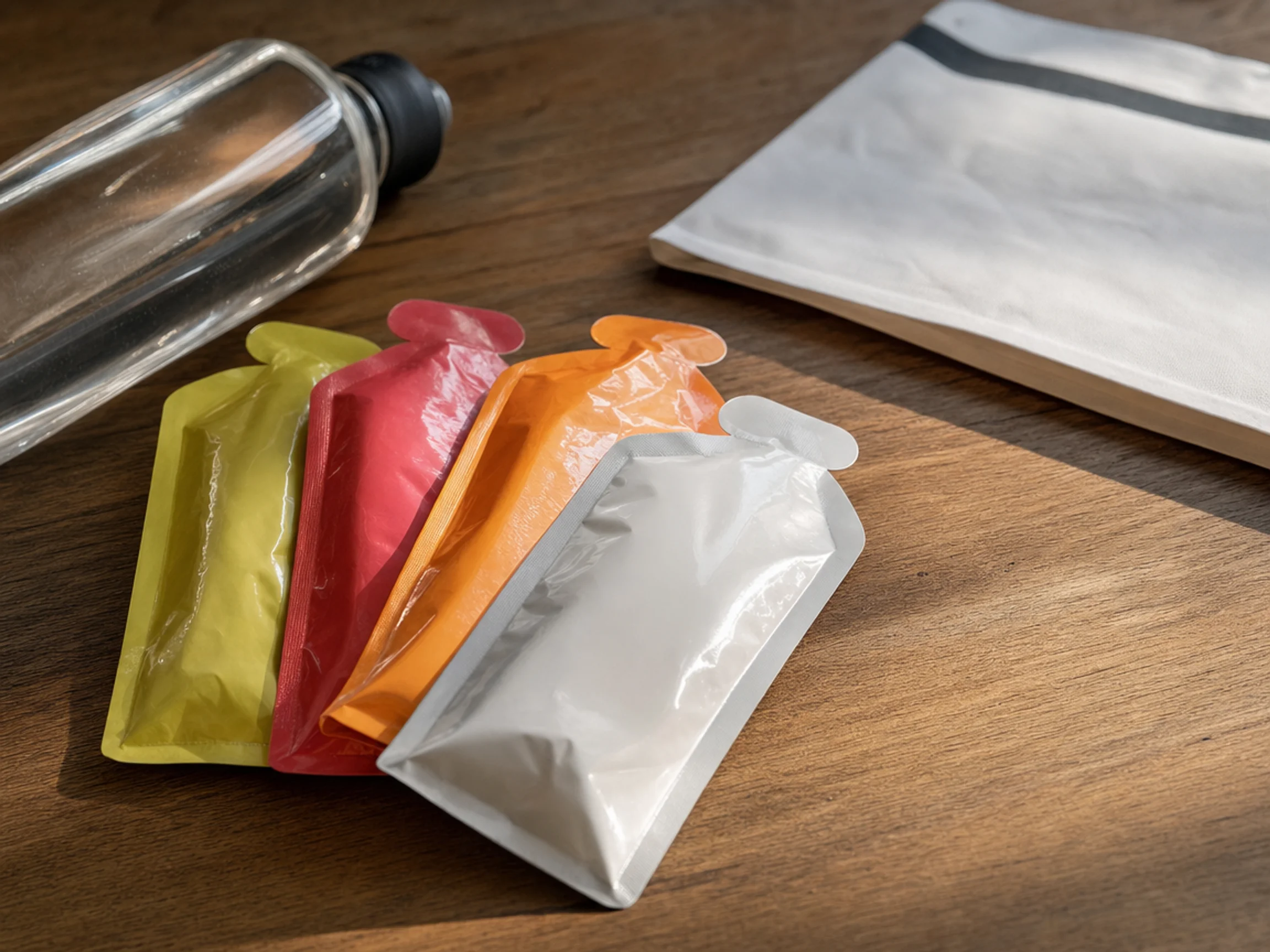
How Many Gels for a Marathon? Energy Gel Calculator

How Many Gels for a Marathon? Energy Gel Calculator

How many gels for a marathon? This energy gel calculator builds a fueling plan with exact km markers, carbs/hour target, caffeine timing, and water pairing.

:
Fine-tune (optional)
Common: GU 22g, Maurten 25g, SIS 22g, Clif 24g, Honey Stinger 24g, Spring 30g
Dual-source gels (e.g. Maurten, SIS Beta Fuel) allow higher carb absorption rates
Check your race website for sponsored nutrition on course
Common: GU 20-40mg, Maurten 100mg, SIS 75-150mg, Clif 25mg, Spring 30mg

How the Energy Gel Calculator Works

The calculator determines your target carb intake rate (30-90 g/hr) based on gel source type, intensity, and GI sensitivity. It calculates the fueling window (race time minus first 30 minutes), determines total gels needed, subtracts aid station availability, and generates a race timeline with exact time and distance markers for each gel, plus caffeine tracking and water pairing.

Carbohydrate Fueling Science

Stored glycogen (400-500g) fuels ~90-120 minutes of running. Beyond that, fat oxidation only supports ~60-65% VO2max. Exogenous carbs delay depletion. Glucose absorption via SGLT1 saturates at ~60g/hr. Adding fructose (via GLUT5) increases total oxidation to 90g/hr — the basis for dual-source gels (Jeukendrup, 2004).

Caffeine Strategy for Race Day

Caffeine blocks adenosine receptors, reducing perceived effort. Optimal dose: 3-6 mg/kg body weight. Best timing: second half of the race when fatigue peaks. The calculator offers four strategies (none, strategic, late-race, all caffeinated) and tracks total intake against your safe range.

Practical Gel Fueling Tips

Practice everything in training — gut tolerance improves with repeated practice. Walk briefly while gelling to improve absorption (costs only 5-10 seconds per stop). Pre-open packets before the race. Carry gels in a running belt or tape to forearms. Our calculator tells you exactly how many to carry vs. pick up at aid stations.

Sources & References

  1. Jentjens, R.L., Moseley, L., et al. (2004). Oxidation of Combined Ingestion of Maltodextrins and Fructose during Exercise. Journal of Applied Physiology.
  2. Jeukendrup, A.E. (2014). A Step Towards Personalized Sports Nutrition. Sports Medicine.
  3. Guest, N.S., VanDusseldorp, T.A., et al. (2021). ISSN Position Stand: Caffeine and Exercise Performance. Journal of the International Society of Sports Nutrition.
  4. Viribay, A., Arribalzaga, S., Mielgo-Ayuso, J., et al. (2020). Effects of 120 g/h of Carbohydrates Intake during a Mountain Marathon. Nutrients.

Frequently Asked Questions

How many energy gels do I need for a marathon?

Most runners need 5-10 gels for a marathon. The formula: (fueling hours × target carbs/hr) ÷ carbs per gel. A 4-hour marathoner targeting 50g/hr with 25g gels needs ~7 gels. Factors like GI sensitivity, heat, and aid station availability adjust the final count.

When should I take my first energy gel?

Take your first gel 30-45 minutes into the race. Your body's stored glycogen (400-500g) is sufficient for the first 30 minutes. Taking gels earlier wastes a serving and can cause GI distress. After the first gel, maintain 20-45 minute intervals.

Should I use caffeinated or non-caffeinated gels?

Use a strategic mix: non-caffeinated in the first half, caffeinated from midpoint onward. Caffeine improves endurance ~3.3% and is most beneficial when fatigue is highest. The ergogenic dose is 3-6 mg/kg body weight (210-420 mg for 70 kg). Always test in training first.

Can I take gels with sports drinks instead of water?

Always take gels with plain water, never sports drinks. Combining the concentrated gel with a carb-containing drink creates a hypertonic solution that impairs absorption and causes GI distress. Take 200-250 mL of water per gel. Plan gels around water stations, not sports drink stations.

What is the difference between single-source and dual-source gels?

Single-source gels (glucose/maltodextrin) max at 60g/hr absorption. Dual-source gels (glucose + fructose, ~2:1 ratio) use two intestinal transporters simultaneously, enabling up to 90g/hr. Dual-source only matters if consuming >60g/hr. Popular dual-source: Maurten, SIS Beta Fuel.

How many gels do I need for a half marathon?

Most runners need 2-4 gels for a half marathon, depending on finish time and intensity. A 1:45 half targeting 40g/hr with 25g gels works out to ~3 gels. Skip the first 30 minutes (stored glycogen covers it), then take one every 30-40 minutes. Sub-1:30 runners often need only 2; 2:15+ finishers may need 4-5. Enter your exact finish time above for a precise count.

How many gels for an ultra, 50K, or 100K?

A 50K usually needs 8-12 gels and a 100K many more, but most ultrarunners rotate gels with real food (bananas, rice balls, soup) to avoid flavor fatigue. The science cap still applies: glucose+fructose gels max ~90 g/h carbs (ACSM 2016), and some trained guts push toward 120 g/h on long, lower-intensity efforts (Viribay et al., 2020). Select 50K or 100K above and enter your finish time for a count that already subtracts aid-station carbs.

Do marathon aid stations give out gels?

Usually no — most US and World Major aid stations serve sports drink and water, not gels. A few races have one or two designated gel stations from a sponsor (check the course map), but plan to carry your own. Use the on-course carbs field above to subtract the ~12-15 g of carbs per cup of sports drink you actually drink, so you do not over-carry gels.

References 4 peer-reviewed sources
  1. Jentjens, R.L., Moseley, L., et al. (2004). Oxidation of Combined Ingestion of Maltodextrins and Fructose during Exercise. Journal of Applied Physiology.
  2. Jeukendrup, A.E. (2014). A Step Towards Personalized Sports Nutrition. Sports Medicine.
  3. Guest, N.S., VanDusseldorp, T.A., et al. (2021). ISSN Position Stand: Caffeine and Exercise Performance. Journal of the International Society of Sports Nutrition.
  4. Viribay, A., Arribalzaga, S., Mielgo-Ayuso, J., et al. (2020). Effects of 120 g/h of Carbohydrates Intake during a Mountain Marathon. Nutrients.