Marathon Nutrition: Science-Based Fueling Guide
What to eat before and during a marathon: carb loading protocol (8-10g/kg), race-day gel timing (60-90g/hr), gut training, GI prevention, and recovery nutrition.
Key Takeaways
- You will run out of fuel -- Your body stores roughly 2,500 kcal of glycogen but a marathon burns 2,500-3,500 kcal. Mid-race fueling is not optional.
- Target 60-90g carbs per hour -- The running world is catching up to what cycling and triathlon have known for years. If you are taking 1-2 gels total, you are under-fueling.
- Train your gut like you train your legs -- Start practicing race nutrition on long runs 8-10 weeks out, beginning at 30g/hr and building to your race target.
- Start fueling at 30-45 minutes, not when you feel tired -- Waiting until energy drops means glycogen depletion is already underway and much harder to reverse.
- Test everything in training -- Never try a new gel, drink, or food on race day. Know your gel's water rules (with or without) and practice the exact protocol you will use.
Your fueling strategy can make or break a marathon. A runner who trained perfectly for 16 weeks can still blow up at kilometer 30 because of a nutrition mistake made at kilometer 7 -- or three days before the race. The math is unforgiving: your body stores roughly 2,000-2,500 calories of glycogen, but a marathon burns 2,500-3,500 depending on your weight and pace. Without mid-race fueling, you will run out of energy before you reach the finish line.
This guide covers the complete marathon nutrition timeline: carb loading in the days before, the pre-race meal, a kilometer-by-kilometer race-day fueling plan, hydration strategy, caffeine use, GI problem prevention, real food alternatives to gels, and post-race recovery nutrition. Every recommendation is grounded in current sports science (Jeukendrup 2011, Burke 2011, Thomas et al. 2016 ACSM position stand, Stellingwerff 2012 gut training review) and pressure-tested against what actually works for community runners. For a broader look at how fueling integrates with pacing strategy across all race distances, see our Race Fueling Strategy Guide.
The Energy Deficit: Why You Must Eat During a Marathon
During a marathon, your body burns a mix of carbohydrates and fat. At marathon pace, roughly 60-80% of your energy comes from carbohydrates stored as glycogen in muscles and liver. The remainder comes from fat oxidation. Here is the problem: your glycogen stores contain about 2,000-2,500 calories, but a marathon burns 2,500-3,500 calories. When glycogen runs out, you hit the wall -- a sudden, dramatic collapse in performance that typically strikes between 28-35 km.
Three strategies work together to prevent the wall: (1) carb loading maximizes your starting glycogen stores by 30-45%, (2) consistent mid-race fueling offsets glycogen burn in real time, and (3) conservative pacing reduces carbohydrate oxidation rate. Each one matters; neglect any and the others cannot fully compensate. Use the Marathon Wall Predictor to model when you would hit the wall at your planned pace and fueling rate. Use the Calorie Calculator to estimate your total energy expenditure by distance and weight.
Carb Loading: 48-72 Hours Before the Race
Carb loading is the process of saturating your muscle glycogen stores before race day. Properly executed, it increases glycogen by 30-45% above normal levels -- the single largest legal performance boost available to marathon runners (Burke 2011).
How Much and What to Eat
- Target: 8-10 grams of carbohydrates per kg of body weight per day, for 2-3 days before the race
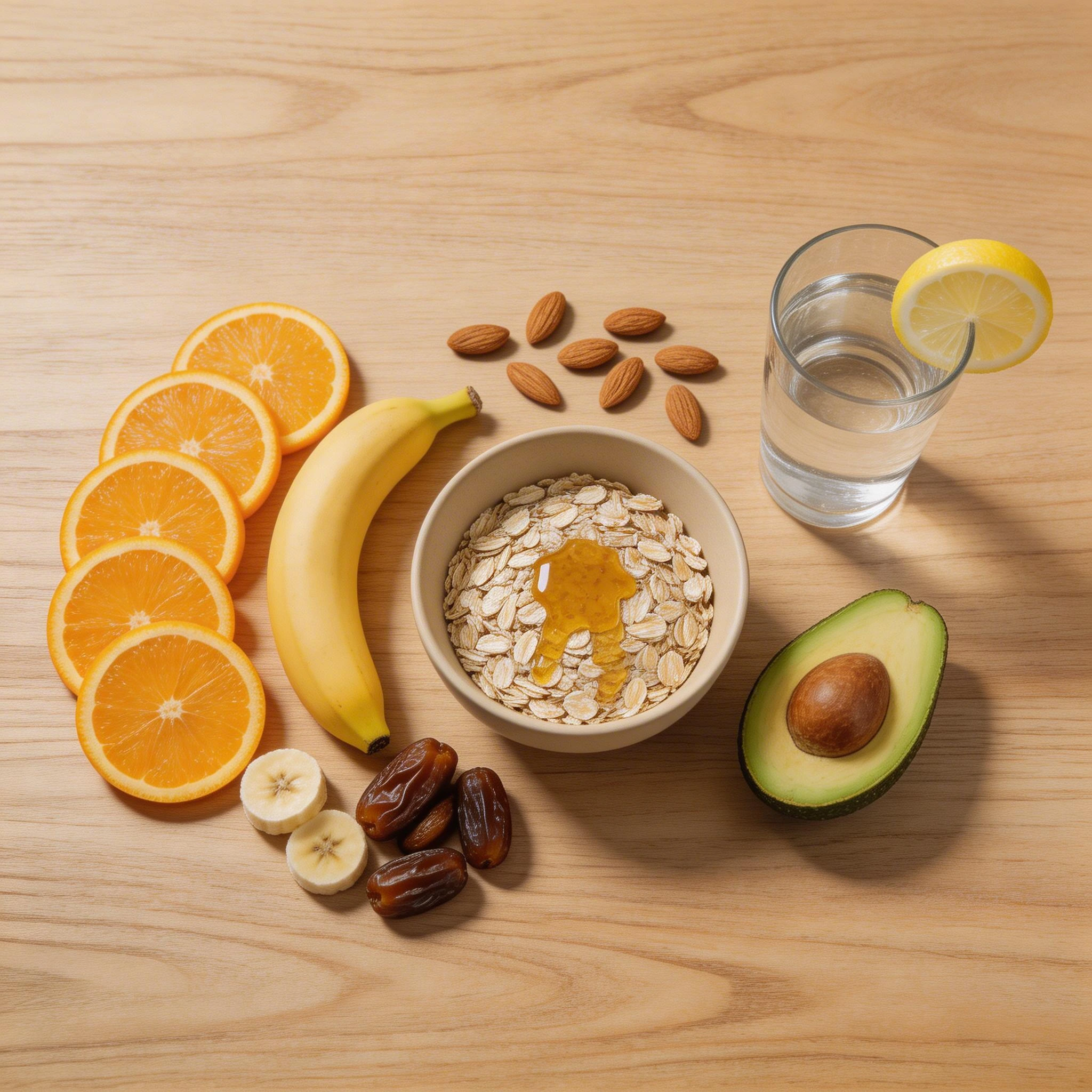
- Best foods: White rice, pasta, white bread, potatoes, bagels, pancakes, oatmeal, bananas, sports drinks, pretzels
- What to reduce: High-fiber foods (risk of GI distress and bloating), very fatty foods (slow digestion), large quantities of unfamiliar foods
- Hydration link: Each gram of glycogen stores 3 grams of water. You will gain 1-2 kg of water weight during the loading phase -- this is expected and beneficial
Choosing the Right Carbohydrates
During the 48-72 hour loading window, prioritize high-glycemic, low-fiber carbohydrates that digest rapidly and convert efficiently to glycogen. White rice and regular pasta are better choices than their whole-grain counterparts during this specific window. Whole grains are excellent for daily training, but the loading phase is the one time you should actively choose refined carbohydrates.
A practical plan for a 70 kg runner targeting 8g/kg/day (560g of carbs): breakfast -- large bowl of oatmeal with honey and banana; lunch -- double serving of pasta with simple tomato sauce; dinner -- more rice or noodles with lean protein; snacks throughout the day -- white bread with jam, bananas, pretzels, and sports drinks to fill remaining grams. Spreading intake across 5-6 smaller meals reduces bloating compared to three large ones.
Use the Carb Loading Calculator to get your exact daily carbohydrate target based on body weight.
The "Don't Overthink It" Approach
Some experienced runners take a simpler approach: eat normally but ensure every meal is carb-dominant (sandwich instead of salad at lunch, rice or pasta with dinner), and let the taper's reduced calorie burn naturally top off glycogen stores. This works well for runners who already eat a carb-rich diet. For runners aiming for a specific time goal, the structured 8-10g/kg approach leaves less to chance.
Pre-Race Meal: 3-4 Hours Before the Gun
Your pre-race meal tops off liver glycogen, which depletes overnight during sleep, and provides readily available fuel for the early kilometers. Aim for 1-4 grams of carbohydrates per kg of body weight, consumed 3-4 hours before the start.
Proven pre-race meals: oatmeal with banana and honey, white toast with jam, a bagel with peanut butter, rice with a small amount of protein. Keep it low-fiber, low-fat, and familiar. This is the single most important rule of pre-race eating: nothing new on race day.
Use the Pre-Race Meal Planner to calculate optimal meal composition and timing for your body weight and start time.
The Pre-Race Morning Routine
Plan to finish your meal at least 3 hours before the start. This allows time for digestion and a bathroom visit. If your race starts at 7:00 AM, set an alarm for 3:30 AM and eat by 4:00 AM. Coffee is fine for regular coffee drinkers -- it assists with pre-race bowel movements and provides caffeine. Avoid large quantities of fiber or fat in this window.
Race-Day Fueling: The 60-90g Per Hour Target
This is where most marathoners -- especially first-timers -- fail. The sports science is clear: consuming carbohydrates during exercise lasting more than 75 minutes significantly improves performance (Jeukendrup 2011). The running community has been slower to adopt this than cycling and triathlon, but the evidence is identical.
How Much to Consume
- Minimum effective: 30g carbohydrates per hour (roughly 1 standard gel every 45 minutes)
- Evidence-based target: 60g carbohydrates per hour (1 gel every 20-25 minutes, or equivalent from other sources)
- Maximum with dual-source carbs: 90g per hour using glucose + fructose blends -- requires trained gut (Jeukendrup 2010)
Calculate your personalized plan with the Gel Calculator.
When to Start Fueling
Take your first gel at 30-45 minutes into the race, then maintain a consistent schedule. The single most common fueling mistake is waiting until you feel tired to eat. By that point, glycogen depletion is already underway and much harder to reverse. Think of race fueling as maintenance, not rescue.
Kilometer-by-Kilometer Fueling Timeline
For a runner targeting a 4:00-4:30 marathon at ~60g carbs/hour:
- Start to 5 km: No fueling needed. Settle into target pace. Sip water at the first aid station if thirsty.
- 7-8 km (~35-40 min): First gel with water. Glycogen stores are still high, but this early gel ensures a steady supply of exogenous carbohydrate from the start.
- 14-15 km (~70 min): Second gel. Glycogen utilization is accelerating. Wash down with plain water -- not sports drink.
- 21 km (halfway, ~2:00-2:15): Third gel. Critical refueling point. Many runners feel good here and skip fueling -- this is a mistake. The second half demands more fuel, not less.
- 27-28 km (~2:40): Fourth gel. You are entering the danger zone where glycogen depletion accelerates exponentially. Consistent fueling up to this point is what prevents the wall at 30-35 km.
- 33-34 km (~3:15): Fifth gel. Many runners cannot stomach gels this late. If solid food tolerance drops, take a sip of sports drink instead, or dissolve the gel in water.
- 38-39 km: Optional sixth gel. If your gut can handle it, one final gel provides a small boost for the last 3-4 km. A caffeinated gel here delivers both mental and physical lift when fatigue is highest.
Adjust this timeline for your pace and course. Map your fueling stops against the actual aid station locations using the Aid Station Planner.
Practical Race-Day Fueling Tips
- Test everything in training -- never try a new gel brand, flavor, or real food option on race day. Practice your full fueling plan on at least 4-5 long runs.
- Take gels with plain water, not sports drink -- combining them creates a hypertonic solution in your stomach (too much sugar at once), which draws water into your gut and causes cramping and diarrhea.
- Sip gels slowly over 3-5 minutes -- taking a full gel in one swallow is a common GI trigger. Small mouthfuls over several minutes reduce gastric impact significantly.
- Use walk breaks for fueling -- taking gels while walking reduces the risk of choking and GI issues compared to fueling at full pace.
- Carry your own gels -- do not rely on aid station brands you have not tested. Some gels are labelled to be taken with water (like Gu); hydrogels such as Maurten are designed to go down without it, though Maurten itself says rehydrating still matters. Follow the packet, not habit.
- Set watch reminders -- program your GPS watch to alert you at gel intervals so you do not forget during the mental fog of racing.
Real Food Alternatives to Gels
Gels are convenient but not mandatory. The only requirement is hitting your carb target of 30-60g per hour from any easily digestible source. Proven alternatives used by community runners:
- Maple syrup in a soft flask with a pinch of salt -- simple, natural, well-tolerated
- Applesauce pouches -- squeeze pouches designed for toddlers work perfectly for runners with sensitive stomachs
- Dates (pitted) in a sandwich bag -- ~15g carbs per date, palatable texture
- Gummy candy (like Nerds Gummy Clusters, Swedish Fish, jelly babies) -- a cult following among budget-conscious runners
- Honey Stinger Waffles / Stroopwafels -- a solid option for early race kilometers when stomach tolerance is highest
- Flat Coca-Cola -- a late-race pick-me-up that delivers caffeine + sugar simultaneously; many ultramarathon veterans swear by it after km 30
- DIY gel: maltodextrin + fructose (1:0.8 ratio) + pinch of citric acid + water. Some runners report this costs a fraction of commercial gels with identical performance.
- Sports drink only: For runners who despise gels entirely, drinking sports drink at every aid station (30-40g carbs per 500 ml) can provide sufficient carbohydrate intake if the math works for your pace.
Hydration Strategy During the Marathon
Dehydration degrades performance, but overhydration (hyponatremia -- dangerously low blood sodium) can be life-threatening. The goal is to replace most but not all fluid losses. For a complete guide on hydration science, sweat rate testing, and electrolyte strategy, see our Hydration Guide for Runners.
- General guideline: 400-800 ml per hour, adjusted for temperature, humidity, and your sweat rate
- Hot conditions (above 25C / 77F): closer to 800 ml/hour with added sodium
- Cool conditions (below 10C / 50F): 400-500 ml/hour may be sufficient
- Electrolytes: Sodium replacement becomes critical in events over 2 hours, especially in heat. Most runners lose 500-1500 mg of sodium per liter of sweat.
Use the Hydration Calculator for personalized fluid and sodium recommendations, and the Electrolyte Calculator for sodium and potassium targets.
Caffeine as a Performance Tool
Caffeine is one of the most thoroughly researched legal performance aids for endurance athletes. A meta-analysis of over 40 studies shows caffeine improves endurance performance by 2-4% on average -- equivalent to 4-8 minutes in a 4-hour marathon. It works by blocking adenosine receptors in the brain (reducing perceived effort), increasing fat oxidation (sparing glycogen), and enhancing muscle contractility.
Practical Caffeine Strategy
- Pre-race dose: 3-6 mg per kg of body weight, consumed 30-60 minutes before the start. For a 70 kg runner: 210-420 mg, roughly 2-3 cups of strong coffee.
- Mid-race caffeine: Save caffeinated gels (typically 25-50 mg each) for the second half -- particularly after 25-30 km -- when fatigue is highest and the mental boost is most valuable.
- Caffeine withdrawal protocol: Some coaches recommend reducing intake 5-7 days before race day to increase sensitivity, then consuming your full dose on race morning. Evidence is mixed, but many experienced runners report a sharper effect.
- Side effects to watch: Increased heart rate, jitteriness, mild diuretic effect. If caffeine-sensitive, start at 2-3 mg/kg and test in training first.
Gastrointestinal Problems: The Most Common Race-Day Failure Mode
GI distress is the number one reason marathon fueling plans fail on race day. Research shows that 30-50% of endurance athletes experience some form of GI symptoms during competition -- ranging from mild bloating to vomiting or emergency bathroom stops. The good news: most GI problems are preventable.
Why GI Problems Happen During Marathons
When you run, blood flow is diverted from your digestive system to working muscles. At marathon pace, gut blood flow drops by 60-80%, severely impairing your stomach's ability to process food and absorb fluids. Adding concentrated sugar (gels) to an already compromised gut is what triggers nausea, cramping, and diarrhea in many runners.
The Gut Training Protocol
Your GI system adapts to fueling during exercise just like muscles adapt to running -- but only if you practice. Stellingwerff (2012) documented that elite marathon runners who gradually increased carbohydrate intake during training were able to tolerate 60+ g/hr during competition with fewer GI symptoms. The protocol:
- Start early in training -- begin practicing race nutrition on long runs at least 8-10 weeks before race day
- Start small, build up -- begin with 30g/hr and increase by 10g every 2-3 weeks toward your 60-90g target
- Train with your race products -- use the exact gels, drinks, and foods you plan to use on race day
- Simulate race conditions -- practice fueling at race pace, not easy pace, since gut tolerance drops at higher intensities
GI Prevention Rules
- Never mix gels with sports drink -- this is the most commonly violated rule and one of the most damaging. A gel plus sports drink creates a hypertonic solution that draws water into your gut.
- Know your gel's water rules -- some gels (like Gu) are labelled to be taken with water; hydrogels (like Maurten) do not need it to go down. Check the packet.
- Avoid fiber and fat on race morning -- both slow digestion and increase mid-race risk
- Skip NSAIDs -- ibuprofen increases gut permeability and is linked to higher GI bleeding rates during marathons. Do not take it before or during the race.
- Manage pre-race anxiety -- stress increases gut motility. Practice your race-morning routine during training to reduce surprises.
- Know your personal triggers -- common culprits include dairy, artificial sweeteners (sorbitol, mannitol), high-fructose gels, and excessive caffeine
Post-Race Recovery Nutrition
The 30-60 minute window after finishing is when your muscles are primed for glycogen replenishment and protein synthesis. The rate of glycogen storage is roughly 50% higher during this window than if you wait 2+ hours to eat.
Immediate Recovery (0-60 Minutes Post-Finish)
- Carbohydrates: 1-1.2g per kg of body weight to begin glycogen replenishment
- Protein: 20-30g to initiate muscle repair and reduce inflammatory response
- Fluids: 1.5 liters for every kg of body weight lost during the race
- Sodium: salty foods or an electrolyte drink to replace losses
A recovery drink or chocolate milk followed by a proper meal within 2 hours covers these needs well. Most race finish areas provide bananas, bagels, and sports drinks -- eat these even if you are not hungry, because appetite suppression after hard exercise is common.
The First 24-48 Hours
Recovery nutrition extends well beyond the finish line. Continue prioritizing carbohydrates (6-8g/kg/day) to fully restore glycogen, which can take up to 48 hours. Maintain elevated protein (1.6-2.0g/kg/day) to support muscle repair. Include anti-inflammatory foods: tart cherry juice, fatty fish, berries, and leafy greens. Avoid alcohol for at least 24 hours -- it impairs glycogen resynthesis, disrupts sleep quality, and slows muscle repair.
For a complete guide to daily eating patterns that support both training and recovery, read our Daily Nutrition Guide for Runners.
Nutrition Tools
- Carb Loading Calculator -- pre-race carbohydrate targets by body weight
- Gel Calculator -- race-day gel schedule and carb-per-hour plan
- Hydration Calculator -- fluid and electrolyte needs by conditions
- Wall Predictor -- glycogen depletion modeling by pace and fueling
- Calorie Calculator -- energy expenditure by distance and weight
- Pre-Race Meal Planner -- optimal pre-race meal timing and composition
- Aid Station Planner -- map fueling points along your course
- Electrolyte Calculator -- sodium and electrolyte replacement targets
Sources & References
- (2011). Nutrition for endurance sports. Journal of Sports Sciences.
- (2011). Carbohydrates for training and competition. Journal of Sports Sciences.
- (2010). Metabolic factors limiting performance in marathon runners. PLoS Computational Biology.
- (2012). Nutritional intake and gastrointestinal problems during competitive endurance events. Medicine & Science in Sports & Exercise.
- (2016). Position of the Academy of Nutrition and Dietetics, Dietitians of Canada, and the American College of Sports Medicine: Nutrition and Athletic Performance. Journal of the Academy of Nutrition and Dietetics.
- (2012). Case Study: Nutrition and Training Periodization in Three Elite Marathon Runners. International Journal of Sport Nutrition and Exercise Metabolism.