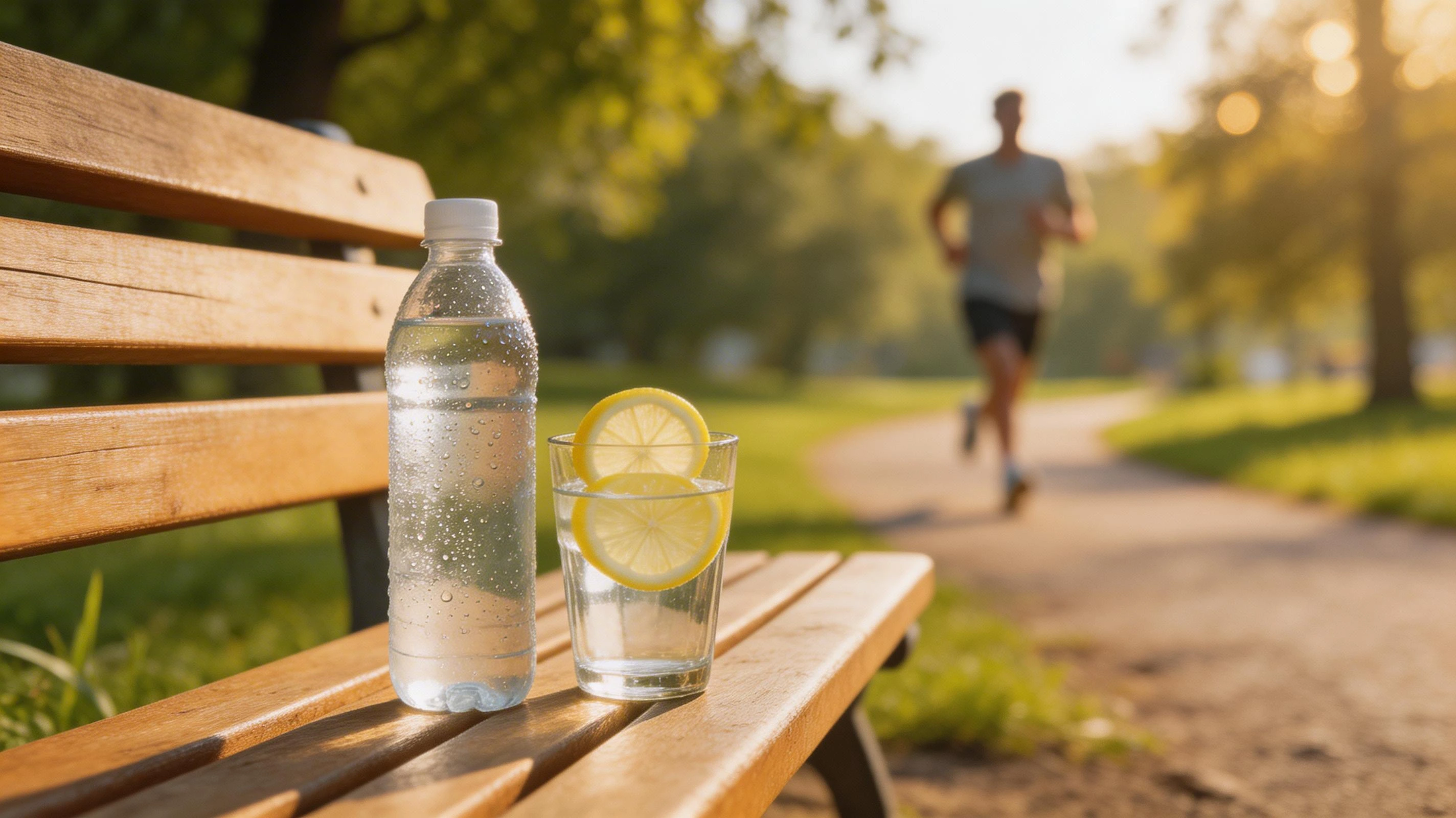
Runner Hydration: Sweat Rate, Electrolytes & Hyponatremia
How much water should runners drink? Drinking too much is more dangerous than dehydration. Test your sweat rate, time sodium, and avoid hyponatremia.
Key Takeaways
- Precision matters more than volume — Both dehydration and over-hydration harm performance; drinking to thirst is the safest strategy.
- Know your sweat rate — It varies from 400ml to 2,500ml per hour and is the foundation of any hydration plan.
- Hyponatremia is more dangerous than dehydration — Drinking too much water has killed marathon runners; slower runners are most at risk.
- Electrolytes become critical after 90 minutes — Sodium replacement (300-600mg/hour) maintains blood volume and prevents cramping.
Water makes up 60% of your body weight and is involved in every physiological process that keeps you running — from cooling your core temperature through sweat to transporting oxygen to your muscles via blood plasma. Lose too much, and performance drops. Drink too much, and you risk a condition far more dangerous than dehydration. Getting hydration right is about precision, not just volume.
This guide covers everything runners need to know: how much to drink daily, how to measure your personal sweat rate, what electrolytes actually do, and how to build a race-day hydration plan that keeps you safe and fast.
Daily Hydration for Runners
Before we talk about race-day hydration, we need to talk about the other 23 hours. Many runners show up to training already dehydrated because their daily fluid intake is insufficient. Chronic mild dehydration (even 1-2% body weight loss) impairs cognitive function, mood, and exercise tolerance.
How Much Should Runners Drink Daily?
The old "8 glasses a day" rule is not evidence-based. Actual needs depend on your body weight, climate, training volume, and sweat rate. A reasonable starting point:
- Baseline: 30-40ml per kg of body weight per day (a 70kg runner: 2.1-2.8 liters)
- Add for training: Replace approximately 80-100% of sweat lost during runs (see sweat rate testing below)
- Hot climates or high altitude: Add an additional 500-1,000ml per day
Use our Hydration Calculator for personalized recommendations based on your weight, training load, and conditions.
Hydration Check: Are You Drinking Enough?
Two simple self-tests work better than any formula:
- Urine color: Aim for pale straw yellow. Clear means you are over-hydrating. Dark amber means you need more. Check first thing in the morning for the most accurate reading.
- Morning body weight: Weigh yourself after using the bathroom, before eating or drinking. If your weight drops 1%+ from your baseline over consecutive days, you are chronically under-hydrated.
Sweat Rate Testing: Know Your Numbers
Sweat rate is the single most important number for building a hydration plan. It varies dramatically between individuals — from 400ml/hour to over 2,500ml/hour — and is influenced by genetics, fitness level, heat acclimatization, and environmental conditions.
How to Measure Your Sweat Rate
- Weigh yourself naked immediately before a run (weight A in kg)
- Run for 60 minutes at your typical training pace in typical conditions
- Track all fluid intake during the run (weight B in liters — 1 liter = 1 kg)
- Weigh yourself naked again immediately after the run, toweling off excess sweat (weight C in kg)
- Calculate: Sweat rate = (A - C) + B, expressed in liters per hour
Example: You weigh 70.0kg before, 68.8kg after, and drank 0.5L during the run. Sweat rate = (70.0 - 68.8) + 0.5 = 1.7 liters per hour.
Test in different conditions: your sweat rate in 30°C heat will be dramatically different from 10°C. Check conditions before any run with our Weather Score Calculator.
Electrolytes: More Than Just Salt
Sweat is not just water — it contains electrolytes, primarily sodium, but also potassium, magnesium, and calcium. Replacing water without replacing electrolytes dilutes your blood sodium concentration, which at extreme levels becomes dangerous.
Sodium: The Main Event
Sodium is the electrolyte you lose the most through sweat — typically 500-1,500mg per liter of sweat (it varies widely by individual). Sodium maintains blood volume, supports nerve function, and drives the thirst mechanism.
- Salty sweater signs: White stains on dark clothing, gritty skin after running, craving salty foods post-run
- For runs under 60 minutes: Water alone is sufficient
- For runs 60-90 minutes: An electrolyte drink or tablet provides insurance
- For runs over 90 minutes: Active sodium replacement becomes important — 300-600mg per hour
Use our Electrolyte Calculator for personalized sodium and electrolyte replacement targets.
Potassium, Magnesium, and Calcium
These play supporting roles in muscle contraction, nerve signaling, and bone health:
- Potassium: Lost in sweat but usually replaced through normal diet (bananas, potatoes, avocados). Supplementing during runs is rarely necessary.
- Magnesium: Involved in 300+ enzymatic reactions including energy production. Runners with frequent cramps should check magnesium levels. Food sources: nuts, seeds, dark leafy greens, dark chocolate.
- Calcium: Critical for bone density in high-impact athletes. Ensure daily intake through dairy or fortified alternatives, not race-day supplements.
Race-Day Hydration Strategy
Your race-day plan should be built on your sweat rate data, the weather forecast, and the aid station map. Do not wing it.
Before the Race
- Pre-hydrate: Drink 5-7ml per kg of body weight 2-4 hours before the start (350-500ml for a 70kg runner)
- Stop drinking 30 minutes before the gun: This allows time for your kidneys to process excess fluid
- Sodium preloading: For hot races, consuming extra sodium (500-700mg) with your pre-race fluids helps retain water and expand blood plasma volume
During the Race
- Drink to thirst: Current sports science consensus says thirst is the best guide — it has evolved over millions of years for exactly this purpose
- General target: 400-800ml per hour, with the exact amount guided by conditions and your sweat rate
- Hot races (>25°C): Lean toward 600-800ml/hour, with electrolytes at every other aid station. Use our Weather Score to assess conditions.
- Cool races (<15°C): 300-500ml/hour is often sufficient; do not force fluids
- Aid station strategy: Plan which stations you will use with the Aid Station Planner. You do not need to drink at every one.
After the Race
- Weigh yourself: The difference between pre- and post-race weight tells you exactly how much fluid you need to replace
- Replace 150%: Drink 1.5 liters for every kg lost (because not all fluid is retained immediately)
- Include sodium: Salty foods or electrolyte drinks accelerate rehydration by improving fluid retention
The Danger of Over-Hydration: Hyponatremia
This is the most important section of this guide. Exercise-associated hyponatremia (EAH) — dangerously low blood sodium caused by drinking too much water — has killed marathon runners. It is more dangerous than dehydration for most recreational runners.
Who Is at Risk?
- Slower runners (4+ hour marathoners) who are on the course longer and pass more aid stations
- Smaller-framed runners who drink the same absolute volume as larger runners
- Over-hydrators who drink on a schedule rather than to thirst
- First-time marathoners who are anxious and drink excessively at every aid station
Warning Signs
Hyponatremia symptoms mimic dehydration, which makes it dangerous — runners often respond by drinking more water, making it worse:
- Nausea and bloating
- Headache and confusion
- Swollen hands and feet (rings feel tight)
- Weight gain during the race (you should lose weight, not gain it)
- In severe cases: seizures and loss of consciousness — this is a medical emergency
Prevention
- Drink to thirst, not to a schedule: Your body knows when it needs water
- Include sodium: Electrolyte drinks or salt capsules during runs over 90 minutes
- Know your sweat rate: Never drink more per hour than you sweat per hour
- Weigh yourself before and after training runs: If you gain weight during a run, you are drinking too much
Hydration in Different Conditions
Hot and Humid
High temperatures increase sweat rate by 50-100%. Humidity reduces sweat evaporation, impairing cooling. Adjust by:
- Pre-hydrating more aggressively (7-10ml per kg)
- Increasing sodium intake (500-700mg per hour)
- Using ice, cold water, or sponges for external cooling
- Accepting a slower pace — even elite athletes slow down in heat
Cold Weather
You still sweat in cold weather — you just do not notice it as much because sweat evaporates faster in dry cold air. Cold also blunts the thirst mechanism. Risks include:
- Dehydration from reduced thirst perception
- Increased respiratory water loss (visible breath = water leaving your body)
- Practical issue: not wanting to carry or drink cold water
Set hydration reminders in cold weather rather than relying on thirst alone.
Altitude
Higher altitude means drier air, faster breathing, and increased urine production — all of which accelerate fluid loss. At altitude above 2,000m:
- Increase daily fluid intake by 500-1,000ml
- Monitor urine color more frequently
- Allow 1-2 weeks of acclimatization before hard training
Building Your Personalized Hydration Plan
- Test your sweat rate in various conditions (hot, cool, humid, dry)
- Identify your electrolyte needs — are you a salty sweater? Use our Electrolyte Calculator
- Practice your race-day plan during long training runs using the same fluids and timing
- Check the weather on race week with our Weather Score Calculator and adjust accordingly
- Know the aid station map — use the Aid Station Planner to mark your drinking stations
Hydration Tools
- Hydration Calculator — personalized daily and race-day fluid targets
- Electrolyte Calculator — sodium and electrolyte replacement needs
- Weather Score Calculator — assess running conditions for hydration planning
- Aid Station Planner — map fueling and hydration points along your course
- Calorie Calculator — energy expenditure and fluid loss estimation
Hydration is one piece of the nutrition puzzle. For a complete race-day fueling plan including gels and carbohydrates, see our Marathon Nutrition Guide. Gels also differ in whether they need water to go down: some brands say none is needed, others tell you to take theirs with a mouthful of water, and the energy gel buying guide lists each product's official water guidance. For distance-specific fueling strategies from 5K to marathon, our Race Fueling Strategy Guide provides detailed protocols.
Sources & References
- (2007). Exercise and Fluid Replacement. Medicine & Science in Sports & Exercise.
- (2015). Statement of the Third International Exercise-Associated Hyponatremia Consensus Development Conference. Clinical Journal of Sport Medicine.
- (2007). Fluid balance and hydration habits of elite female runners during training and competition. International Journal of Sport Nutrition and Exercise Metabolism.