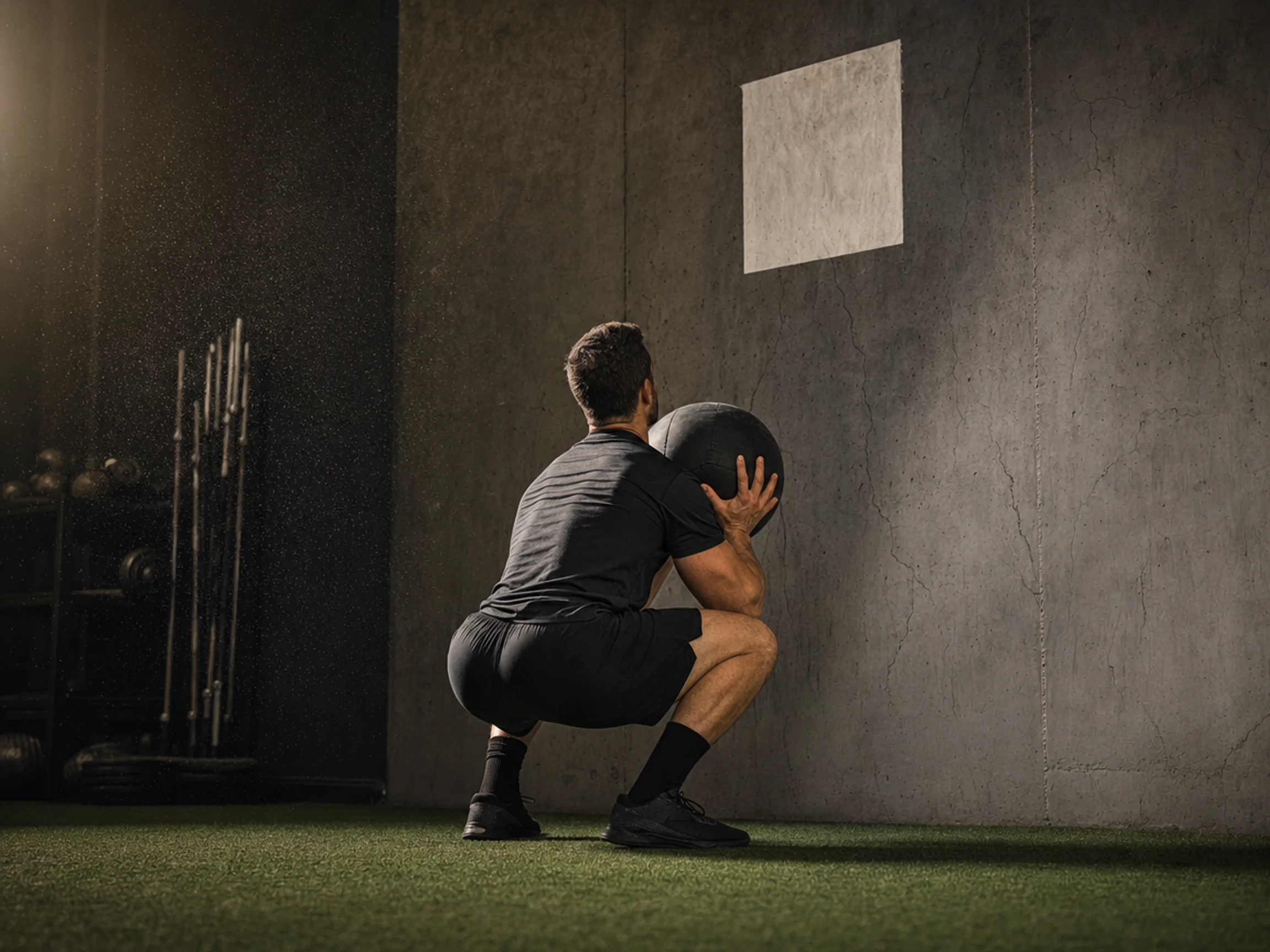
What it checks, and how a rep is scored
The checker does one thing, and does it well: it decides whether your hip drops below your knee on every rep — the depth standard HYROX judges apply under Rulebook 8.8. It walks the clip frame by frame at up to 24 fps, so a fast rep at the bottom is never skipped between frames, finds the lowest point of each squat, and marks that rep counted, grey zone, or no rep.
That is a narrower question than 'was it a good rep', and deliberately so. A throw can hit the target and still be waved off because the squat was shallow — depth is the miss a target-focused eye skips, and the one no-reps pile up on once your legs are cooked.
Every rep lands in one of three buckets:
- Counted — the hip reached parallel or dropped past it.
- Grey zone — up to about 5% short of parallel, with the hip just above the line. These count as valid, on purpose: a real judge gives a borderline rep the benefit of the doubt, and so does the tool.
- No rep — the hip stayed above the knee by more than the grey margin.
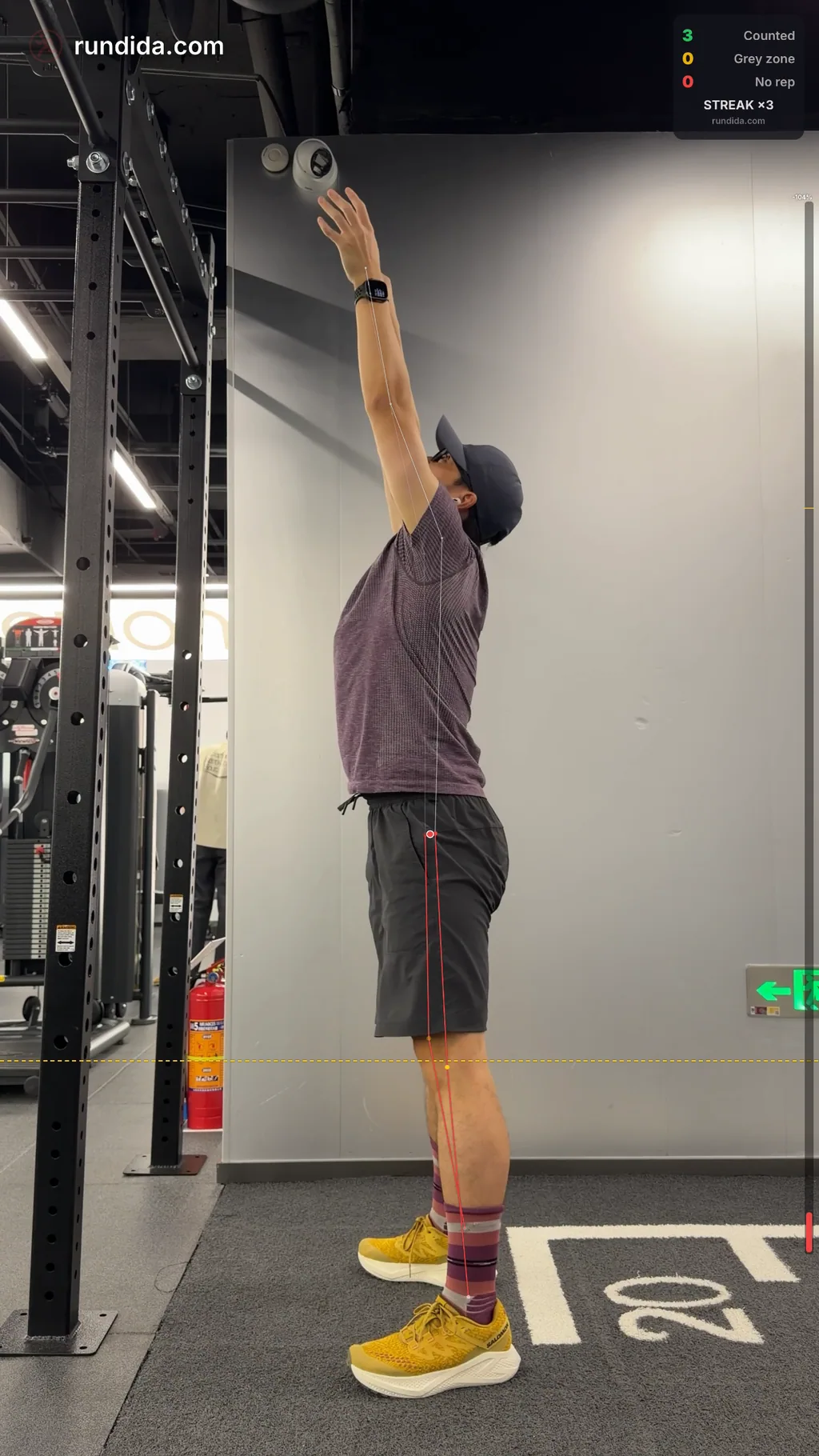
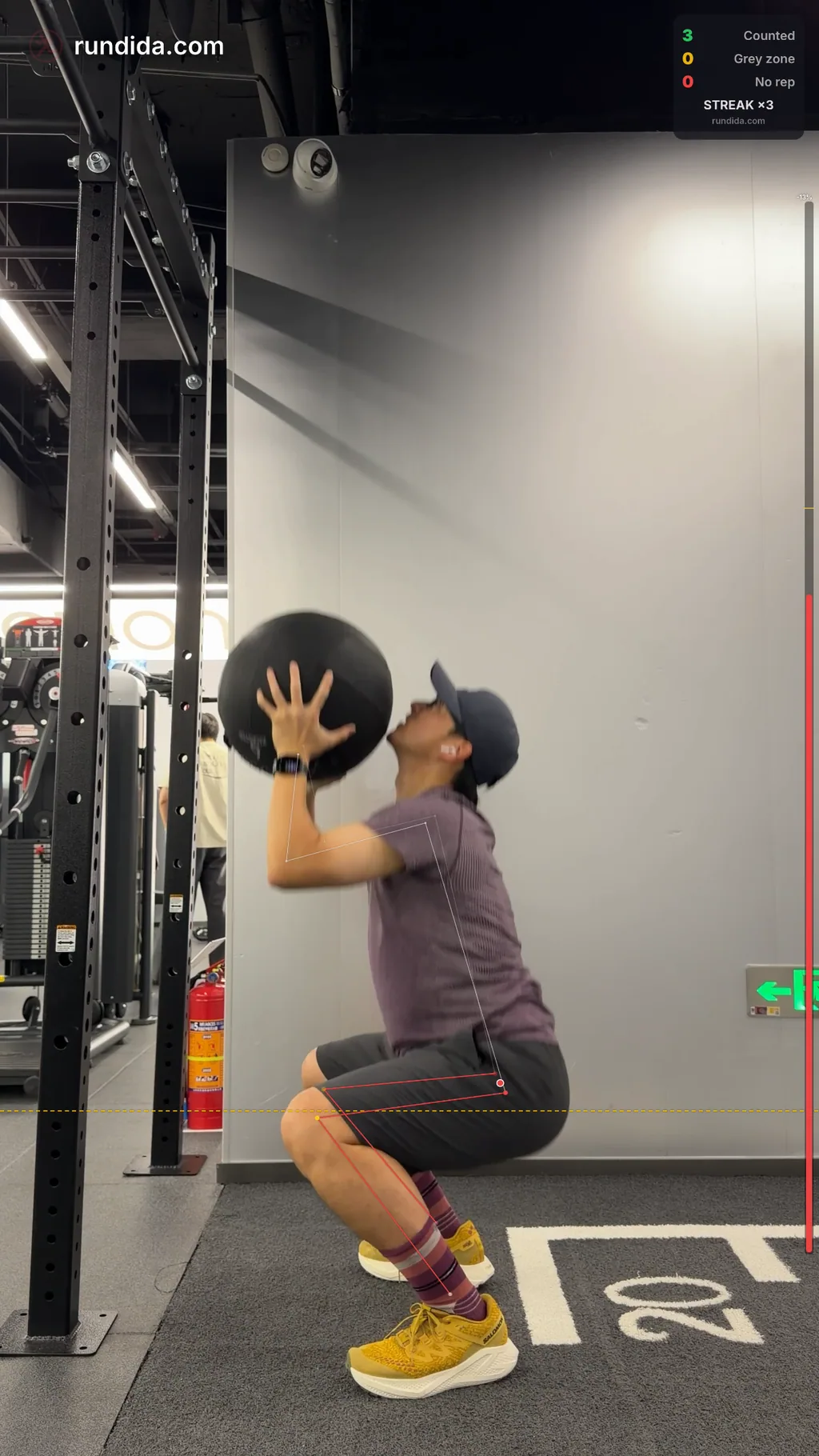
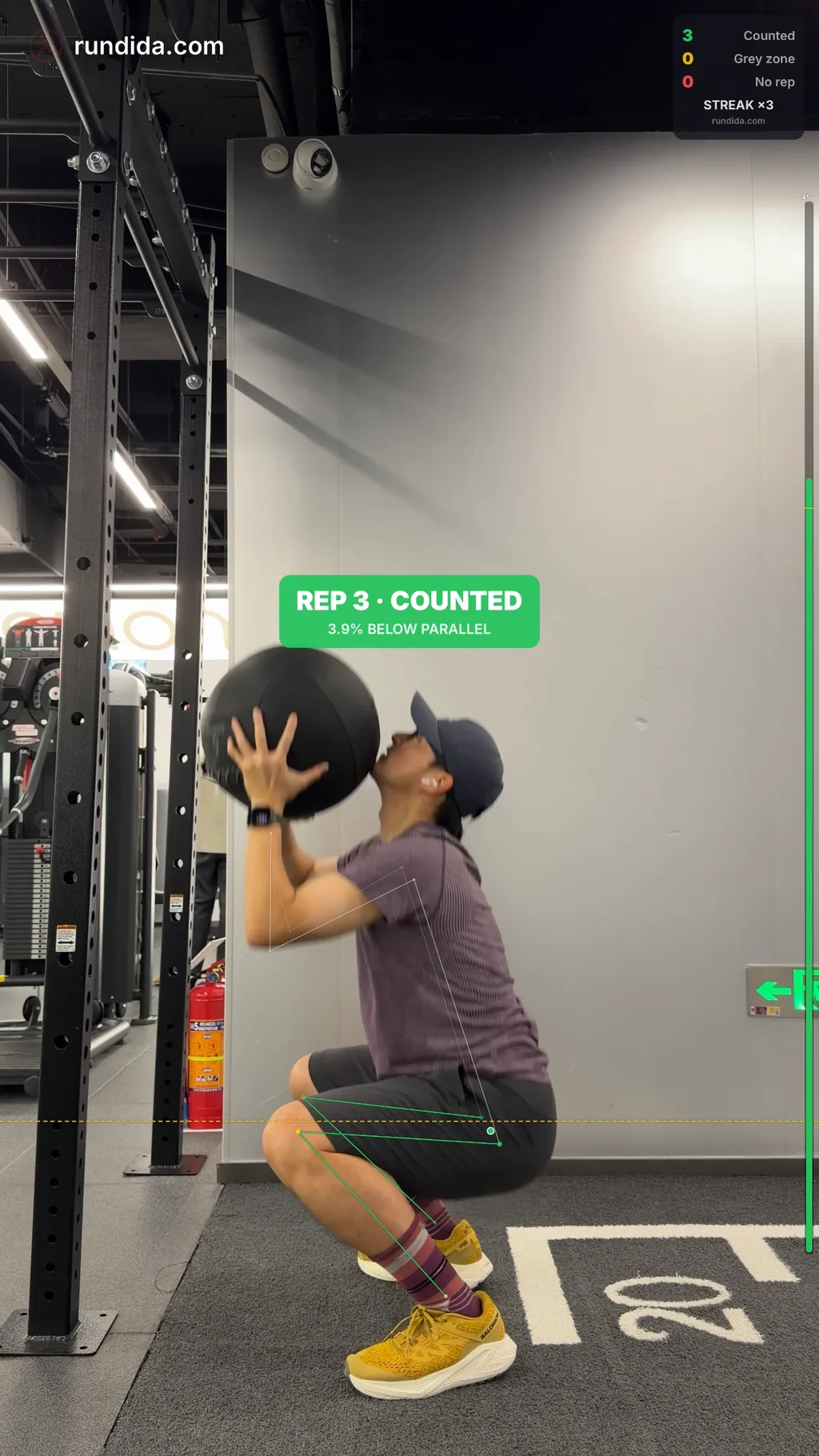
Each rep also shows a depth figure — how far past parallel you reached, as a percentage — so a 'grey' call is a number you can see, not a guess. Underneath, pose estimation (MediaPipe, 33 body landmarks) supplies the hip and knee positions the maths runs on; the judgement itself is plain geometry — the same hip-below-knee test a human judge makes by eye. It's the same depth standard applied at every HYROX race on the calendar.
Where to trust it, and where to trust your eyes
Treat it as a sharp second opinion, not an official verdict. The call is only as clean as what the camera saw: a slightly high or angled camera compresses depth and can read a good rep as shallow, and loose shorts over the knee blur the exact line. When part of your body is hidden from the lens, the tool marks that rep low confidence rather than force a call it cannot back up — so a borderline grey rep filmed off-angle is a cue to re-film side-on, not a reason to argue with a judge.