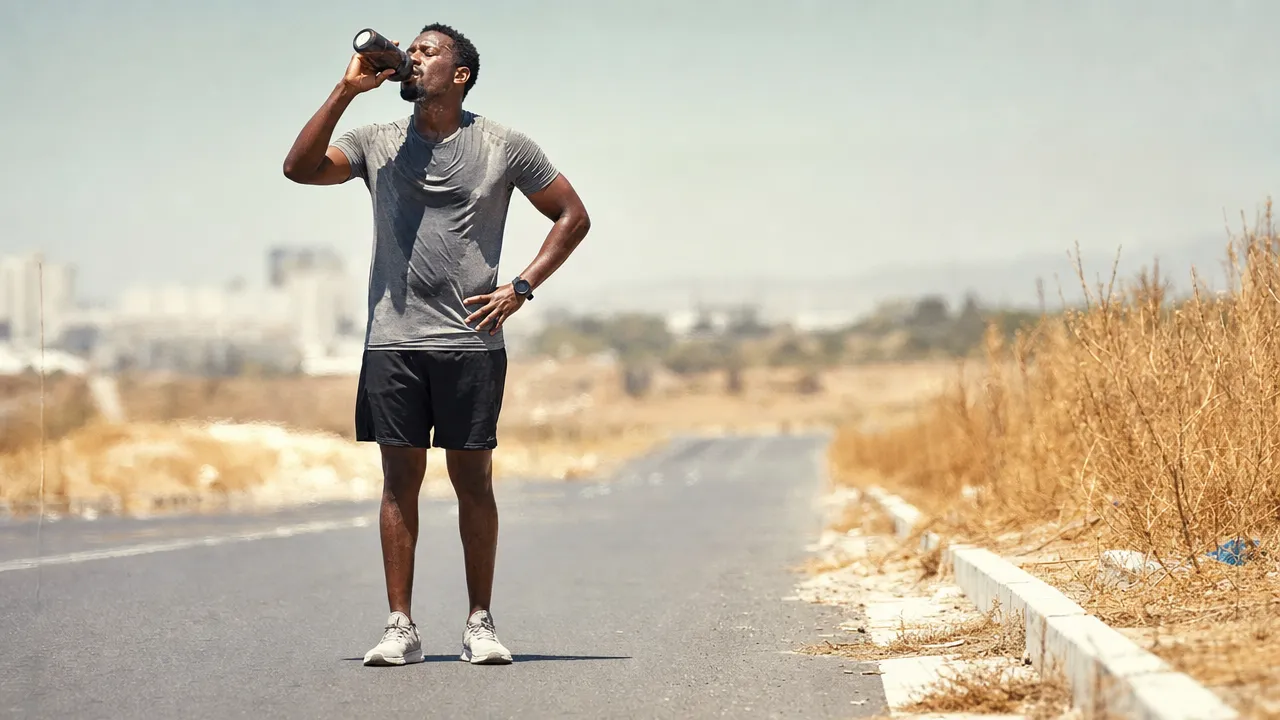
How Hot Is Too Hot to Run? Heat Safety & Pace Guide
How hot is too hot to run? A °C/°F threshold table, heat-illness warning signs, pace-slowdown percentages, and free calculators for safe summer running.
Evidence-based Health & Recovery guides to help you train smarter and run better.
How hot is too hot to run? A °C/°F threshold table, heat-illness warning signs, pace-slowdown percentages, and free calculators for safe summer running.
Why do 60% of running injuries stem from training errors? The 5 most common injuries, prevention exercises, the 10% rule, and when to see a doctor.
Do rest days actually make you faster? Research shows 23% greater gains with structured recovery. Learn active vs passive rest and how to schedule rest days.
Are you overtraining or just tired? Spot the warning signs of overtraining syndrome early with HRV monitoring and the 80/20 rule to protect your running.
Sleeping under 7 hours raises injury risk by 70%. Sleep optimization strategies for runners: nap timing, training schedule tips, and pre-race insomnia facts.
How long to regain running fitness after a break? Comeback plans for 2 weeks to 6 months off with detraining science, run-walk protocols, and pace expectations.
Should you stop running when your knee hurts? Evidence-based runner's knee and ITBS guide with PEACE & LOVE protocol, hip strength, and a stepwise return plan.
Running but not losing weight? Get an 8-week walk-run plan, deficit math, plateau fixes, and why running cuts belly fat even when the scale won’t move.
You may not need to stop running: the 3-check pain rule, insertional vs mid-portion differences, and the 12-week loading rehab with the strongest evidence.
One full rest day per week is the minimum for recreational runners; two is typical for masters runners, those carrying injury history, or anyone running 5+ days. Cross-training (cycling, swimming) on the second "rest" day is fine if you keep effort easy. See rest days for runners.
The classic pattern: dull pain around or behind the kneecap, worse going downhill or down stairs, often appearing after a sudden mileage jump or new shoes. Sharp pain, swelling, or instability are different injuries — see a physio. The runner's knee guide covers diagnosis criteria and the conservative treatment progression.
Resting heart rate elevated 5-10 bpm above baseline for 3+ consecutive mornings, sleep quality dropping despite fatigue, mood/motivation drop, and pace at the same heart rate getting slower. Any single sign can be noise; three together is the cue to cut volume by 30-50% for a week. The overtraining prevention guide covers detection and recovery protocols.
The standard rule: pain that decreases as you warm up and stays below 3/10 is usually safe to run through with reduced volume. Pain that worsens during a run, alters your gait, or persists after the run requires a break. The injury prevention guide covers the decision tree and when to seek a physio.
Yes — and the effect is larger than most runners assume. Sleep restriction below 6 hours/night for a week reduces time-to-exhaustion by 10-30% in controlled studies (Fullagar 2015 meta-analysis). For marathoners, the cumulative deficit during a 16-week training block compounds: poor sleep blunts adaptation, raises injury risk, and degrades fueling decisions on long runs. See sleep and running performance.
Rule of thumb: weeks off ≈ weeks needed to return safely. After 2 weeks off, expect 2 weeks to rebuild. After 6+ weeks, plan 8-10 weeks of progressive return — the cardiovascular system rebounds faster than tendons and joints, so your cardio will feel normal before your structures actually are. The return-to-running guide has week-by-week protocols.
The single biggest predictor of marathon performance is consistency — and the single biggest threat to consistency is injury. Surveys of recreational runners put annual injury rates between 30% and 75% depending on training volume and inclusion criteria; for first-time marathoners with thin base mileage, the rate climbs higher still. The economics are unforgiving: six months of lost training to a single overuse injury wipes out the gains from two years of patient work.
This category collects 8 guides on the prevention side of that equation — runner's knee (patellofemoral pain syndrome), overtraining symptoms most runners ignore until it's too late, the actual physiological purpose of rest days, sleep as a recovery multiplier, and how to safely return to running after a layoff. The guidance is biased toward early intervention: any niggle that lasts three runs is no longer a niggle, and the published return-to-run protocols (Buist 2010, Nielsen 2014) all start with cutting volume the moment a symptom appears.
If you're currently healthy, start at the rest-day and overtraining guides — these are the levers that prevent injury before it happens. If you're already hurt, jump straight to the specific injury (knee is the most common) or the return-to-running protocol. The training load calculator is the single most useful tool for spotting weeks that ramp too fast — the most common mechanism behind overuse injury.