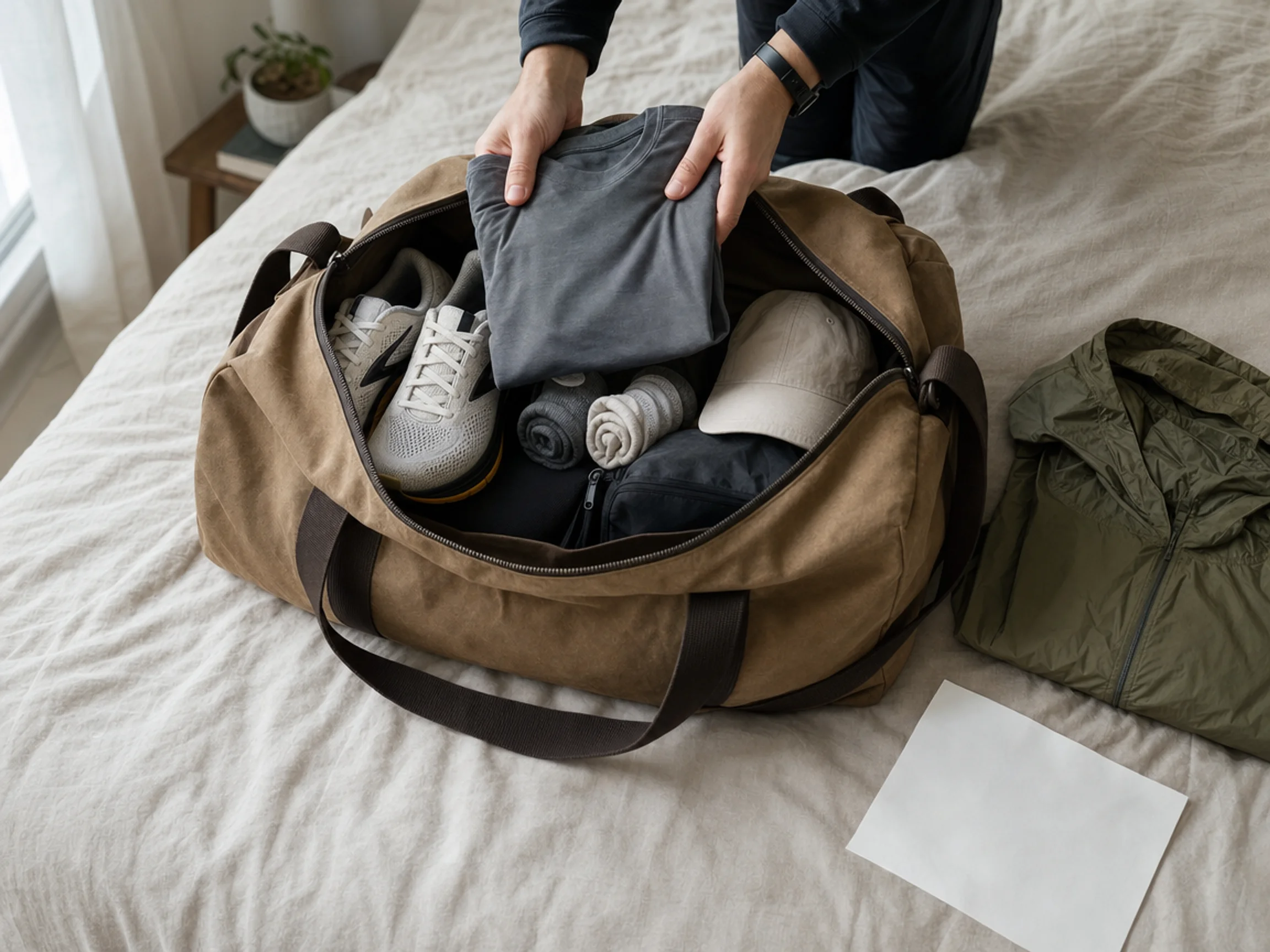
How the Race Packing List Generator Works
The Race Packing List Generator creates a personalized, interactive packing checklist based on six key variables: your race distance, expected weather temperature range, rain probability, whether you are traveling, accommodation type, and race start time. Unlike generic one-size-fits-all packing lists, this tool builds a focused inventory of exactly what you need — and omits what you do not.
Select your race distance from 5K through Ultra Marathon. Each distance triggers different gear, nutrition, and recovery requirements. A 5K runner does not need energy gels or a hydration vest; an ultra runner needs headlamps, solid food, and potentially trekking poles. Choose your expected weather across five levels from cold to hot, and indicate whether rain is expected. These selections add or remove 8-15 weather-specific items across all categories, from throwaway start-line layers in cold weather to sunscreen and electrolyte supplements in heat.
The travel toggle unlocks an entire additional category — identification, accommodation logistics, electronics, and comfort items that local runners would never think to pack. If you are camping for a trail ultra, the list adapts further with tent, sleeping, and meal preparation items. Every generated item is marked as either Essential (forgetting it could ruin your race) or optional (nice to have). The interactive checkboxes persist across browser sessions using localStorage, so you can check off items over several days of preparation and return to see your progress.
The Science of Race Preparation and Checklists
Race-day packing is not merely an organizational task — it is a cognitive performance strategy. Dr. Atul Gawande's research in The Checklist Manifesto demonstrated that structured checklists reduce errors by 36% in high-stakes environments, even among highly trained professionals. Race morning is one of the highest-stress scenarios a recreational athlete faces: early alarms, disrupted routines, performance anxiety, and logistical complexity all compete for limited cognitive bandwidth.
Research by Baumeister and colleagues on ego depletion shows that every decision you make on race morning — "Did I pack gels? Where is my bib? Should I wear long sleeves?" — consumes the same mental energy needed for pacing discipline at mile 20. By offloading these decisions to a pre-made checklist, you preserve willpower for when it matters most during the race itself.
The Zeigarnik effect — the tendency to remember uncompleted tasks more vividly than completed ones — explains why an unchecked list item nags at you. As you check off items, your brain releases them from active processing, creating what psychologists call cognitive closure. The progress bar in this tool provides visual feedback that triggers small dopamine rewards with each completed item, making preparation feel satisfying rather than overwhelming.
Distributed preparation (packing over several days rather than one frantic session) leverages the spacing effect from memory research. You are more likely to notice a missing item when you return to the list after sleeping on it than when you rush through everything in 20 minutes the night before. The localStorage persistence in this tool is specifically designed to support this research-backed approach to preparation.
Weather-Specific Packing Guide for Runners
Weather is the single most impactful variable in race preparation. A 20-degree temperature swing between your last training run and race morning can change your clothing, nutrition, hydration, and gear requirements entirely.
Hot Weather Packing (Above 75F / 24C)
Heat requires the most significant packing changes. Add sport-formula sunscreen (SPF 30+, sweat-resistant), a light-colored visor (not a full cap, which traps heat), extra electrolyte tablets, additional pre-race water, and a cooling towel for post-race. Nutrition shifts toward higher sodium intake — you lose 500-1500mg of sodium per hour of sweating, and plain water cannot replace it. Research by Ross et al. (2011) showed that pre-cooling strategies can improve endurance performance in heat by up to 10%.
Cold Weather Packing (Below 40F / 5C)
The challenge in cold weather is the gap between start-line conditions and mid-race body temperature. Pack arm sleeves (removable mid-race), lightweight touchscreen-compatible gloves, an ear warmer, and a moisture-wicking base layer. Add throwaway layers — old clothes you can discard at the start line. Most races collect discarded clothing for charity. A neck gaiter pre-warms inhaled air, which can prevent exercise-induced bronchoconstriction.
Rain Packing
Rain dramatically increases chafing risk. Pack a disposable poncho for pre-race waiting, a waterproof phone case or ziplock bags, an extra pair of dry socks, and a brimmed cap to keep rain off your face. Apply double your normal anti-chafe coverage. Keep race shoes dry until the last moment by wearing old shoes to the venue. Despite the discomfort, many runners actually perform well in light rain — the cool moisture acts as natural temperature regulation.
Race Travel Packing Strategy
Traveling to a race introduces a layer of logistical complexity that local runners never face. The key principle is redundancy for critical items: if losing an item would prevent you from racing, carry a backup or keep it in your carry-on luggage rather than checked bags.
Non-Negotiable Travel Items
Race bib and timing chip (if picked up at expo), government-issued photo ID, race confirmation email (printed and saved digitally), phone charger and portable power bank, health insurance card, and cash for parking or food vendors. Pack these items in your personal bag, never in checked luggage.
Accommodation-Specific Packing
Hotel stays are the simplest — most essentials are provided. For Airbnb stays, verify check-in instructions and access codes before race morning. Confirm whether towels and basic toiletries are provided. For camping (common at ultra trail races), your packing list expands significantly: tent, sleeping bag, sleeping mat, headlamp, meals, cooking supplies, and wet wipes for hygiene when showers are unavailable.
Arrival Strategy
Arrive at your race destination at least one full day before the event. This allows time for expo pickup, course preview driving, restaurant scouting for pre-race dinner, and most importantly — a full night of sleep in your race-location bed. Trying to combine travel day with race morning is one of the most common mistakes traveling runners make. The mental and physical stress of travel compounds with race-day anxiety, and sleep quality in an unfamiliar bed on the first night is typically poor.
Pack a foam roller or lacrosse ball for post-travel muscle work, and comfortable flip-flops or recovery sandals for walking around the expo without fatiguing your legs.