Chicago · October 11, 2026 · A personal race story
My first Chicago Marathon: 3:51:19, and everything around it
In this story
It's been a little over two weeks since I ran the Chicago Marathon. I've finally sat down to write about the trip.
I finished in 3:51:19. A PB, but short of the 3:45 I had hoped for. My legs cramped three times near the end, and after the finish I needed a wheelchair to get to the medical tent.
Still, when I think about the whole trip, I'm very glad I went.
I said yes in a few seconds
Around the middle of August, I was at home watching a film on a Saturday night when my running club leader messaged me. There was a sponsor entry for Chicago. Did I want it? I would probably need to pay for my own flights and hotel.
Yes. Of course I wanted it!
It took me a few seconds to reply. I usually think of myself as an ENTJ. That evening, the planning part of my personality seems to have taken a break.
It was Chicago. I'd entered enough popular races to know that applying and getting a place were two different things. I even thought this might be my only chance to run it.
After saying yes, I started thinking about the practical problems. My US visa had expired. There were about eight weeks left to prepare.
I was still exercising: strength training three times a week, and preparing for HYROX. Running was another matter. From June through August, I was only running about 50 km a month. I'd run a half marathon earlier in the year in a little over 1:45 and felt I had something left. My only full marathon was Shanghai in 2024, in 4:08:31.
Based on that half, I chose 3:45 as a target I wanted to try for. Then I used the AI plan tool on RunDida to make an eight-week plan and started following it.
A long run that felt like a practice exam
The first few weeks went quite well. The distance was building gradually, and I was still excited that I was actually going to Chicago.
The longer runs were harder.
On one planned 26 km run, I stopped at 14 km. It was a hot afternoon, and I hadn't arranged water properly. Other days it rained. Sometimes I just found it hard to keep going on my own. I did go out for those runs, but I didn't always finish the distance.
The plan had a fallback: if I didn't complete both of the longest runs, I should change the target to 3:55. I remembered that. I still wanted to try for 3:45.
Three weeks before the race, I did a proper rehearsal. Sunday morning, eight o'clock, race clothes and shoes. Breakfast, gels and salt products were all arranged as I planned to use them in Chicago. I went to a school track so I wouldn't need to stop along the route.
I ran 32 km in 2:50.
The early part felt good. Later, I was struggling to hold the pace, slipping to around 5:30–6:00/km. I tried lifting my knees and speeding up. I could do it briefly, but I couldn't keep it going.
After that run, I thought I could finish the marathon. I wasn't so sure about 3:45 anymore.
I was putting effort into the preparation outside the runs too. I tried different gels and carbohydrate drinks, along with beetroot powder and tart cherry juice, and didn't drink alcohol during those weeks. I really wanted to run well.
My eight-week training plan
A post-race reconstruction using historical inputs, not the original pre-race file or a record of completed training. All 56 days are kept here for context.
- A goal 3:45 · 5:20/km
- B goal 3:55 · 5:34/km
View all eight weeks (56 days)
W1 · Base 36 km
- Mon
- Rest
- Tue
- Easy run 4 km
- Wed
- Club run 8 km, easy
- Thu
- Easy run 4 km
- Fri
- Rest
- Sat
- Rest
- Sun
- Long run 20 km at 5:34–6:39/km
W2 · Base 43 km
- Mon
- Rest
- Tue
- Easy run 6 km, then 4–6 strides
- Wed
- Club run 8 km, easy
- Thu
- Easy run 6 km
- Fri
- Rest
- Sat
- Rest
- Sun
- Long run 23 km at 5:34–6:39/km
W3 · Build 47 km
- Mon
- Rest
- Tue
- Warm-up 2 km + threshold 4 km at 4:50–5:04/km + cool-down 1 km
- Wed
- Club run 8 km, easy
- Thu
- Easy run 6 km
- Fri
- Rest
- Sat
- Rest
- Sun
- Long run 26 km at 5:34–6:39/km
W4 · Build 52 km
- Mon
- Rest
- Tue
- Easy run 5 km, then 4–6 strides
- Wed
- Club run 8 km, easy
- Thu
- Easy run 5 km
- Fri
- Easy run 5 km
- Sat
- Rest
- Sun
- Long run 29 km, final 3 km at goal marathon pace, 5:20/km
W5 · Peak 58 km
- Mon
- Rest
- Tue
- Warm-up 2 km + threshold 5 km at 4:50–5:04/km + cool-down 1 km
- Wed
- Club run 8 km, easy
- Thu
- Easy run 5 km
- Fri
- Easy run 5 km
- Sat
- Rest
- Sun
- Long run 32 km, with km 20–28 at goal marathon pace, 5:20/km
W6 · Peak 64 km
- Mon
- Rest
- Tue
- Warm-up 2 km + 6 km at goal marathon pace, 5:20/km + cool-down 1 km
- Wed
- Club run 8 km, easy
- Thu
- Easy run 6 km
- Fri
- Easy run 6 km
- Sat
- Rest
- Sun
- Long run 35 km; final 5 km at marathon pace optional, depending on how the legs feel
W7 · Taper 40 km
- Mon
- Rest
- Tue
- Easy run 6 km, final 3 km at goal marathon pace, 5:20/km
- Wed
- Club run 8 km, easy
- Thu
- Easy run 6 km
- Fri
- Rest
- Sat
- Rest
- Sun
- Long run 20 km, final 4 km at goal marathon pace, 5:20/km
W8 · Race week 16–19 km before race + marathon
- Mon
- Rest
- Tue
- Easy run 6 km, then 4–6 strides
- Wed
- Club run 6 km, easy
- Thu
- Easy run 4 km, final 2 km at goal marathon pace, 5:20/km
- Fri
- Rest
- Sat
- Rest, or an optional very easy 3 km
- Sun
- Race day: marathon, 42.195 km
Scroll the calendar sideways, or switch to the daily view.
| Mon | Tue | Wed | Thu | Fri | Sat | Sun |
|---|---|---|---|---|---|---|
Rest |
Easy run 4 km |
Club run 8 km, easy |
Easy run 4 km |
Rest |
Rest |
Long run 20 km at 5:34–6:39/km |
Rest |
Easy run 6 km, then 4–6 strides |
Club run 8 km, easy |
Easy run 6 km |
Rest |
Rest |
Long run 23 km at 5:34–6:39/km |
Rest |
Warm-up 2 km + threshold 4 km at 4:50–5:04/km + cool-down 1 km |
Club run 8 km, easy |
Easy run 6 km |
Rest |
Rest |
Long run 26 km at 5:34–6:39/km |
Rest |
Easy run 5 km, then 4–6 strides |
Club run 8 km, easy |
Easy run 5 km |
Easy run 5 km |
Rest |
Long run 29 km, final 3 km at goal marathon pace, 5:20/km |
Rest |
Warm-up 2 km + threshold 5 km at 4:50–5:04/km + cool-down 1 km |
Club run 8 km, easy |
Easy run 5 km |
Easy run 5 km |
Rest |
Long run 32 km, with km 20–28 at goal marathon pace, 5:20/km |
Rest |
Warm-up 2 km + 6 km at goal marathon pace, 5:20/km + cool-down 1 km |
Club run 8 km, easy |
Easy run 6 km |
Easy run 6 km |
Rest |
Long run 35 km; final 5 km at marathon pace optional, depending on how the legs feel |
Rest |
Easy run 6 km, final 3 km at goal marathon pace, 5:20/km |
Club run 8 km, easy |
Easy run 6 km |
Rest |
Rest |
Long run 20 km, final 4 km at goal marathon pace, 5:20/km |
Rest |
Easy run 6 km, then 4–6 strides |
Club run 6 km, easy |
Easy run 4 km, final 2 km at goal marathon pace, 5:20/km |
Rest |
Rest, or an optional very easy 3 km |
Race day: marathon, 42.195 km |
- Archive condition: switch to the B goal if both the 32 km and 35 km runs were not completed. Completing them does not guarantee the A goal.
- Wednesday club runs were planned as easy. If they became marathon-pace runs, the Tuesday quality session was to become easy.
- The original archive made progression conditional on no old-injury or joint symptoms in the 48 hours after the first long run. This historical plan is not a current prescription for readers.
- The 3 km on the final Saturday is optional. Total pre-race training over eight weeks is 356–359 km.
- Reconstructed weekly totals differ from the old artifact’s 39 / 43 / 48 / 54 / 60 / 63 / 39 / 18 km. This page freezes the reconstruction shown in the supplied PDF.
Finding a hotel I could afford during marathon weekend
The visa worked out surprisingly smoothly. I found flights with suitable times and a price I was happy with. The hotel took much longer.
I wanted to stay downtown, close to the start and finish. When I searched in September, the usual booking platforms were expensive. I remember seeing around $1,500 for one pre-race night. Some hotels showed no rooms at all.
Eventually I found the Hotels section on the official participant information page. That led me to Maritz, the event housing partner. It listed partner hotels and distances from the start and finish.
I first booked Westin River North, when it was only going to be me. Then two friends decided to join, so both the dates and the number of guests needed changing. I searched again and eventually booked Palmer House Hilton.
Three of us stayed for four nights. The accommodation was about $1,850; with the extra-bed charge, we spent about $1,900 in total.
I didn't keep screenshots of the other platforms, so I can't give an exact saving. But the official site's housing link helped me find an option I was happy to book.
For a while, I only had the booking platform's confirmation email. Nothing from the hotel itself. I kept wondering whether I really had a room. I felt much better when the hotel's confirmation arrived.
On race day, the location made things easy. I was in Corral F, entering through Gate 1, only a couple of blocks from the hotel. I didn't check a bag because I was staying so close.
After the race, with my legs hurting, being able to walk back for a shower and a rest felt worth the money.

These are my own accommodation costs from 2026. The official page changes with each edition, so check the current hotels, rates and booking conditions.
One more place to check when booking a Chicago hotel
If you're comparing marathon-weekend accommodation, I think it's worth checking the official housing channel alongside your usual platforms:
- Go through Hotels on the official participant information page to that edition's housing partner. Search for your actual dates and number of guests.
- Compare the total for the same dates, room type and occupancy, including taxes and extra-bed charges. Don't compare only the headline nightly rate. Our four-night stay for three came to about $1,900 including the extra bed.
- Check the location against your assigned entrance, then read the payment and cancellation terms and confirm the reservation details. Being near the start area doesn't mean being equally near every corral entrance.
This route worked for me, but I can't say it's always cheaper. For me, getting back to the hotel fairly quickly after finishing was part of what made the booking worthwhile.
At halfway, I thought things were going very well
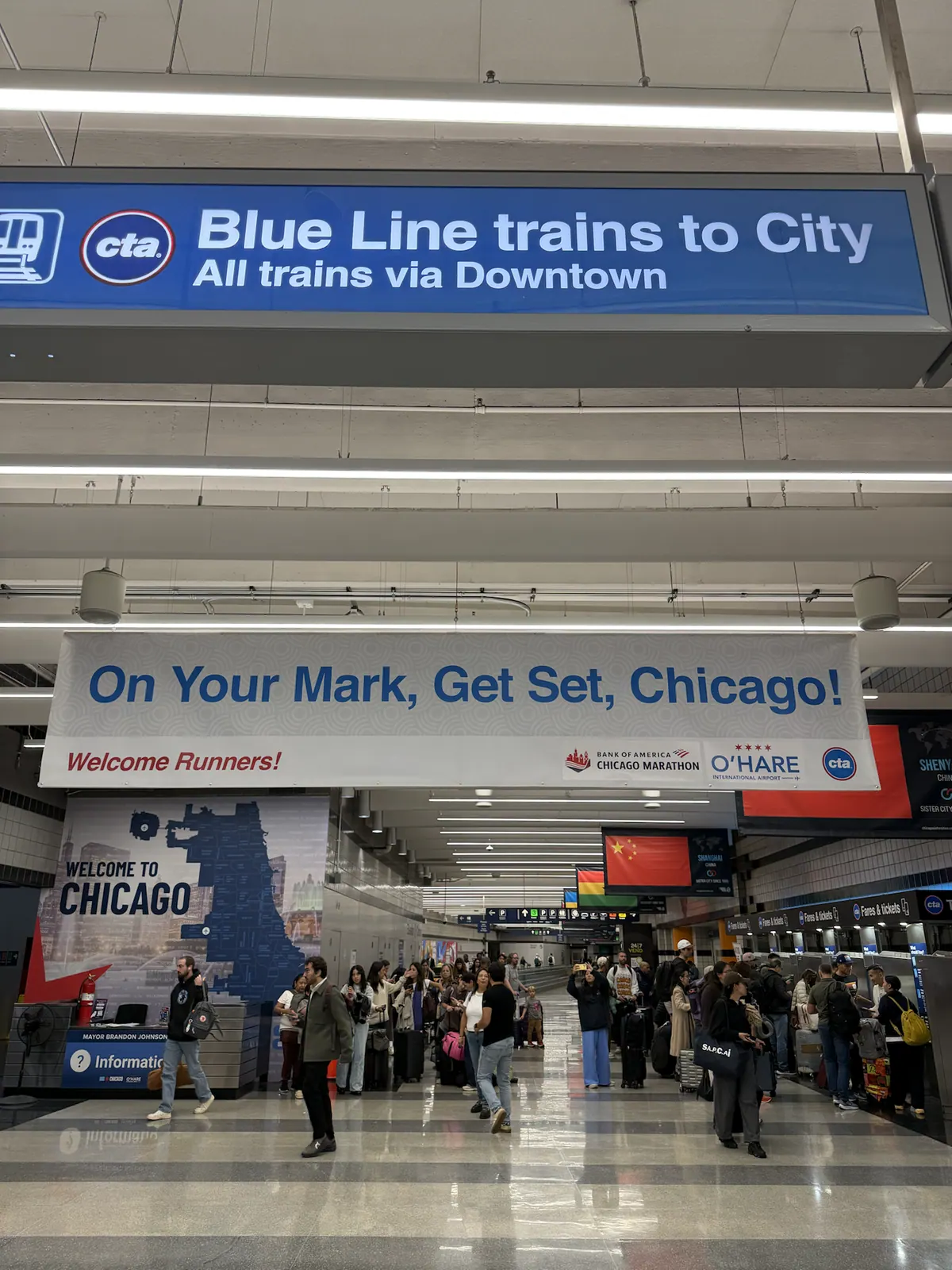
I'd arrived in the US earlier and spent a few days in Philadelphia before reaching Chicago on October 8. By race weekend, I'd mostly adjusted to the time difference.
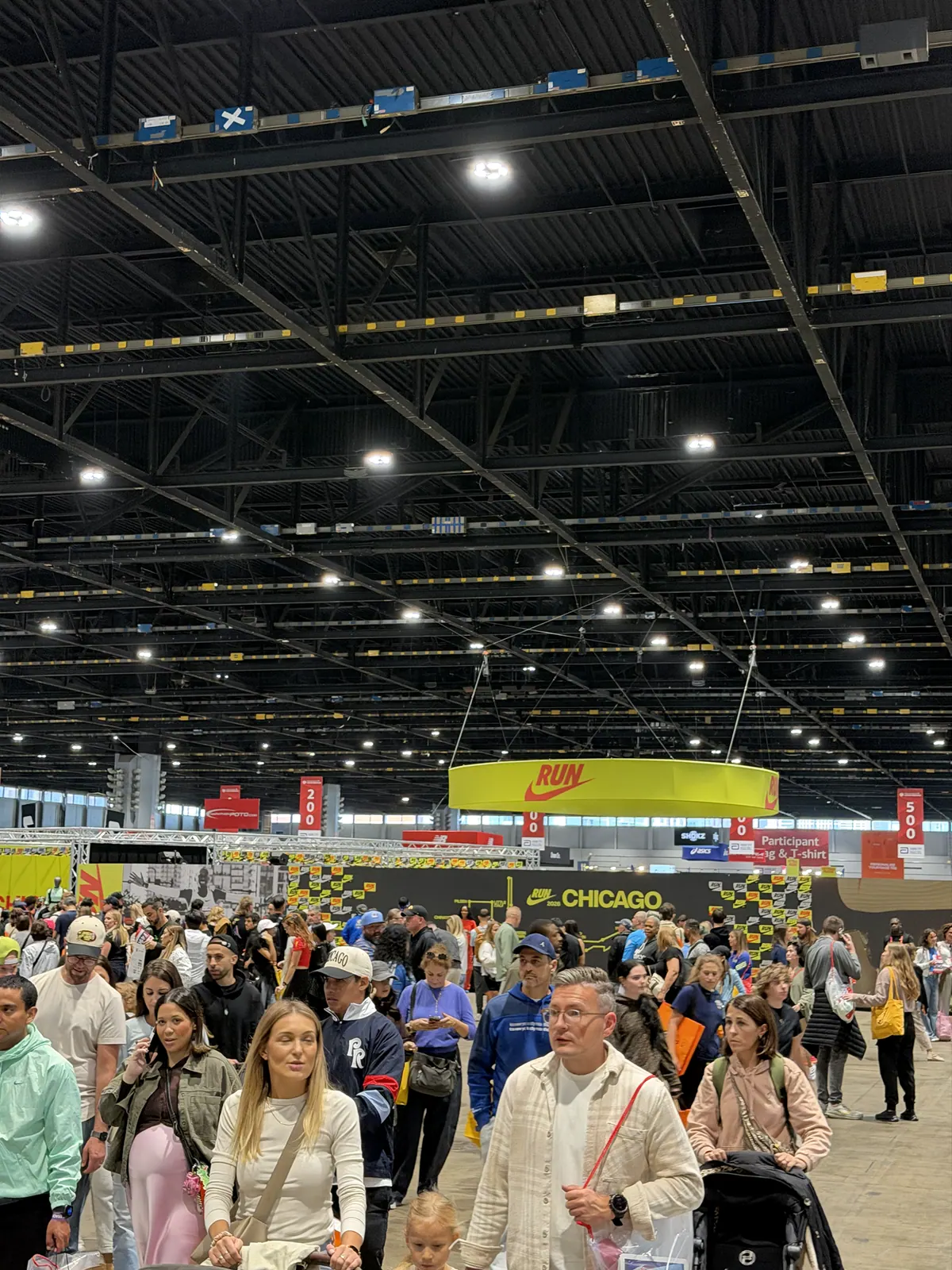
I took the bus to packet pickup on Friday lunchtime. It was full of people going to the same place. The Expo was much busier than I expected. I collected my bib and race shirt and left without doing much browsing.
On Saturday I visited a museum and went shopping. I walked roughly 10 km and felt a little tired, though I didn't worry much about it. I started eating pasta at about six that evening. Then I slept very well. My Apple Watch gave the night a sleep score of 97, which gave me another reason to believe I could run well.
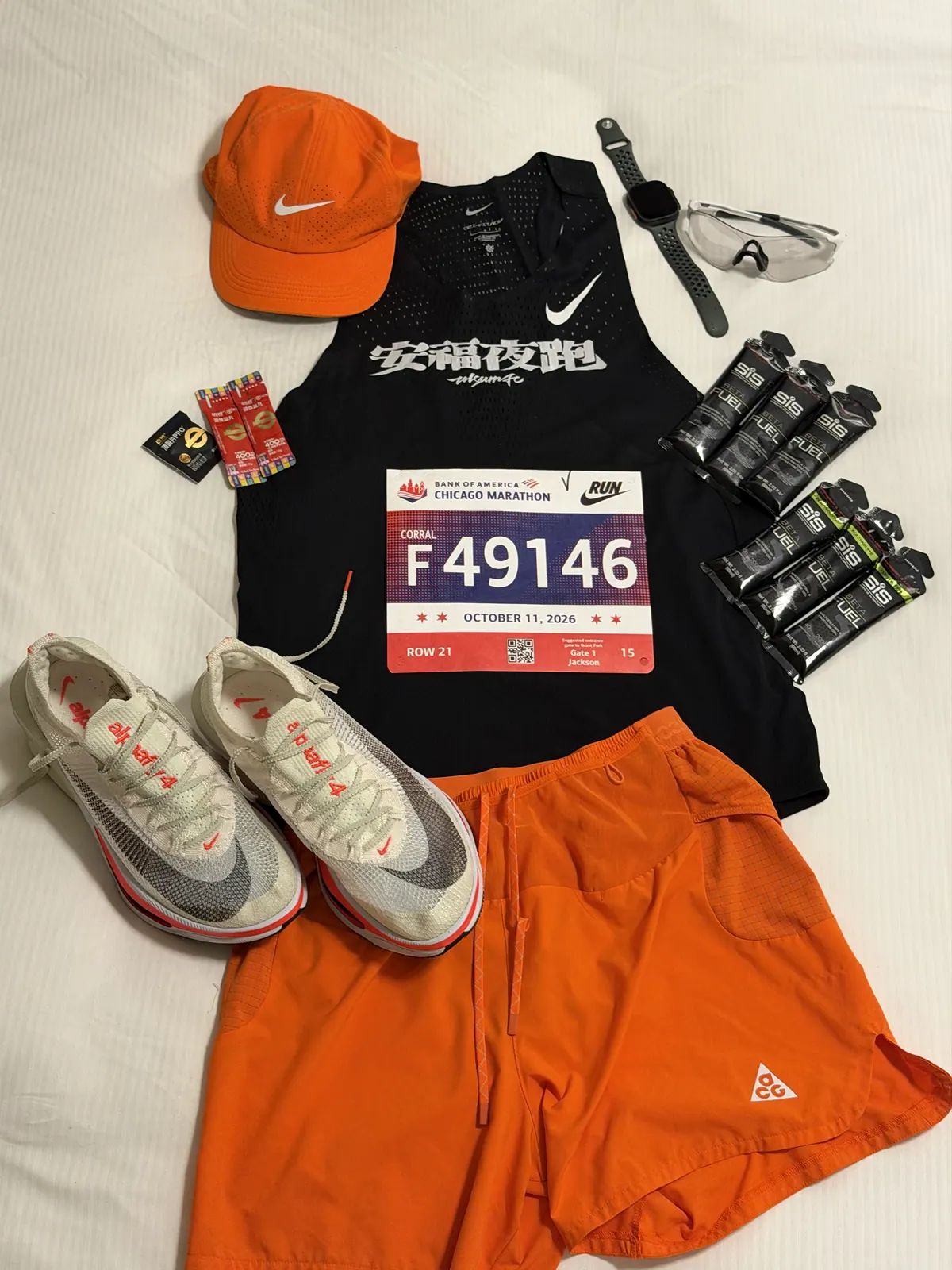
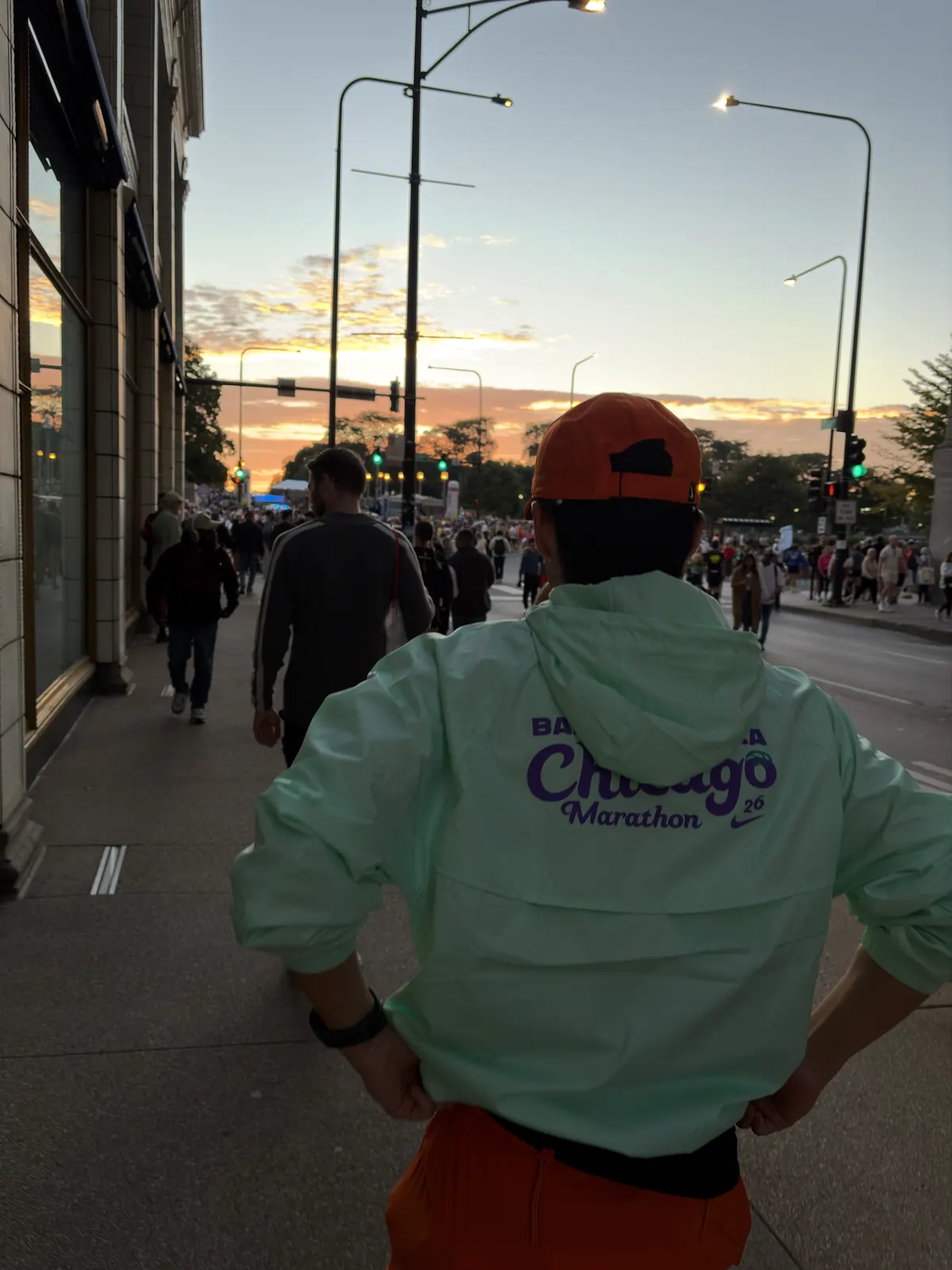
I had a caffeinated carbohydrate drink in the morning and left at around seven. I wasn't especially nervous on the walk over. Mostly excited.
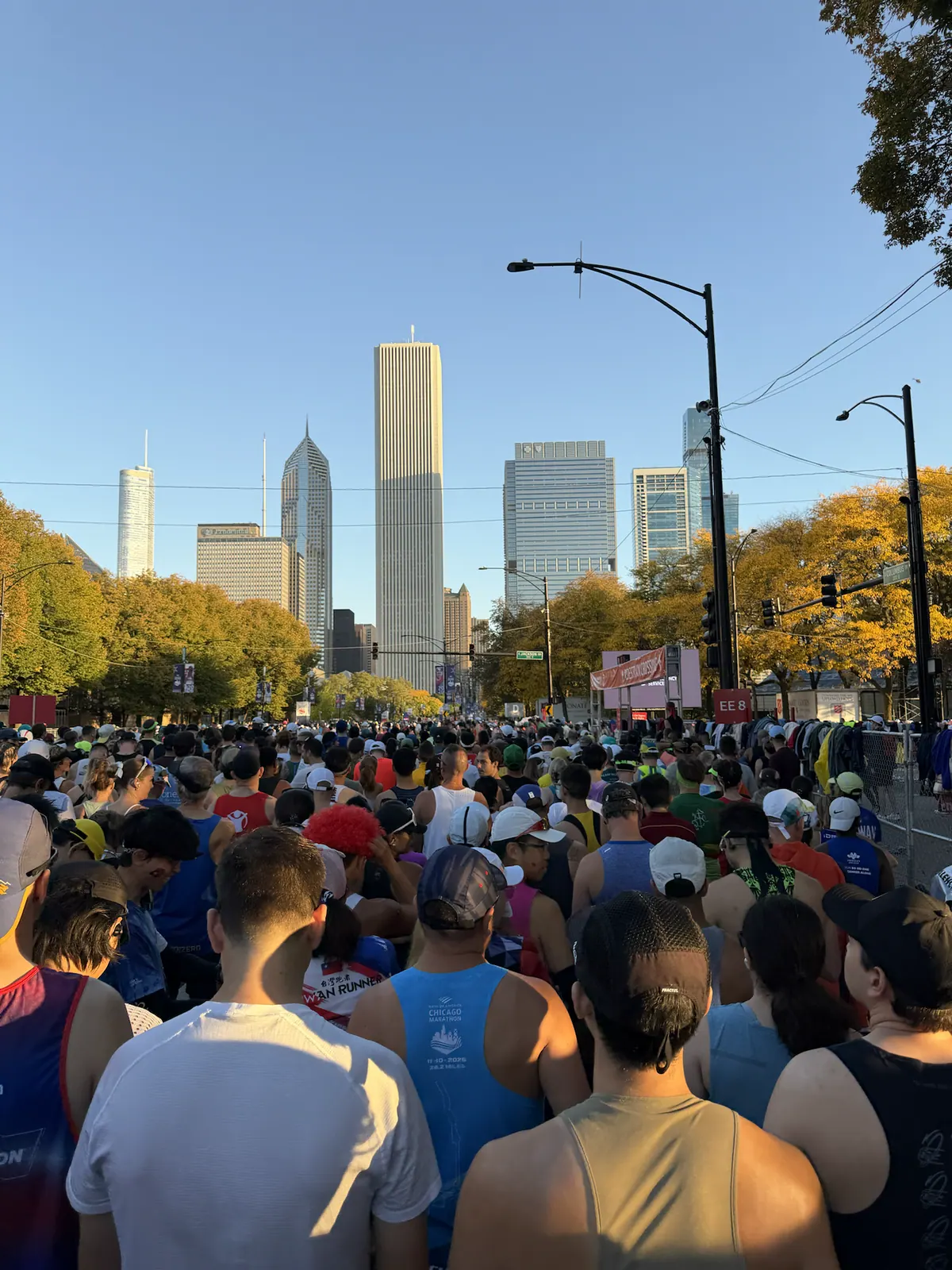
I wanted to run a negative split: hold back in the first half, then speed up. My plan was to begin around 5:30/km and settle in gradually.
Instead, I went too fast.
I'd read warnings about GPS around the tall buildings, so I relied mainly on feel. I was breathing through my nose and out through my mouth without feeling out of breath. I took that to mean I could keep going at this pace.
The day felt warmer than I had hoped, but I hadn't changed the target. I thought I could start running and slow down later if the weather made it necessary.
Ten kilometres took 50:01. Halfway was 1:46:35.
I saw the halfway time. My reaction was that I was having a good day and might get under 3:45.
For an evenly paced 3:45, halfway would have been 1:52:30. I was almost six minutes ahead of that. During the race, I thought this was good news.
Official splits and watch pace, on the same chart
The first half took 1:46:35 and the second 2:04:44, a difference of 18:09. Red segments show official interval averages; the blue line shows Apple Watch kilometre averages. Toggle either series.
3:45 goal pace, about 5:20/km
The official course is 42.195 km; the watch recorded 42.52 km. Their kilometre positions do not match exactly.
Official cumulative times and interval pace
| Checkpoint | Elapsed time | Interval pace |
|---|---|---|
| 5 km | 0:25:23 | 5:05/km |
| 8 km | 0:40:06 | 4:54/km |
| 10 km | 0:50:01 | 4:58/km |
| 15 km | 1:14:55 | 4:59/km |
| 20 km | 1:40:47 | 5:10/km |
| 21.0975 km | 1:46:35 | 5:17/km |
| 25 km | 2:07:29 | 5:21/km |
| 30 km | 2:34:38 | 5:26/km |
| 35 km | 3:04:50 | 6:02/km |
| 40 km | 3:38:16 | 6:41/km |
| 42.195 km | 3:51:19 | 5:57/km |
Watch pace and heart rate by kilometre, including the final partial split
| Watch split | Split time | Average pace | Average heart rate |
|---|---|---|---|
| 1km | 5:08 | 5:08/km | 159 bpm |
| 2km | 5:29 | 5:29/km | 161 bpm |
| 3km | 5:16 | 5:16/km | 159 bpm |
| 4km | 4:54 | 4:54/km | 157 bpm |
| 5km | 4:43 | 4:43/km | 160 bpm |
| 6km | 4:49 | 4:49/km | 165 bpm |
| 7km | 4:41 | 4:41/km | 165 bpm |
| 8km | 4:53 | 4:53/km | 163 bpm |
| 9km | 4:51 | 4:51/km | 167 bpm |
| 10km | 4:55 | 4:55/km | 166 bpm |
| 11km | 4:48 | 4:48/km | 164 bpm |
| 12km | 4:54 | 4:54/km | 164 bpm |
| 13km | 4:53 | 4:53/km | 161 bpm |
| 14km | 4:56 | 4:56/km | 162 bpm |
| 15km | 4:57 | 4:57/km | 162 bpm |
| 16km | 4:51 | 4:51/km | 162 bpm |
| 17km | 5:39 | 5:39/km | 163 bpm |
| 18km | 4:53 | 4:53/km | 161 bpm |
| 19km | 5:04 | 5:04/km | 161 bpm |
| 20km | 5:08 | 5:08/km | 161 bpm |
| 21km | 5:06 | 5:06/km | 161 bpm |
| 22km | 5:55 | 5:55/km | 162 bpm |
| 23km | 5:13 | 5:13/km | 162 bpm |
| 24km | 5:23 | 5:23/km | 162 bpm |
| 25km | 5:20 | 5:20/km | 162 bpm |
| 26km | 5:32 | 5:32/km | 162 bpm |
| 27km | 5:10 | 5:10/km | 161 bpm |
| 28km | 5:15 | 5:15/km | 162 bpm |
| 29km | 5:23 | 5:23/km | 165 bpm |
| 30km | 5:36 | 5:36/km | 165 bpm |
| 31km | 5:55 | 5:55/km | 166 bpm |
| 32km | 5:34 | 5:34/km | 172 bpm |
| 33km | 5:54 | 5:54/km | 165 bpm |
| 34km | 6:06 | 6:06/km | 163 bpm |
| 35km | 6:10 | 6:10/km | 161 bpm |
| 36km | 5:59 | 5:59/km | 164 bpm |
| 37km | 6:18 | 6:18/km | 163 bpm |
| 38km | 7:01 | 7:01/km | 159 bpm |
| 39km | 6:52 | 6:52/km | 160 bpm |
| 40km | 6:12 | 6:12/km | 165 bpm |
| 41km | 6:02 | 6:02/km | 164 bpm |
| 42km | 5:40 | 5:40/km | 170 bpm |
| Final partial km | 3:08 | 5:55/km | 171 bpm |
Heart rate recorded by the watch
The Apple Watch recorded an overall average of 163 bpm. These are kilometre averages joined to show the trend, not a second-by-second trace. The last point is the final partial kilometre.
Data sources and recording differences
The horizontal axis keeps each source’s own distances. A watch kilometre is not necessarily the same location as a course marker. Blue points sit at the middle of each kilometre; the final partial split is positioned approximately from the rounded total distance. No second-by-second data were invented or interpolated.
Source: the author’s official tracking screenshot, four Apple Watch split screenshots and workout summary. Watch workout time is 3:50:27, elapsed time 3:51:18, and official finish time 3:51:19. The displayed splits sum to one second less than workout time; original values are kept. These charts do not establish why the cramps happened.
You can find the race's results through the official Results page.
“You can make it”
The crowds were wonderful. I ran the whole race without headphones. There was so much cheering that my ears actually hurt in some places.
My friends sent a meeting point near the start, but the signal was poor and the message didn't arrive straight away. I eventually saw it, moved to the right and found them about a kilometre into the race for a high five. They photographed me again later. I didn't spot them that time; there were so many people and so much noise.
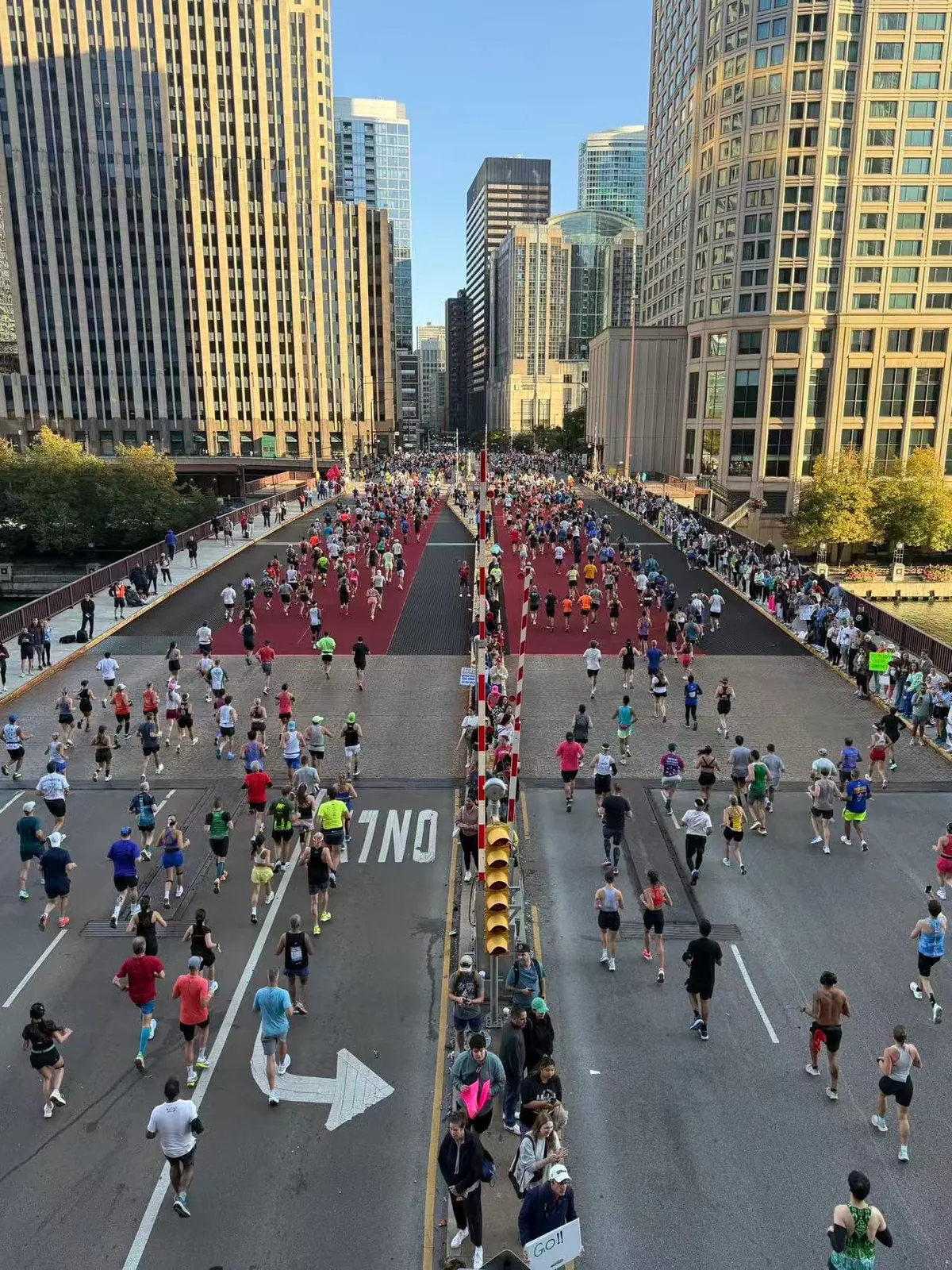
After halfway, my left foot started to feel a little numb, with slight twitching at the front of my thigh. I could still run. After 30 km, I was slowing noticeably.
I carried eight gels and ate seven, mostly following my plan of one every half-hour. I also took the salt products I had planned. I still don't know what caused the numbness or the cramps.
The first clear cramp came around 38 km, at the back of my calf. I stumbled toward the side of the road. A man caught me, opened a Gatorade and gave me a sip.
“You can make it, you can make it,” he kept saying.
I stretched and got going again quite quickly. I still wish I'd taken a photo with him. At the time, I just wanted to keep running.
The second cramp came not far afterward, feeling like the front of the other thigh.
The third was close to the finish. I tried to speed up for the last part, cramped again, and had to move aside, stretch and slowly restart.
My breathing still felt manageable. My legs wouldn't do what I wanted. After the first cramp, I knew 3:45 was probably gone.
I crossed the line in 3:51:19.
Crossing the line wasn't quite the end
My legs still felt as though they might cramp. Standing hurt. Sitting or lying on the ground wasn't comfortable either. Sitting in a chair felt better.
I asked for medical help. Staff took me to the medical tent in a wheelchair, checked my heart rate and blood pressure, took my details and watched how I was doing.
I was still able to joke with one of them: “Will I see my mom again?”
After about fifteen minutes I felt better and slowly went out to find my friends. We took photos, walked back to the hotel for a shower, then went out for an all-you-can-eat barbecue meal.
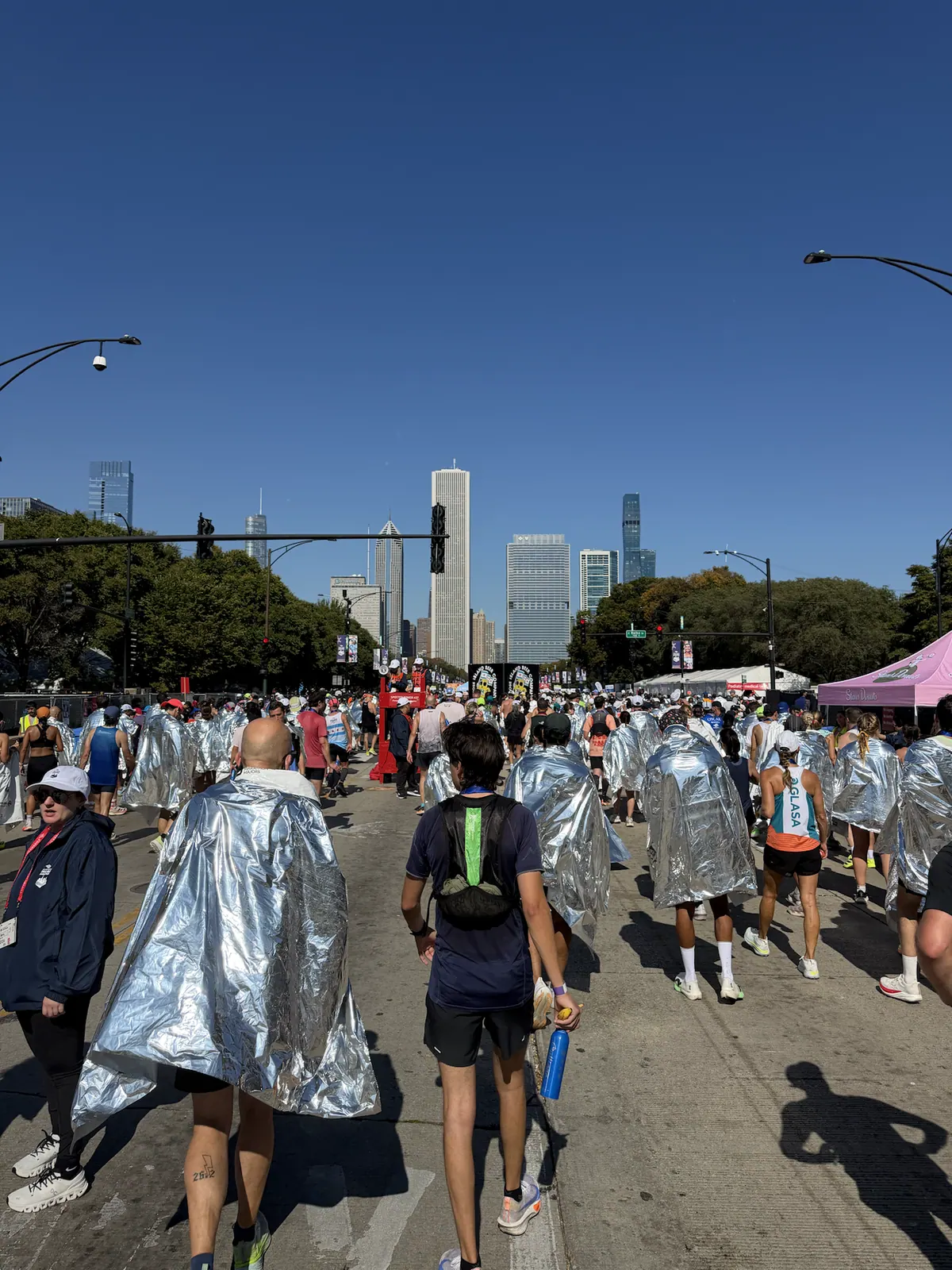
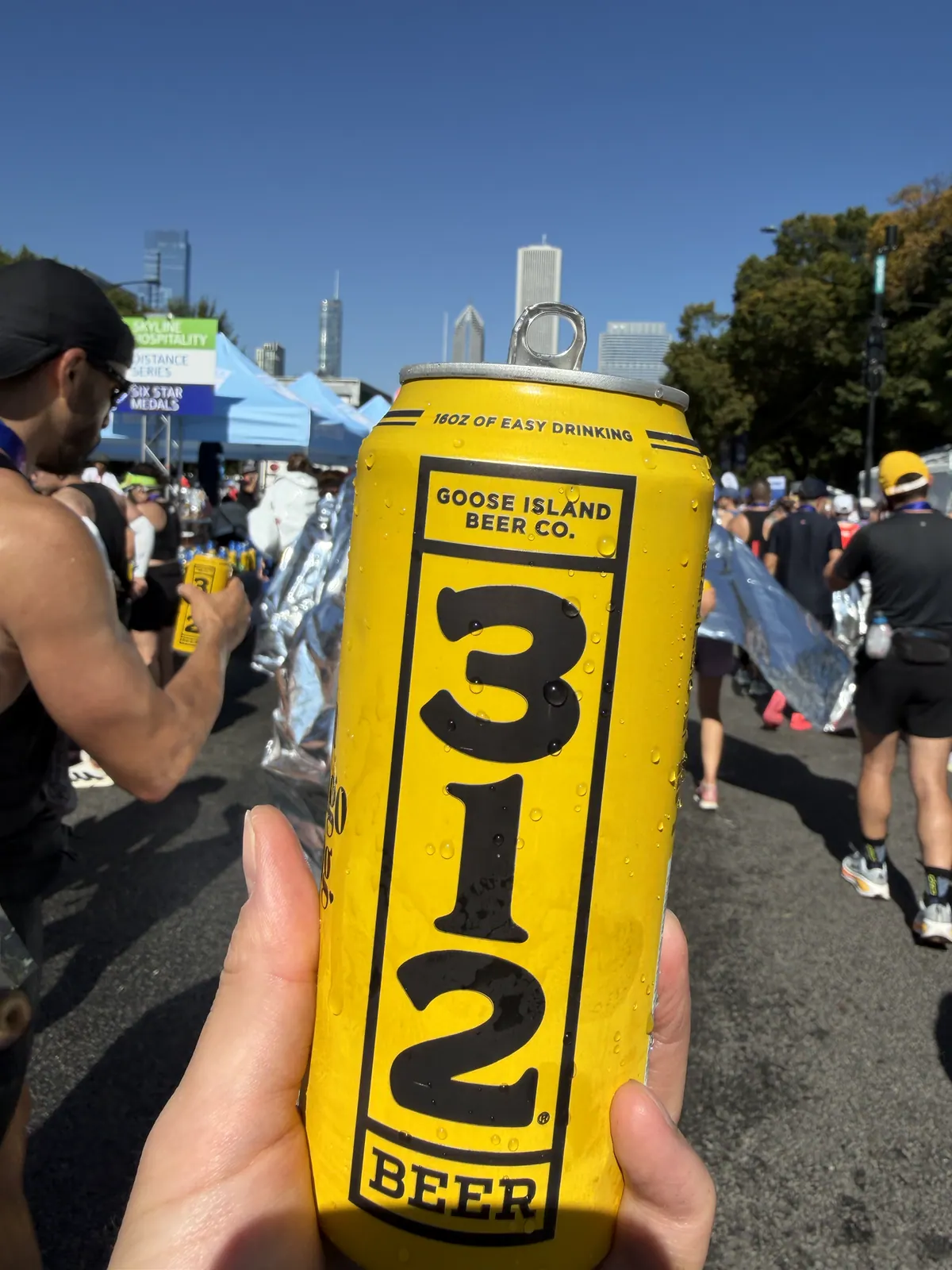
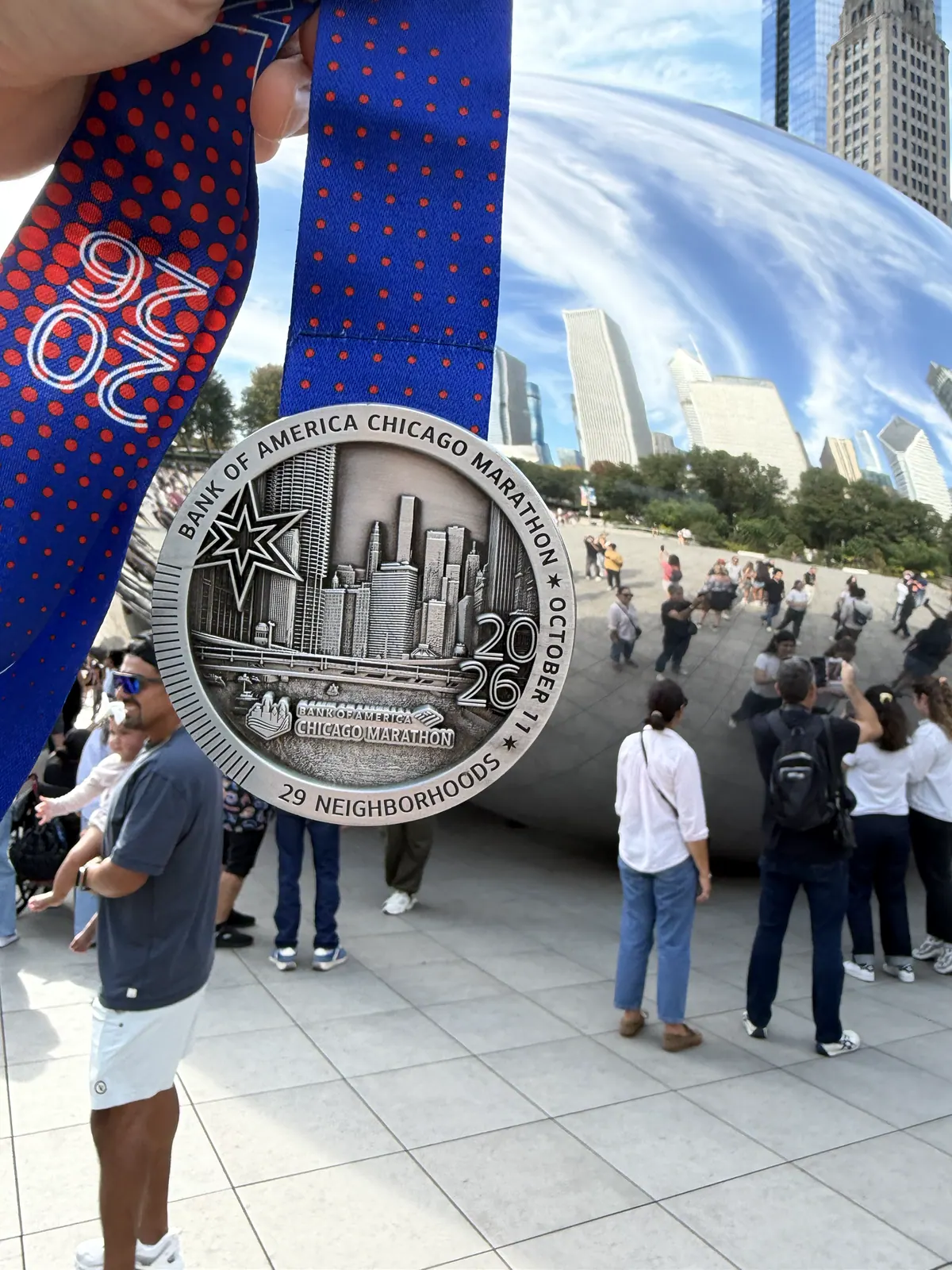
Stairs were difficult on Monday. Things eased on Tuesday. By Thursday, I felt mostly recovered, and I started running again a week after the race.
I haven't been too hard on myself about missing the target. I ran a PB, and I can see plenty of things to work on.
If I could go back to the start, I'd tell myself to begin more slowly. I'd also take another look at the long runs I hadn't finished.
But Chicago gave me much more to remember than those lessons.
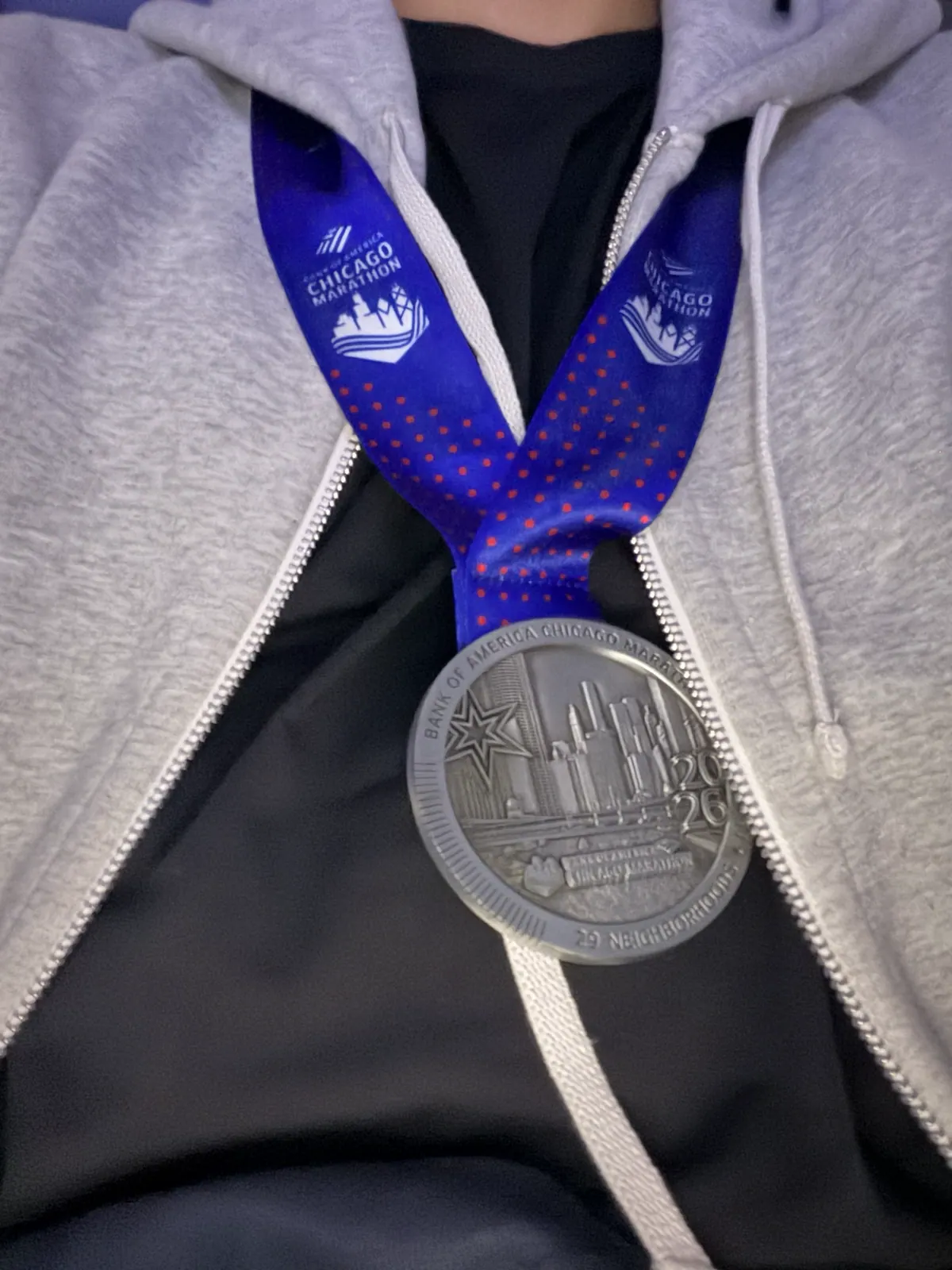
I liked being by the lake in good weather. Walking around with the medal, strangers would notice and say congratulations. That felt really good.
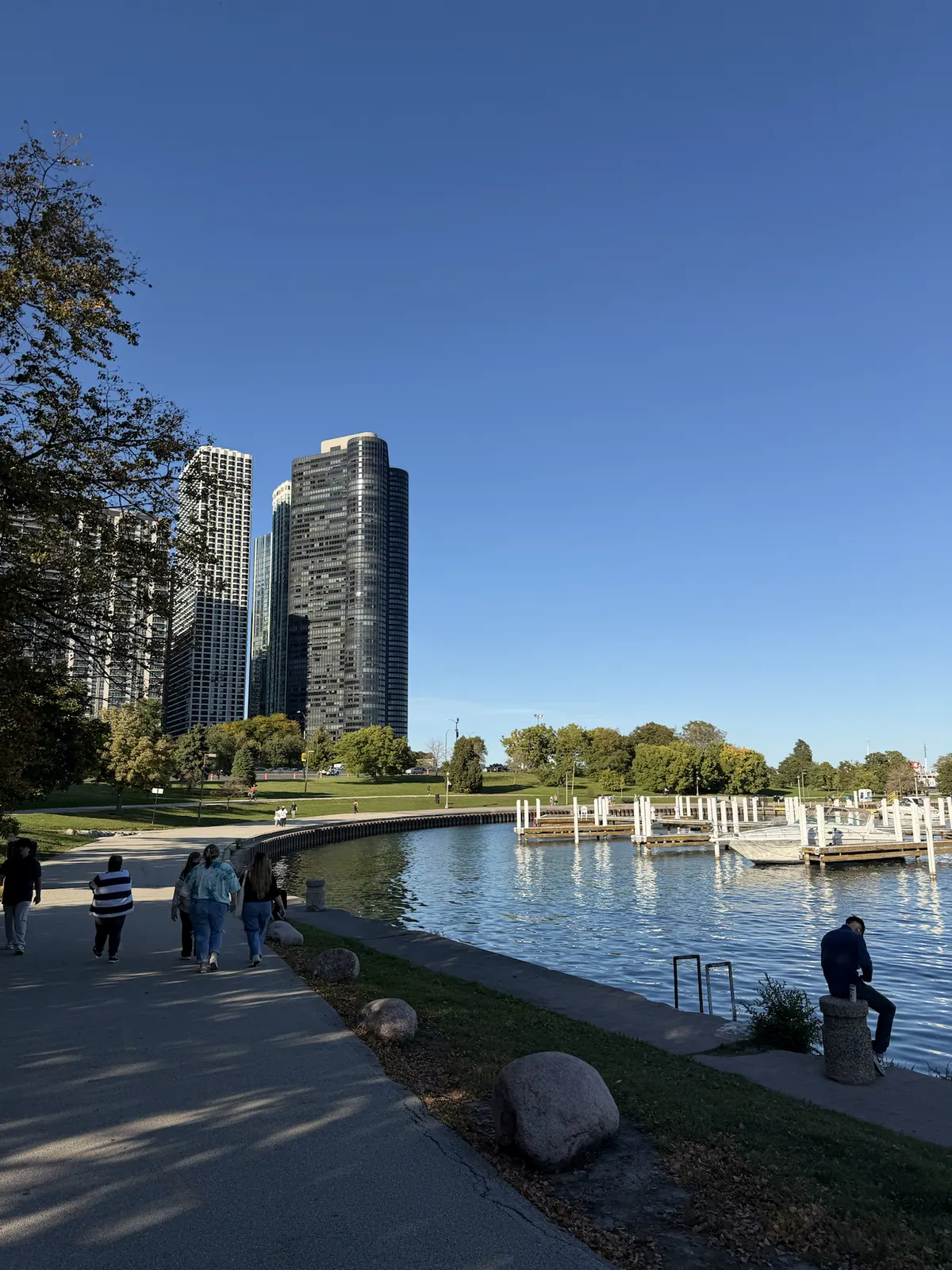
When I accepted the entry, I thought it might be my only Chicago. After running it, I started wanting to collect more of these races and enjoy their courses and cities. A PB would be lovely. If it doesn't happen, I can try for a faster time somewhere else.
One thing I might change next time: buy fewer fridge magnets.