Running Pace Calculator — Min/km, Finish Time & Pace Chart
Free running pace calculator for 5K, 10K, half marathon, and marathon. Get min/km or min/mile, your ...
Use Calculator →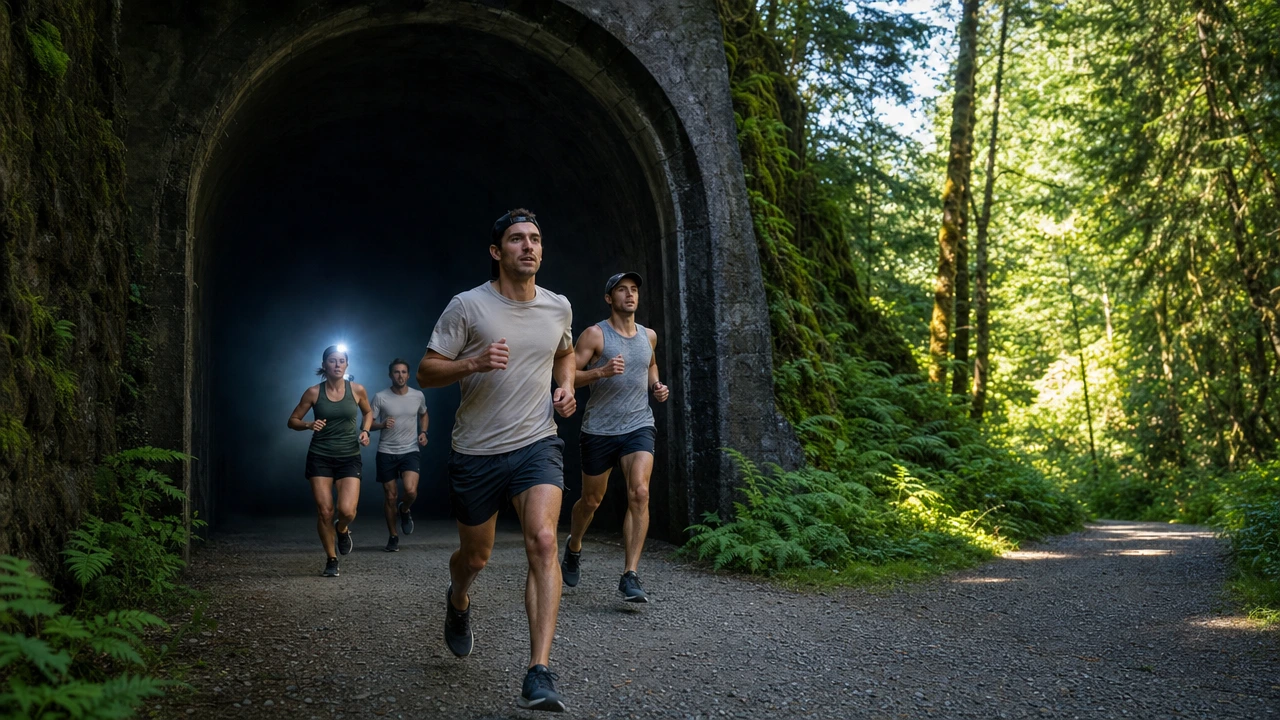
Race Completed
This marathon has finished. Check back for next year's edition.
Finished this one? Turn your result into a keepsake:
Finisher certificate ·
Virtual race bib ·
Achievement card
See entry dates for other marathons →
| Race | 2026 Jack & Jill's Downhill Marathon - Jul 25 |
|---|---|
| City | North Bend |
| Date | 2026-07-25 at 06:00 |
| Time Limit | 6 hours 30 min |
| Cutoff pace | 9:15/km |
| Timezone | America/Los_Angeles |
| Official Site | Run Super Series |
| Average Temperature | 17.6°C / 64°F |
|---|---|
| Humidity | 78% |
| Peak Wind | 7 km/h |
| Rain Chance | 15% |
| Typical Conditions | Cool, dry late-July Cascade foothills morning — fast running weather with a chilly, shaded forest start |
What to Prepare: Late July at Snoqualmie Pass starts cold — race-morning lows can sit near 48-52°F / 9-11°C at the high Hyak start, warming toward a high in the upper 60s°F / ~20°C by the North Bend finish. Inside the Snoqualmie Tunnel it is roughly 20°F colder than outside and damp, so a throwaway long-sleeve plus your headlamp for the first half is smart.
Based on historical averages for race week. Use our Weather Score Calculator and What to Wear Guide for personalized advice.
Winds peaking around 7 km/h — the typical daily maximum for this date — can affect your pace by 5-15 seconds per kilometer in exposed stretches. Headwinds slow you down exponentially: a 20 km/h wind costs more than twice a 10 km/h wind.
Calculate your wind-adjusted pace →Based on 20 years of race-week weather (2005-2024), MERRA-2 reanalysis
| Cooler | Typical | Warmer | |
|---|---|---|---|
| Temperature | 13.9°C | 16.9°C | 22.4°C |
| Dew point | 10.6°C | 12.9°C | 15.5°C |
Data: NASA POWER (MERRA-2 reanalysis), NASA Langley Research Center
| Course Type | Point-to-point (net downhill) |
|---|---|
| Elevation Gain | 120m |
| Terrain | Crushed-gravel rail-trail (smooth, hard-packed; one 2.3-mile dark tunnel) — not paved road |
| Profile | One of the fastest marathons in the country and a Boston-qualifier magnet. The course is a point-to-point on the crushed-gravel Palouse to Cascades (Iron Horse) rail-trail, dropping about 1,000 ft net from the Hyak Sno-Park start down to the finish in North Bend — split roughly into a flat first 13 miles and a sustained, gentle, runnable downhill second half. The signature feature comes around mile 13: the 2.3-mile (3.6 km) Snoqualmie Tunnel, an unlit former railroad tunnel that runs straight through the Cascade crest. It is pitch black, drips water, and sits about 20°F colder than the air outside, so a headlamp or flashlight is required (you can hand it to volunteers at the tunnel exit). Because the surface is smooth, hard-packed rail-trail gravel rather than road, footing is excellent but it is NOT a paved course — it is still USATF-certified and an official Boston qualifier, and because the net loss stays under Boston's 1,500-ft limit, times count toward BQ with no downhill adjustment. About 24% of finishers qualified for Boston in 2025 (24.5% in 2024) — one of the highest BQ rates of any US marathon. Note: storm damage to the trail means the 2026 edition may run on a re-permitted alternate route that keeps the same fast net-downhill character; confirm the final course on the official site before race day. |
| Boston Qualifier | Yes — Check your BQ time |
Use our free training tools to get race-ready:
Free running pace calculator for 5K, 10K, half marathon, and marathon. Get min/km or min/mile, your ...
Use Calculator →Free printable pace band for marathon, half marathon, or custom distance. Choose even, negative, or ...
Use Calculator →7 AM race, wake at 3:45 AM? Enter the gun time; we work backward through meal, gear, bathroom, warm-...
Use Calculator →Free marathon predictor — convert your 5K, 10K, or half marathon time into race-day estimates from R...
Use Calculator →Predict your race finish time from pace, or set a goal time to find required pace. Free instant calc...
Use Calculator →What heart rate should you train at? Enter your age and resting HR to get personalized 5-zone traini...
Use Calculator →The 2026 Jack & Jill's Downhill Marathon is on Saturday, July 25, 2026, with a 6:00 a.m. PDT rolling start at Hyak Sno-Park near Snoqualmie Pass, finishing in North Bend, WA. Because the field is small and the trail is narrow, the race also runs a second day on Sunday, July 26 — pick your day at registration.
It is one of the best Boston qualifiers in the country. The point-to-point course drops about 1,000 ft net over 26.2 miles on the Palouse to Cascades rail-trail — a flat first half, then a steady, gentle downhill. It is USATF-certified, and because the net loss is well under Boston's 1,500-ft limit, your finish time counts toward BQ with no downhill adjustment. About 24% of finishers qualified for Boston in 2025 (24.5% in 2024). Check your target with our Boston qualifying calculator.
Yes — a headlamp or flashlight is required. Around mile 13 the course runs straight through the 2.3-mile (3.6 km) Snoqualmie Tunnel, an unlit former railroad tunnel under the Cascade crest. It is completely dark, drips water, and is roughly 20°F colder than the air outside, so most runners wear a throwaway long-sleeve. You can hand your light to volunteers at the tunnel exit and reclaim it after the race.
It runs on a crushed-gravel rail-trail, not paved road. The surface is smooth and hard-packed, so footing is good and most road shoes work fine, but you should expect dirt/gravel rather than asphalt and a few damp, dark miles inside the tunnel. The trail grade is gentle and consistent, which is what makes it so fast. It is still a fully USATF-certified Boston qualifier.
The marathon has a 6.5-hour time limit (the half marathon limit is 4 hours), which works out to roughly a 14:53 per mile average pace. With a net-downhill course most finishers run well inside the cutoff, but plan your splits with our pace calculator to stay ahead of it.
Registration is handled through RunSignUp, with the full marathon recently priced around $171 (it rises as the field fills). The field is small and the race sells out most years, so register early. English-language online registration is straightforward for international runners.
Possibly not. Storm damage to the Palouse to Cascades Trail means the original course could not be used as-is, and the organizer is re-permitting a proposed alternate route that keeps the same fast, smooth, net-downhill character (about 1,000 ft of drop). The race is not cancelled. Confirm the final 2026 course — and whether it still passes through the Snoqualmie Tunnel — on the official site before you travel.
Late July at the high start is cool — race-morning lows near 48-52°F (9-11°C) climbing to the upper 60s°F (~20°C) at the North Bend finish, with low rain chances. The big extra is the tunnel: it is dark and about 20°F colder, so bring a headlamp and a throwaway long-sleeve you can shed after. A small light and gloves for the first half are the most common additions to a normal summer kit.
Fukuoka · 2026-11-08

Guangzhou · 2026-12-20
Kunming · 2026-12-13
Honolulu · 2026-12-13
Taipei · 2026-12-20
Shenzhen · 2026-12-06