Butter Run Challenge: What It Is & How to Make Butter
The viral butter run turns 8–10 km of trail bounce into real, spreadable butter. Get the science, the ideal 10–13°C cream window, and a free calculator.
Key Takeaways
- 8-10 km on trails is the sweet spot — 45-60 minutes of trail running provides roughly 16,000 agitation cycles to churn cream into butter.
- Temperature is the #1 success factor — Cream must stay at 10-13°C; too cold and fat won't clump, too warm and it melts.
- Use 36%+ fat cream in double-bagged ziplocks — Lower fat needs longer distance, and single bags risk leaking mid-run.
- Trail terrain generates 30-50% more churning — Uneven surface creates more vertical oscillation, the force that drives butter formation.
The butter run — or "Churn and Burn" as social media has lovingly dubbed it — is 2026's most unexpected running trend. What started as a whimsical trail run experiment by Oregon couple Libby Cope and Jacob Arnold has exploded into a global phenomenon, with millions of runners strapping bags of heavy cream to their backs and hitting the trails. Here's everything you need to know to join the movement.
What Is a Butter Run?
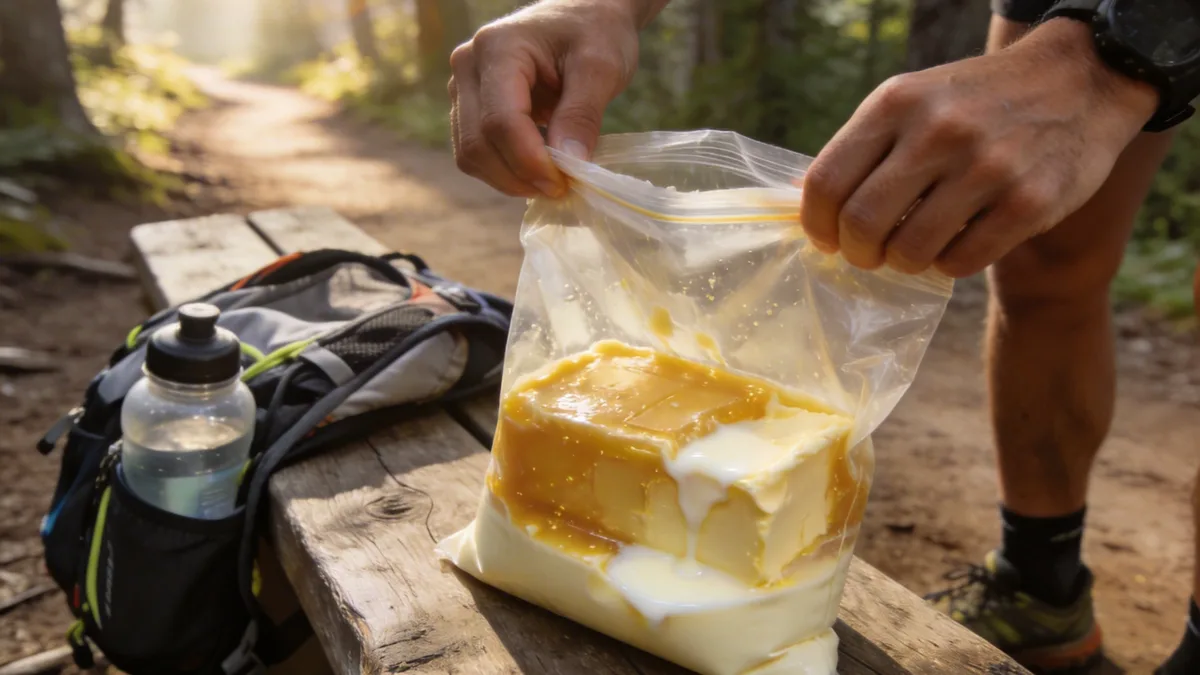
A butter run is exactly what it sounds like: you carry heavy cream in a sealed container while running, and the constant bouncing motion churns it into real, spreadable butter. It's part fitness challenge, part kitchen science experiment, and 100% social media gold. The original video — posted February 25, 2026 — hit 2.3 million views on TikTok and 11 million on Instagram, spawning countless variations from chocolate ice cream runs to honey butter creations.
But beyond the viral appeal, butter running taps into something deeper. It transforms a routine training run into a tangible, edible experiment. You're not just logging miles — you're creating something. That simple shift in framing has brought entirely new audiences to running.
The Science Behind Butter Churning While Running
Butter formation is a phase inversion process rooted in physics. Cream is an oil-in-water emulsion: microscopic fat globules (1-10 micrometers) float in a water-based liquid, stabilized by membranes of phospholipids and proteins.
When subjected to sustained mechanical agitation — like the rhythmic bouncing of a trail run — three things happen:
- Membrane disruption — Constant shaking damages the protective membrane surrounding each fat globule, exposing raw fat surfaces.
- Fat coalescence — Exposed fat surfaces stick to each other, forming increasingly larger clumps. This is the "grain" stage where tiny butter granules appear.
- Phase inversion — Enough fat clumps merge that the system flips from oil-in-water (cream) to water-in-oil (butter). The remaining liquid is buttermilk.
Running provides ideal agitation: 8-10 cm of vertical bounce per stride at 160-180 steps per minute. Over a 10 km run, that's roughly 16,000 agitation cycles — more than enough to fully churn cream into butter. Temperature is equally critical: fat molecules must be soft enough to merge on contact but firm enough to hold shape. The optimal range is 10-13°C (50-55°F).
Interestingly, the type of agitation matters. Traditional butter-making uses a single-axis rotational churn, but running produces multi-axis oscillation — vertical bounce, lateral sway, and forward-backward deceleration on each footstrike. This three-dimensional agitation pattern is actually more efficient at disrupting fat globule membranes than single-axis motion, which is why trail running (with its irregular surface angles) tends to produce butter faster than road running at the same distance.
How to Make Butter While Running (Step-by-Step)
What You Need
- Heavy cream — 150-250 ml, at least 36% fat content. Take it straight from the fridge.
- A pinch of salt — Optional but recommended. Accelerates fat coalescence and improves flavor.
- Double-layered ziplock bags — Place cream + salt in one bag, squeeze out excess air, seal, then place inside a second bag.
- Running vest or pack — The bag should sit snugly against your back for maximum motion transfer.
The Run
- Plan 8-10 km (or 45-60 minutes at your comfortable pace).
- Choose a trail route if possible — the uneven terrain generates significantly more churning motion than roads.
- Run normally — no special technique needed. The natural bouncing does all the work.
- Check at 30 minutes — You should feel the bag getting heavier/thicker. Don't open it yet.
- Check at 45-60 minutes — Open the outer bag and gently squeeze. You should feel solid chunks separated from liquid.
After the Run
- Drain the buttermilk — Pour off the liquid (it's drinkable!).
- Knead briefly — Press the butter with clean hands or a spoon to expel remaining liquid.
- Taste your creation! — Spread on bread, crackers, or eat it straight. Fresh trail butter has a uniquely sweet, creamy flavor.
- Refrigerate within 2 hours — Homemade butter lasts 1-2 weeks refrigerated.
Optimal Conditions for Success
Our Butter Run Calculator uses a 6-factor weighted model. Here are the key conditions:
- Temperature: 10-13°C (50-55°F) — The single most important factor. Below 5°C, fat is too hard. Above 20°C, it melts instead of separating.
- Distance: 8-10 km — Gives you the ideal 45-60 minute churning window at most recreational paces.
- Cream: 36%+ fat — Higher fat content means more raw material. Heavy cream or whipping cream works best.
- Terrain: Trail > Road > Treadmill — Trail running generates 30-50% more vertical oscillation than flat roads.
- Container: Flexible bags > Rigid bottles — Ziplock bags transfer running motion directly to the cream. Rigid bottles absorb too much energy.
- Fill level: 60-70% — Leave room for the cream to slosh and collide. A too-full bag reduces agitation.
Weather and Seasonal Planning
Because temperature is the single most critical success factor, smart butter runners plan their attempts around weather conditions rather than treating it as an impulse decision. The ideal window in most temperate climates falls in spring (March-May) and autumn (September-November), when morning temperatures naturally sit in the 8-14°C range.
Seasonal considerations by climate zone:
- Temperate (most of US, Europe, East Asia) — Best windows are early morning in spring/autumn. Summer midday runs almost always fail unless at altitude.
- Tropical — Butter runs are extremely difficult year-round. Your best chance is a pre-dawn run in the coolest month, with the cream bag wrapped in a thin insulating layer.
- Cold/subarctic — Winter runs risk the cream being too cold to churn. Wait for a day above 5°C or let the cream warm to 10°C before starting.
- Altitude — Higher elevation means cooler temps even in summer. Mountain trail runs at 1,500m+ often hit the sweet spot when valley temps are too warm.
A useful rule of thumb: if the Weather Score rates conditions as "good" or "excellent" for running, and the air temperature is between 8-15°C, you have a viable butter run window. Windy days are actually a bonus — wind chill helps keep the cream cool during the run.
Fitting a Butter Run into Your Training Week
One of the best things about butter running is that it naturally aligns with easy-effort training. The ideal butter run pace is your normal conversational pace — around 60-70% of your maximum heart rate. You are not trying to set a personal best; you are trying to give the cream enough time and bouncing to churn. This makes butter runs a perfect substitute for a weekly easy run or aerobic base-building session.
Here is how butter runs fit into common weekly training structures:
- Beginner (3-4 runs/week) — Replace one easy run with a butter run every 2-3 weeks. It adds novelty without disrupting your progression.
- Intermediate (4-5 runs/week) — Schedule a butter run on your longest easy day (not your long run day). The 8-10 km distance fits most mid-week easy runs perfectly.
- Advanced (6+ runs/week) — Use a butter run as an active recovery day. The forced easy pace prevents you from accidentally turning a recovery run into a tempo effort.
If you are following a structured training plan, the key rule is simple: never substitute a quality session (intervals, tempo, long run) with a butter run. Butter runs belong in the easy-effort portion of your week. Stay well-hydrated throughout — carry a bottle or plan a route with water access. The Hydration Calculator can help you estimate your fluid needs based on distance and temperature.
For runners new to trail surfaces, consider reading our Trail Running for Beginners guide before attempting a trail-based butter run. Trail footing requires slightly different mechanics than road running, and tackling both a new surface and a butter experiment simultaneously can be distracting.
Common Mistakes and Troubleshooting
- "I only got whipped cream" — You're close! Run longer (aim for 45+ minutes) or try a trail route for more agitation.
- "The cream is still liquid" — Too cold or too short. Warm up the cream slightly before the run, or increase distance.
- "It melted into a greasy mess" — Too warm. Wait for cooler weather. The cream needs to stay below 20°C throughout the run.
- "The bag leaked!" — Always double-bag. Squeeze out excess air before sealing. Test the seal before running.
- "It took forever" — Check your cream's fat content. Anything below 33% will take significantly longer. Switch to heavy cream (36%+).
- "The butter tastes bland" — Add a pinch of flaky sea salt to the cream before running. Salt both accelerates churning and dramatically improves the final flavor. You can also fold in herbs or honey after the run.
- "I ran out of water" — Butter runs are real training sessions, even at easy pace. Use the Hydration Calculator to plan your fluid intake, especially on warmer days when both you and the cream need temperature management.
Creative Variations
The butter run community has gotten wonderfully creative:
- Honey Butter Run — Add honey to the cream before running. Runner Irene Choi's corn juice honey butter hit 2.9 million TikTok views.
- Herb Butter Run — Add rosemary, garlic, or chili flakes. The agitation infuses flavors while churning.
- Chocolate Ice Cream Run — Freeze a chocolate cream base in a bag of ice and salt. This is really the prototype of the ice cream run, and because the salt-and-ice bath makes its own cold it actually suits hot weather.
- Team Relay Butter — Pass the cream bag between relay team members. Each runner contributes their churning.
- Distance Challenge — What's the shortest distance for butter? Competitive runners are pushing for sub-5K butter with maximum agitation techniques.
- Post-race Butter — Some runners have started carrying cream during organized races, timing their butter to finish with their finish line crossing. The added weight is minimal (200-300 g) and the reward at the end is unforgettable.
When summer heat pushes the temperature past the butter window, flip to the warm-season sibling and make ice cream while running instead — the same bouncing stride freezes a salt-and-ice base into soft-serve precisely when conditions are too warm for butter.
Food Safety Tips
Butter running produces real food, so treat it with basic food safety practices:
- Use pasteurized cream within its expiration date.
- Keep the sealed container close to your body — body heat helps but shouldn't exceed 20°C.
- Consume or refrigerate within 2 hours of your run.
- Use clean, food-grade containers (new ziplock bags, not reused ones).
- The separated buttermilk is safe to drink — it's essentially the same as commercial buttermilk.
For longer runs in warm conditions, consider wrapping the cream bag in a thin microfiber cloth before placing it in your vest. This provides a small layer of insulation against your body heat while still allowing the mechanical agitation to pass through. If the run extends beyond 75 minutes, keep an eye on the cream's consistency — prolonged agitation past the butter stage can begin to over-work the fat, producing a grainier texture. When in doubt, check early and stop churning once you feel solid separation.
Whether you are a seasoned marathoner or a brand-new runner looking for a reason to lace up, the butter run offers something rare in fitness: a challenge that is equal parts science, sport, and culinary craft. Plan your conditions with the Butter Run Calculator, pick a cool-weather morning, and go make something delicious. For more guidance on easy-effort running that complements butter run training, explore our Aerobic Base Building Guide and Hydration Guide for Runners.
Sources & References
- (2013). Cream Churning Physics: Fat Globule Coalescence Under Mechanical Agitation. Ice Cream (7th ed.), Springer.
- (2011). The Role of Temperature in Butter Manufacture. International Dairy Journal.