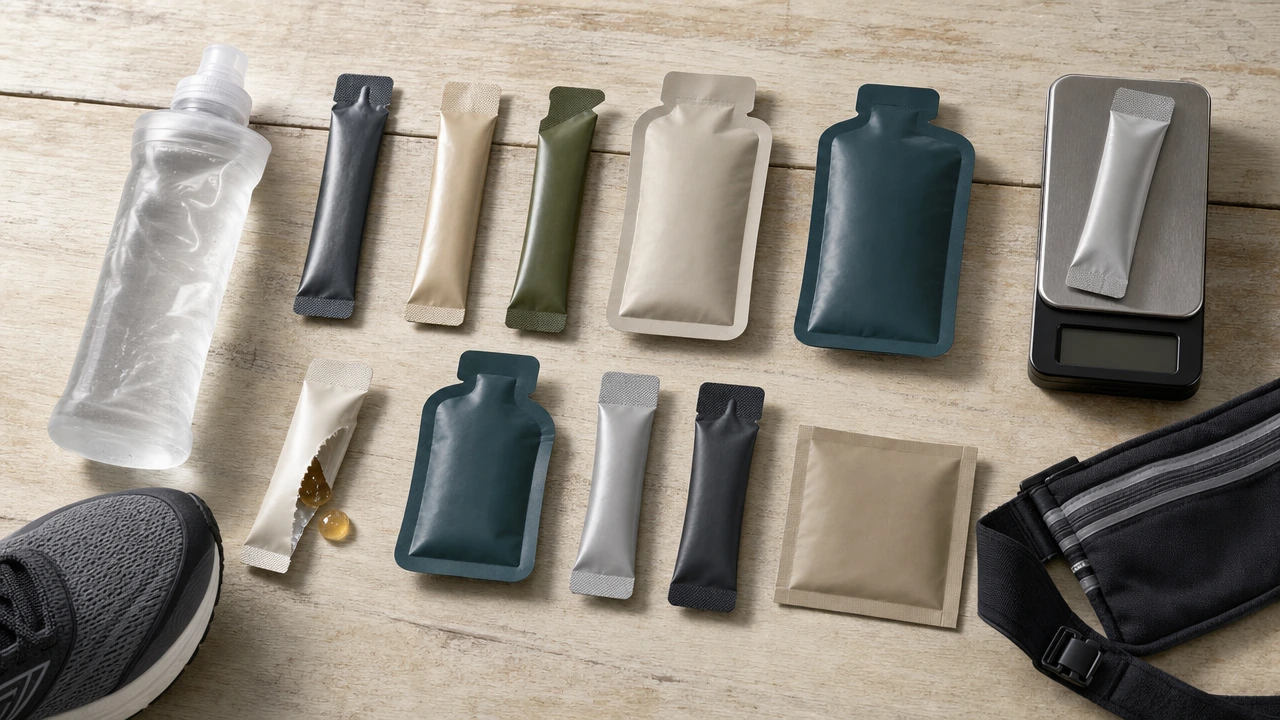
How to Choose an Energy Gel: A Runner's Buying Guide
Most gel roundups rank products without normalising them. Compare 30 gels on carbs, cost per 25 g of carbs, caffeine, sodium and whether they need water.
Key Takeaways
- Compare per 25 g of carbs, not per packet — the same 25 g costs $1.00 to $4.33 across the 19 US-priced gels.
- Look for fructose, not a ratio — glucose alone burns about 1.0 g a minute, a glucose-fructose mix about 1.75.
- Hydrogel is not proven gentler — seven pooled studies found no difference; one 11-runner trial disagrees.
- Never race a gel you have not run with — two weeks of gut training cut symptoms by around 60% in the gel group of a 25-runner trial.
An energy gel is concentrated sugar in a sachet, 21 to 90 g of carbohydrate depending on the one you pick up. Six label numbers decide whether it is the right one for you, and the table below carries all six for 30 gels sold in the US and UK.
Read a gel label in twenty seconds
- Carbs per packet. 21 to 90 g in the table, most standard gels 22 to 30 g. It decides how many you carry.
- Carb source. Look for fructose next to the glucose or maltodextrin: glucose alone is burned at about 1.0 g per minute, a glucose-fructose mix at about 1.75 (Jentjens and Jeukendrup, 2005). Fructose present matters more than the ratio on the box.
- Caffeine. Eight of the 30 carry it, 30 to 100 mg. The effective range is 3 to 6 mg per kg, so 180 to 360 mg for a 60 kg runner (Guest et al., 2021), and race-morning coffee counts toward it.
- Sodium. 0 to 250 mg per packet. Ninety minutes of moderate cycling in 30-degree heat cost eleven athletes about 1,565 mg (Baker et al., 2019), so no gel replaces it; size your own loss with the electrolyte calculator.
- Water. The labels disagree: 10 say none is needed, 10 say required or recommended, 10 say nothing. It decides where on the course you can take one.
- Cost per 25 g of carbs. Carbs Fuel Original and GU Energy Gel both list at $2.00; one delivers 50 g of carbohydrate, the other 23 g.
Five formats, and the two that surprise people
| Format | Carbs per packet | Water on the label | Who it suits |
|---|---|---|---|
| Standard gel | 21-50 g, plus one 90 g pouch | Required, recommended or unstated; PF 30 says not needed | Most runners. The three cheapest rows in the table are all standard gels. |
| Isotonic gel | 22-30 g | Not needed, on all four | Skipping the aid station, at a weight cost. |
| Hydrogel | 25-40 g | Not needed, on all three | Neutral taste, easy swallow; the priciest row. |
| Chews | 36 g per pack | Not stated | Dosing in small bites. Slow to chew at race pace. |
| Real-food alternative | 26-28 g | One says not needed, one says nothing | Long, slow efforts where sweet syrup stops going down. |
Not needing water has a weight. High5 Energy Gel Aqua carries 23 g of carbohydrate in a 66 g packet; GU Energy Gel carries the same 23 g in 32 g. You carry the water either way, in your pocket or at the aid station.
The hydrogel case is thinner than the price implies. Seven pooled studies found no difference in performance, carbohydrate oxidation or blood glucose (Sutehall et al., 2022); in runners, adding pectin and alginate did not lift oxidation above 1.1 g per minute (Barber et al., 2020). One trial points the other way.
The hydrogel evidence, including the study that disagrees
Sutehall et al. (2022) pooled seven studies against an isocaloric control and found no separation on performance, carbohydrate oxidation or blood glucose. Their caveat: several trials were not intense enough to provoke gut problems, so “no difference” is not “disproved at race intensity”. King et al. (2020) tested the marketing claim of less distress and found gut-distress ratings did not differ, concluding hydrogels are similar to traditional carbohydrate sources.
The exception is Rowe et al. (2022): 11 trained male runners taking 90 g per hour ran a time trial 2.1% faster on hydrogel, with fewer gut symptoms. It has not been repeated. Either way, what does the work in the packet is the glucose and fructose.
Energy gel spec table — grouped by type, not ranked
Every gel in our database that you can buy in the US or UK, sorted by type and listed alphabetically inside each group. There is no ranking: the last two columns are arithmetic on the official label, so you can see what a packet actually delivers and what 25 g of carbohydrate costs.
Click a column heading to sort the whole table by that column; click again to reverse.
| Product | Water? | |||||||
|---|---|---|---|---|---|---|---|---|
| Standard gels Concentrated syrup in a tear-top sachet. Whether it wants water depends on the label, so read the water column. | ||||||||
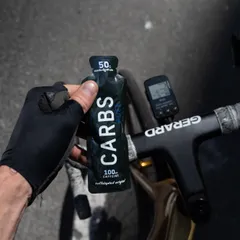 Carbs Fuel Caffeinated Original 50g Energy Gel
maltodextrin, sucrose, fructose · 2:1
Carbs Fuel Caffeinated Original 50g Energy Gel
maltodextrin, sucrose, fructose · 2:1
|
— | 50 g | — | 100 mg | 105 mg | Advised | $2.5 / — | $1.25 |
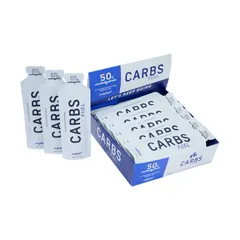 Carbs Fuel Original 50g Energy Gel
maltodextrin, sucrose, fructose · 2:1
Carbs Fuel Original 50g Energy Gel
maltodextrin, sucrose, fructose · 2:1
|
— | 50 g | — | 0 | 105 mg | Advised | $2 / — | $1 |
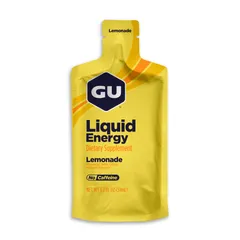 GU Energy Liquid Energy
maltodextrin, fructose
GU Energy Liquid Energy
maltodextrin, fructose
|
— | 24 g | — | 0 | 74.8 mg | Advised | $2.5 / — | $2.6 |
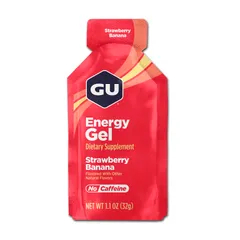 GU Energy Original Energy Gel
maltodextrin, fructose
GU Energy Original Energy Gel
maltodextrin, fructose
|
32 g | 23 g | 72% | 0 | 60 mg | Advised | $2 / — | $2.17 |
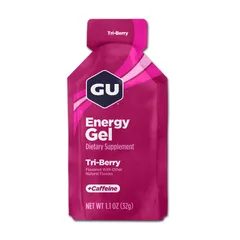 GU Energy Original Energy Gel (caffeinated flavours)
maltodextrin, fructose
GU Energy Original Energy Gel (caffeinated flavours)
maltodextrin, fructose
|
32 g | 23 g | 72% | 40 mg | 60 mg | Advised | $2 / — | $2.17 |
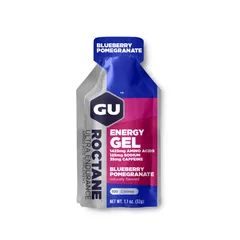 GU Energy Roctane Energy Gel
maltodextrin, fructose
GU Energy Roctane Energy Gel
maltodextrin, fructose
|
32 g | 21 g | 66% | 35 mg | 125 mg | Advised | $3 / — | $3.57 |
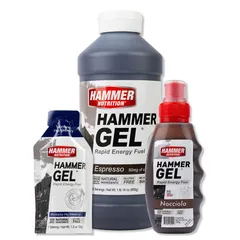 Hammer Nutrition Hammer Gel
maltodextrin, fruit juice concentrate, rice syrup
Hammer Nutrition Hammer Gel
maltodextrin, fruit juice concentrate, rice syrup
|
33 g | 22 g | 67% | 0 | 25 mg | — | $1.46 / — | $1.66 |
 HIGH5 Energy Gel Caffeine
glucose syrup, maltodextrin
HIGH5 Energy Gel Caffeine
glucose syrup, maltodextrin
|
40 g | 23 g | 57% | 30 mg | 16 mg | — | — / £1.45 | — |
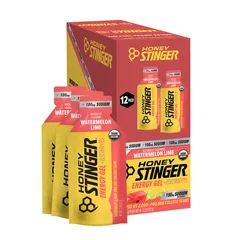 Honey Stinger Electrolyte Energy Gel (Watermelon Lime)
organic tapioca syrup, organic honey
Honey Stinger Electrolyte Energy Gel (Watermelon Lime)
organic tapioca syrup, organic honey
|
31 g | 24 g | 77% | 0 | 100 mg | — | $1.67 / — | $1.74 |
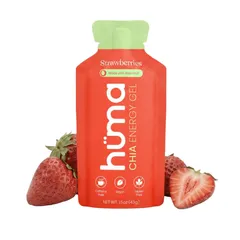 Huma Chia Energy Gel - Original
fruit puree, cane sugar, brown rice syrup, chia seed · 2:1
Huma Chia Energy Gel - Original
fruit puree, cane sugar, brown rice syrup, chia seed · 2:1
|
43 g | 24 g | 56% | 0 | 105 mg | Yes | $2.5 / — | $2.6 |
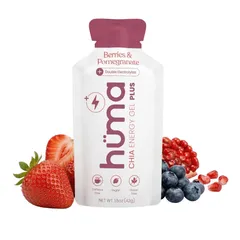 Huma Chia Energy Gel PLUS (double electrolytes)
fruit juice concentrate, brown rice syrup, fruit puree, chia seed · 2:1
Huma Chia Energy Gel PLUS (double electrolytes)
fruit juice concentrate, brown rice syrup, fruit puree, chia seed · 2:1
|
42 g | 24 g | 57% | 0 | 240 mg | Yes | $2.75 / — | $2.86 |
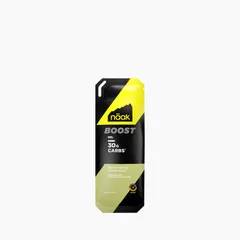 Naak BOOST Gel 30 - Salted Lemon
agave powder, dehydrated tapioca syrup, dextrose · 2:1
Naak BOOST Gel 30 - Salted Lemon
agave powder, dehydrated tapioca syrup, dextrose · 2:1
|
48 g | 30 g | 63% | 0 | 250 mg | — | $4.35 / — | $3.62 |
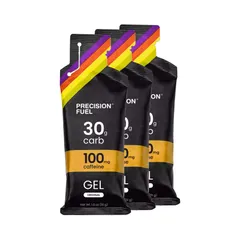 Precision Fuel & Hydration PF 30 Caffeine Gel
maltodextrin, fructose · 2:1
Precision Fuel & Hydration PF 30 Caffeine Gel
maltodextrin, fructose · 2:1
|
51 g | 30 g | 59% | 100 mg | 0 mg | No | — / £3.16 | — |
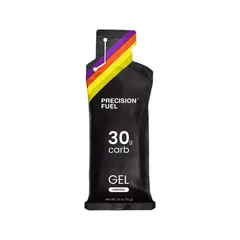 Precision Fuel & Hydration PF 30 Gel
maltodextrin, fructose · 2:1
Precision Fuel & Hydration PF 30 Gel
maltodextrin, fructose · 2:1
|
51 g | 30 g | 59% | 0 | 0 mg | No | — / £2.37 | — |
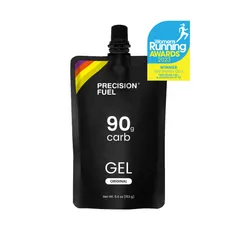 Precision Fuel & Hydration PF 90 Gel
maltodextrin, fructose · 2:1
Precision Fuel & Hydration PF 90 Gel
maltodextrin, fructose · 2:1
|
153 g | 90 g | 59% | 0 | 0 mg | — | — / £5 | — |
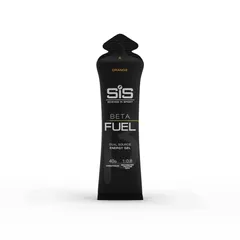 Science in Sport Beta Fuel Energy Gel
maltodextrin, fructose · 1:0.8
Science in Sport Beta Fuel Energy Gel
maltodextrin, fructose · 1:0.8
|
— | 40 g | — | 0 | 12 mg | — | — / £2.33 | — |
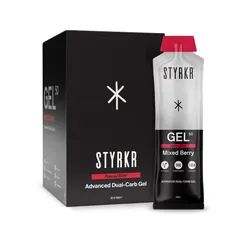 STYRKR GEL50 Dual-Carb Energy Gel
maltodextrin, fructose · 1:0.8
STYRKR GEL50 Dual-Carb Energy Gel
maltodextrin, fructose · 1:0.8
|
72 g | 50 g | 69% | 0 | 0 mg | — | — / £2.5 | — |
 TORQ TORQ Caffeine Energy Gel (Guarana)
maltodextrin, fructose · 2:1
TORQ TORQ Caffeine Energy Gel (Guarana)
maltodextrin, fructose · 2:1
|
45 g | 29 g | 64% | 89 mg | 49 mg | Yes | — / £2.4 | — |
 TORQ TORQ Energy Gel
maltodextrin, fructose · 2:1
TORQ TORQ Energy Gel
maltodextrin, fructose · 2:1
|
45 g | 29 g | 64% | 0 | 49 mg | Yes | — / £2.2 | — |
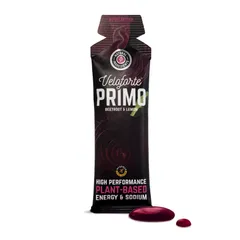 Veloforte Primo - Natural Energy Gel
fruit juice (glucose and fructose), beetroot
Veloforte Primo - Natural Energy Gel
fruit juice (glucose and fructose), beetroot
|
33 g | 22 g | 67% | 0 | 110 mg | — | — / £2.17 | — |
| Isotonic gels Diluted to roughly blood concentration so the brand says no water is needed. Bigger, heavier packets for the same carbs. | ||||||||
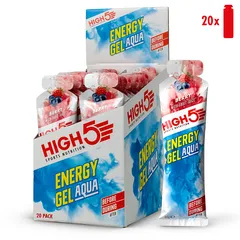 HIGH5 Energy Gel Aqua
glucose syrup, maltodextrin, fruit juice concentrate
HIGH5 Energy Gel Aqua
glucose syrup, maltodextrin, fruit juice concentrate
|
66 g | 23 g | 35% | 0 | 28 mg | No | — / £1.42 | — |
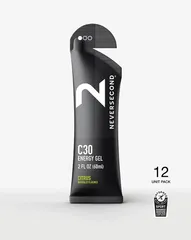 Neversecond C30 Energy Gel
maltodextrin, fructose · 2:1
Neversecond C30 Energy Gel
maltodextrin, fructose · 2:1
|
— | 30 g | — | 0 | 200 mg | No | $3.5 / — | $2.92 |
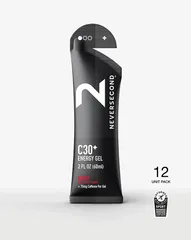 Neversecond C30+ Caffeine Energy Gel
maltodextrin, fructose · 2:1
Neversecond C30+ Caffeine Energy Gel
maltodextrin, fructose · 2:1
|
— | 30 g | — | 75 mg | 200 mg | No | $3.5 / — | $2.92 |
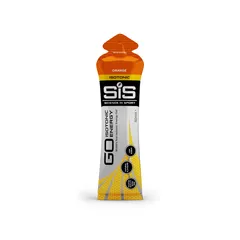 Science in Sport GO Isotonic Energy Gel
maltodextrin (single source)
Science in Sport GO Isotonic Energy Gel
maltodextrin (single source)
|
— | 22 g | — | 0 | 4 mg | No | — / £1.75 | — |
| Hydrogels Pectin and alginate form a gel in the stomach. Same carbs per packet as a standard gel; the evidence for easier digestion is mixed. | ||||||||
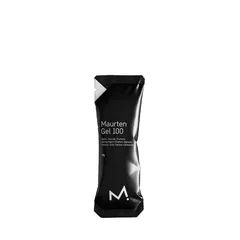 Maurten Gel 100
glucose, fructose · 1:0.8
Maurten Gel 100
glucose, fructose · 1:0.8
|
40 g | 25 g | 63% | 0 | 20 mg | No | $3.75 / £2.83 | $3.75 |
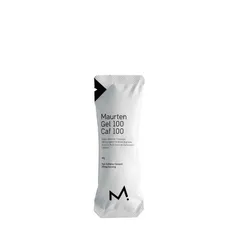 Maurten Gel 100 CAF 100
glucose, fructose · 1:0.8
Maurten Gel 100 CAF 100
glucose, fructose · 1:0.8
|
40 g | 25 g | 63% | 100 mg | 22 mg | No | $4.33 / £3.38 | $4.33 |
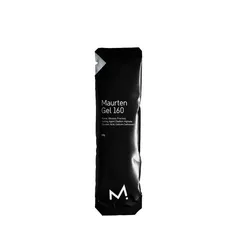 Maurten Gel 160
glucose, fructose · 1:0.8
Maurten Gel 160
glucose, fructose · 1:0.8
|
65 g | 40 g | 62% | 0 | 30 mg | No | $4.58 / £3.75 | $2.86 |
| Chews Solid gummies you chew. Slower to eat on the run, easier to portion. | ||||||||
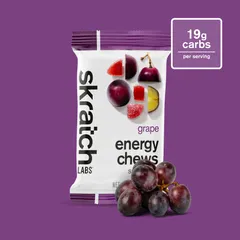 Skratch Labs Energy Chews Sport Fuel
sugar, glucose syrup
Skratch Labs Energy Chews Sport Fuel
sugar, glucose syrup
|
50 g | 36 g | 72% | 0 | 90 mg | — | $2.75 / — | $1.91 |
| Real-food alternatives Rice cakes, waffles, yokan and similar. Carbs come with fat or protein, so digestion is slower. | ||||||||
 Spring Energy Awesome Sauce (Cinnamon Apple Pie Gel, Vegan)
apple juice, basmati rice, apple sauce, maple syrup
Spring Energy Awesome Sauce (Cinnamon Apple Pie Gel, Vegan)
apple juice, basmati rice, apple sauce, maple syrup
|
60 g | 28 g | 47% | 0 | 45 mg | No | $4.2 / — | $3.75 |
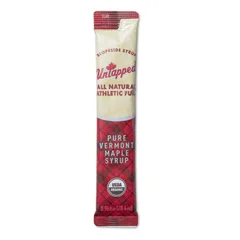 UnTapped Maple UnTapped Athletic Fuel
organic pure Vermont maple syrup
UnTapped Maple UnTapped Athletic Fuel
organic pure Vermont maple syrup
|
38 g | 26 g | 68% | 0 | 5 mg | — | $2.49 / — | $2.39 |
Packet weight, carbohydrate, caffeine and sodium are copied from each brand's official label. Carb density = carbs ÷ packet weight. Price is the list price per packet at the official store or a named retailer on the date shown; per-25-g cost = price ÷ carbs × 25. Product images are the brands' official product photos, shown for identification. 30 products · labels and prices checked 2026-09-09.
How this table is built (and why nothing is ranked)
Rows are grouped by how the product is made, then alphabetical by brand. No product gets a score, because the right gel depends on your stomach, your race length and your budget, not on a leaderboard.
- Carb density (carbs ÷ packet weight) tells you how much of what you carry is fuel. A 25 g-carb hydrogel in a 40 g packet is 63%; the same carbs in a 60 g isotonic packet is 42%.
- Per 25 g carbs normalises price to the amount of fuel you actually need, so a 45 g-carb gel that costs twice as much can still be the cheaper fuel.
- Prices are list prices at the official store where it sells direct, otherwise at a named retailer, on the date shown. Sale prices are ignored. Currency conversions are never applied.
RunDida earns no commission on any product in this table. Links go to the brand's own product page and are marked nofollow.
What the table shows once you sort it
- Cheapest per 25 g of carbohydrate: Carbs Fuel Original ($1.00), Carbs Fuel Caffeinated ($1.25), Hammer Gel ($1.66), Honey Stinger Electrolyte Energy Gel ($1.74), Skratch energy chews ($1.91). Maurten Gel 100 CAF 100 sits at the far end at $4.33.
- The bigger packet is the cheaper fuel, even inside one brand. Maurten Gel 160 is $2.86 per 25 g against $3.75 for Gel 100.
- Carb density runs from 35% to 77%. That column is how much of what you carry is fuel rather than water.
- Sodium is not why you buy a gel. Näak Boost Gel 30 tops the table at 250 mg; Styrkr Gel50 and all three Precision Fuel gels are 0 mg, because Precision Fuel sells electrolytes separately.
- UK-only rows have no per-25 g figure: the column is worked out from the dollar price (19 of the 30 have one, 14 have a pound price). Divide the pound price by the carbs and multiply by 25.
Pick by your situation
- Marathon. Beyond 2.5 hours the ceiling rises to about 90 g of carbohydrate per hour, which needs a mixed glucose-fructose formula (Burke et al., 2011), so check the carb source before the brand. Packet count is the gel calculator; timing is the race fuelling strategy guide.
- Half marathon. Under 2.5 hours the target is 30 to 60 g per hour (Burke et al., 2011), so a two-hour half is two to four packets. Buy for how easily it goes down, and put the effort into the days before with the carb loading calculator.
- Sensitive stomach. Buy a mixed pack, not a box of one thing, and test it running: in a 25-runner trial the group that took gels at race intake for two weeks cut gut symptoms by around 60%, the placebo group not at all (Costa, Miall et al., 2017). The marathon nutrition guide covers how.
- You could not swallow it late last time. A different problem from your stomach. Read the density column: 35% is mostly water, 72% is mostly syrup, and runners who hit this switch to isotonic or thinner gels for the closing hour.
- You want caffeine. The three 100 mg entries are Maurten Gel 100 CAF 100, Precision Fuel PF 30 Caffeine and Carbs Fuel Caffeinated; the other five sit between 30 and 89 mg.
- HYROX and hybrid races. Packet size and mess matter more than the last 5 g of carbohydrate through sled pushes; the HYROX hub covers the rest.
Check these before you pay
- The caffeinated version looks almost identical. GU sells caffeine as a flavour, so the dose follows the flavour in your hand. Read the flavour name, not just the brand.
- Check what your race hands out. In 2026 Boston puts Maurten Gel 100 and Gel 100 CAF 100 on course at three points, Berlin gives Gel 100 at 27.5 km, London hands out Lucozade Sport Gels at miles 13 and 19. A course gel you have never used is still a new gel.
- A label is a claim, not a measurement. Third-party tests in 2024 found Spring Energy Awesome Sauce carried 30% to 38% of the carbohydrate on its label; the brand traced it to its own rice-cooking and applesauce process, reformulated, and now lists 28 g in a 60 g pouch where the old label claimed 45 g in 54 g. The testing was crowdfunded, and Maurten, a competitor, was among the donors.
- Clif Shot is gone. Clif no longer lists an energy gel. Its chews are still sold: 24 g of carbohydrate per three-piece 30 g serving, 48 g in a full 60 g packet, printed in the Nutrition Facts image on each product page.
- Match the water column to the course. A gel that needs water with aid stations 5 km apart is a plan, not a detail: the hydration calculator gives the volume, the hydration guide covers sweat sodium.
Sources & References
- (2005). High rates of exogenous carbohydrate oxidation from a mixture of glucose and fructose ingested during prolonged cycling exercise. British Journal of Nutrition.
- (2010). Novel findings on the metabolic effects of the low glycaemic carbohydrate isomaltulose (Palatinose™). British Journal of Nutrition.
- (2011). Carbohydrates for training and competition. Journal of Sports Sciences.
- (2012). Nutritional intake and gastrointestinal problems during competitive endurance events. Medicine & Science in Sports & Exercise.
- (2013). Fructose-maltodextrin ratio governs exogenous and other CHO oxidation and performance. Medicine & Science in Sports & Exercise.
- (2014). Carbohydrate-dependent, exercise-induced gastrointestinal distress. Nutrients.
- (2014). Gastrointestinal complaints during exercise: prevalence, etiology, and nutritional recommendations. Sports Medicine.
- (2015). Ingesting Isomaltulose Versus Fructose-Maltodextrin During Prolonged Moderate-Heavy Exercise Increases Fat Oxidation but Impairs Gastrointestinal Comfort and Cycling Performance. International Journal of Sport Nutrition and Exercise Metabolism.
- (2015). Fructose-Glucose Composite Carbohydrates and Endurance Performance: Critical Review and Future Perspectives. Sports Medicine.
- (2017). Gut-training: the impact of two weeks repetitive gut-challenge during exercise on gastrointestinal status, glucose availability, fuel kinetics, and running performance. Applied Physiology, Nutrition, and Metabolism.
- (2017). Systematic review: exercise-induced gastrointestinal syndrome—implications for health and intestinal disease. Alimentary Pharmacology & Therapeutics.
- (2017). A comparison of isomaltulose versus maltodextrin ingestion during soccer-specific exercise. European Journal of Applied Physiology.
- (2019). Exercise intensity effects on total sweat electrolyte losses and regional vs. whole-body sweat [Na+], [Cl-], and [K+]. European Journal of Applied Physiology.
- (2019). The effects of isomaltulose ingestion on gastric parameters and cycling performance in young men. Journal of Exercise Science & Fitness.
- (2020). Pectin-Alginate Does Not Further Enhance Exogenous Carbohydrate Oxidation in Running. Medicine & Science in Sports & Exercise.
- (2020). Carbohydrate Hydrogel Products Do Not Improve Performance or Gastrointestinal Distress During Moderate-Intensity Endurance Exercise. International Journal of Sport Nutrition and Exercise Metabolism.
- (2021). International society of sports nutrition position stand: caffeine and exercise performance. Journal of the International Society of Sports Nutrition.
- (2022). Glucose and Fructose Hydrogel Enhances Running Performance, Exogenous Carbohydrate Oxidation, and Gastrointestinal Tolerance. Medicine & Science in Sports & Exercise.
- (2022). The Effect of Sodium Alginate and Pectin Added to a Carbohydrate Beverage on Endurance Performance, Substrate Oxidation and Blood Glucose Concentration: A Systematic Review and Meta-analysis. Sports Medicine - Open.