
Running on an Empty Stomach: Good or Bad?
Easy runs on an empty stomach are safe for most healthy runners — but they burn only ~3 g of extra fat, and eating first wins for long or hard sessions.
Key Takeaways
- Fine for easy runs, wrong for hard ones. A 46-study review found eating first only helps prolonged aerobic work — short easy fasted runs don't suffer.
- The extra fat burn is about 3 grams. Fasted cardio oxidizes ~3 g more fat per session (~27 kcal); a 4-week RCT found no body-composition difference.
- Muscle is safer than you think. The RCT saw no lean-mass difference; your daily protein total matters far more than one skipped breakfast.
- Know your abort signals. Dizziness, cold sweat or nausea means stop, walk, eat — and diabetics or fainters shouldn't run fasted at all.
Every training plan seems to say "never run on an empty stomach," and every real morning says "there's no time to eat and digest." The good news: for most healthy runners doing an easy run of up to about an hour, heading out fasted is safe and performance-neutral. The catch: the fat-burning payoff is far smaller than advertised, and for long or hard sessions, eating first genuinely wins.
The Short Answer
Running on an empty stomach is fine for short, easy runs and a bad idea for workouts. The largest review on the question — 46 studies — found that eating before exercise improved prolonged aerobic performance, but made no difference to shorter sessions (Aird 2018). Keep the fasted slot for conversational-pace runs and fuel your quality days.
Skip fasted running entirely if you have diabetes or take glucose-lowering medication, have a history of fainting or morning dizziness, are pregnant, or are in your first weeks of running — more on the full list below.
What's Actually in the Tank at 6 a.m.
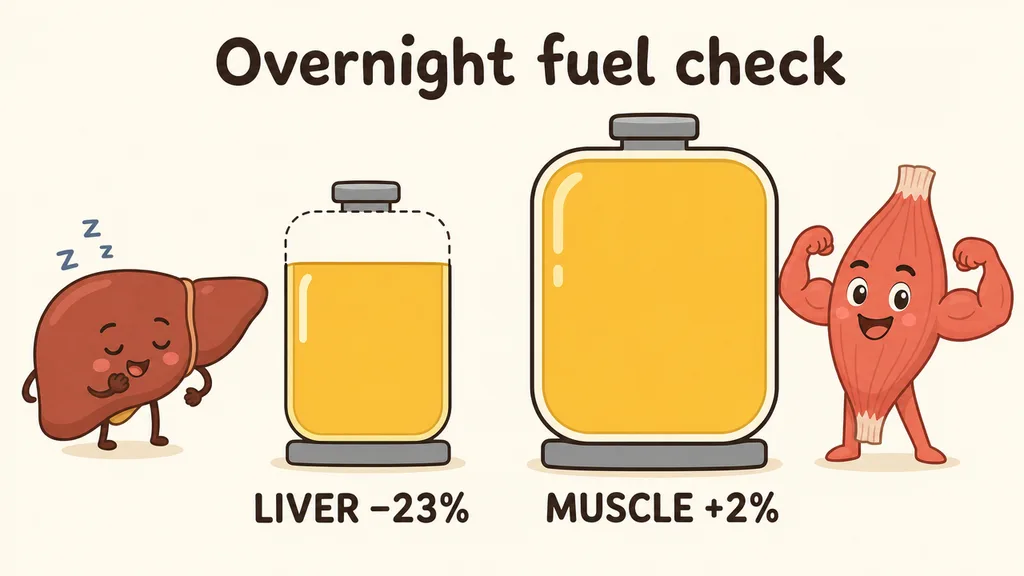
Overnight, your liver glycogen — the store that keeps blood sugar stable — drops by roughly a fifth (−23% in direct 13C-MRS measurements, Iwayama 2021). Your muscle glycogen, the fuel that actually powers your legs, barely moves overnight (+2% in the same measurements). That's why an easy fasted run works: the legs have fuel, and at low intensity your body simply shifts the mix toward fat.
That shift is real and measurable — fasted aerobic exercise burns more fat during the session than the same run after breakfast (Vieira 2016, meta-analysis of 27 studies). The problem is what that difference adds up to, which brings us to the number nobody advertises.
The 3-Gram Truth About Fat Burning
Across those 27 studies, the extra fat oxidized in a fasted session averaged about 3 grams — roughly 27 kcal. That's the entire "fasted cardio burns more fat" effect, per run, measured. Your body then quietly rebalances fuel use across the rest of the day.
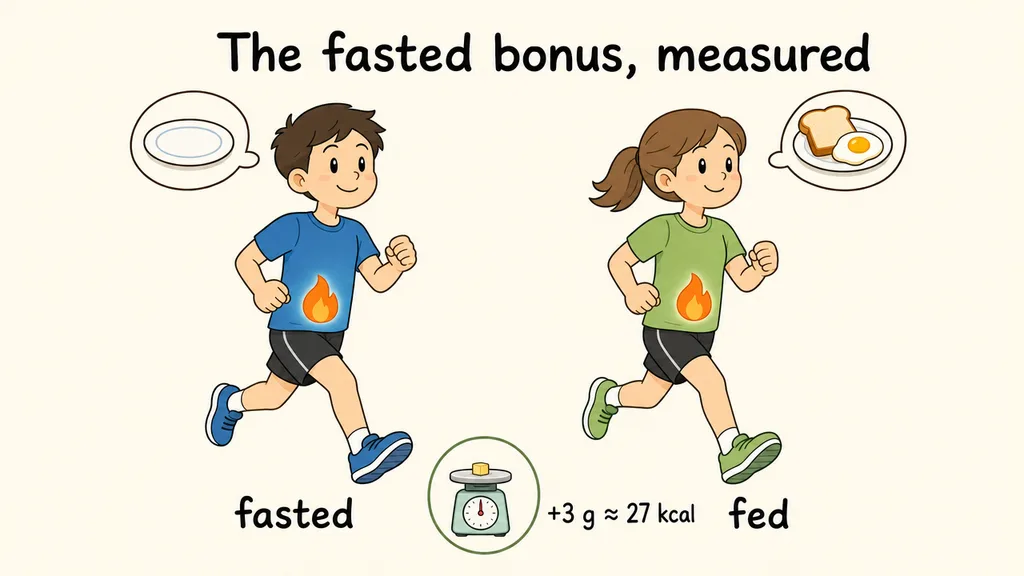
The outcome data agrees: a 4-week randomized trial put 20 young women on supervised calorie deficits with identical training volume — one group ran fasted, one ate first — and found no significant difference in fat loss or any other body-composition measure (Schoenfeld 2014). If fat loss is your actual goal, the levers that matter are weekly volume and your calorie budget — the running calorie calculator puts numbers on both, and our fat-loss running guide covers the full picture.
Will Fasted Running Eat My Muscle?
This is the fear behind half the searches on this topic, and the evidence is calmer than the forums. The same 4-week RCT found no lean-mass difference between fasted and fed runners. Protein breakdown does tick up when you train without eating — but what determines whether you keep muscle is your daily protein total, not the timing of one breakfast.
- Hit your day target: 1.2–2.0 g of protein per kg of body weight — the protein calculator gives you a personal number in seconds.
- Put 20–40 g of it in the meal after your fasted run.
- Worry more about chronically low calories than about any single fasted hour.
When Fasted Running Actually Hurts
Two situations flip the verdict. First, duration: the 46-study review splits cleanly by time — fed runners perform better in prolonged aerobic work, while shorter sessions show no difference (its abstract draws no exact minute line). Our practical cap of about an hour is a rule of thumb that keeps you comfortably on the short side as liver glycogen runs down. Second, intensity: intervals, tempo and hill sessions run on empty tend to fall apart — you'll hit the workout's purpose harder after eating. (The review covered intensity work too, but its headline results are about duration — so treat this one as coaching consensus rather than settled science.)
There is a genuine upside worth knowing: in a 6-week trial, the group that trained fasted — versus a group drinking ample carbs before and during every session — upgraded its fat-burning machinery more: key fat-metabolism enzymes rose 34–47% and the intensity at which fat burning peaks climbed 21% (Van Proeyen 2011, cycling study in men). But note the punchline: both groups improved their VO2max and time-trial results by the same amount. The engine room changed; the race results didn't. Treat fasted easy runs as a nice adaptation bonus, not a shortcut.
How to Run Fasted, Safely
- Cap it around an hour, conversational pace. Past about 90 minutes even easy runs need fuel — the same outer line our fat-loss guide draws. If you can't chat, you're past the intensity this works for — your easy zone is the ceiling.
- Drink water before you go. You wake up mildly dehydrated; thirst is not optional at 6 a.m.
- Black coffee is fine if your stomach tolerates it — caffeine before easy runs is well tested.
- Carry insurance on longer easy runs: one gel in the pocket costs nothing and ends a bad morning fast.
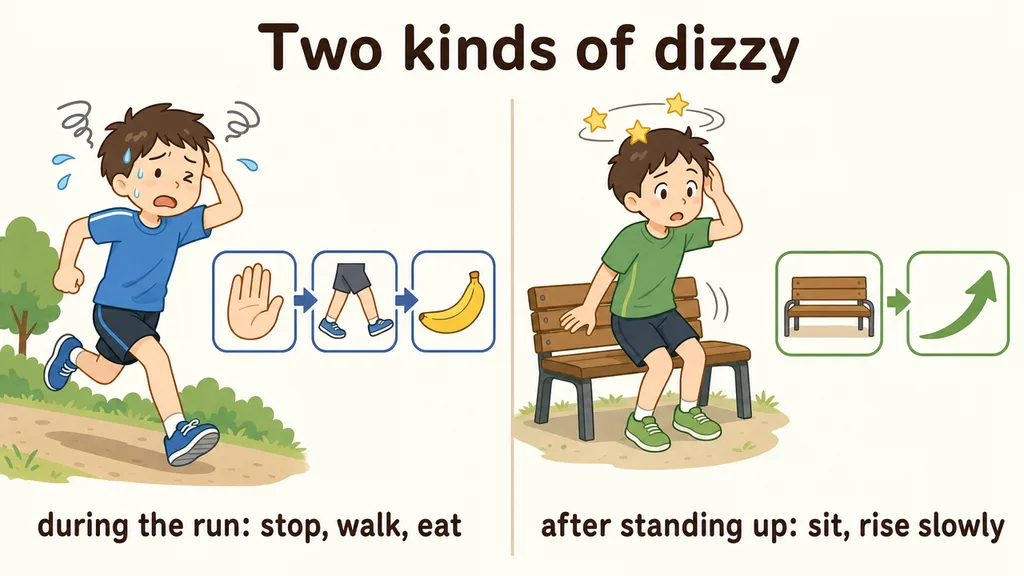
- Learn your abort signals: light-headedness, cold sweat, sudden nausea or wobbly legs mean walk, stop, eat. No easy run is worth pushing through those.
- Afterwards, eat normally within a couple of hours — carbohydrate first, 20–40 g of protein with it.
Who Should Eat First — No Exceptions
- Anyone with diabetes or on glucose-lowering medication — fasted exercise plus medication is a hypoglycemia setup; follow your doctor's plan, not a running site.
- Runners with a history of fainting, morning dizziness or low blood pressure.
- Pregnant runners — fuel first, always.
- Complete beginners — give your body a few weeks of fed running before experimenting.
- Anyone racing or doing a key workout — see the pre-race meal planner for timing a real breakfast.
If you want fuel but have no time to digest, the fix is smaller, not zero: half a banana or a slice of toast 15–30 minutes before an easy run sits fine in most stomachs, and a full carb-rich breakfast clears the stomach in roughly 1.5–2 hours. Day-to-day food strategy lives in the runner's daily nutrition guide.
For Women Specifically
Here's the detail the bro-science aisle misses: the 4-week fasted-cardio RCT cited throughout this guide was run on women — all 20 participants — and found no fat-loss advantage. So the "fasted cardio for women" pitch rests on a study that showed it doesn't beat eating first.
The bigger female-specific concern runs the other way: combining frequent fasted sessions with high mileage and a calorie deficit raises the risk of under-fueling (RED-S) — irregular cycles, recurring injuries and stalled training are the warning signs. If you run high volume, keep fasted runs occasional and your overall energy budget honest. Evidence on tailoring fasted running to menstrual-cycle phases is still thin — no confident protocol exists yet, whatever an influencer says.
Sources & References
- (2018). Effects of fasted vs fed-state exercise on performance and post-exercise metabolism: A systematic review and meta-analysis. Scandinavian Journal of Medicine & Science in Sports.
- (2016). Effects of aerobic exercise performed in fasted v. fed state on fat and carbohydrate metabolism in adults: a systematic review and meta-analysis. British Journal of Nutrition.
- (2014). Body composition changes associated with fasted versus non-fasted aerobic exercise. Journal of the International Society of Sports Nutrition.
- (2011). Beneficial metabolic adaptations due to endurance exercise training in the fasted state. Journal of Applied Physiology.
- (2021). Diurnal variations in muscle and liver glycogen differ depending on the timing of exercise. The Journal of Physiological Sciences.