Running in Jeju: Olle Trail, Hallasan & Island Races
Olle Trail coastal routes, Hallasan volcano trails to 1,947 m, and 5+ races including TransJeju UTMB. Visa-free entry for most nationalities.
Read City Guide →
Race Completed
This marathon has finished. Check back for next year's edition.
Finished this one? Turn your result into a keepsake:
Finisher certificate ·
Virtual race bib ·
Achievement card
See entry dates for other marathons →
| Race | 2026 Jeju International Marathon - Jun 7 |
|---|---|
| City | Jeju |
| Date | 2026-06-07 at 08:00 |
| Time Limit | 6 hours |
| Cutoff pace | 8:32/km |
| Timezone | Asia/Seoul |
| Official Site | Jeju Special Self-Governing Province |
| Fee trend | 2023 ₩40,0002025 ₩50,0002026 ₩50,000(3-yr +25.0%)· above industry avg (+7.7% vs +4.8%/yr) |
| Average Temperature | 19.5°C / 67°F |
|---|---|
| Humidity | 88% |
| Peak Wind | 19.2 km/h |
| Rain Chance | 28% |
| Typical Conditions | Warm and humid with early monsoon conditions |
What to Prepare: Early June on Jeju sits at the edge of monsoon season — expect 22-24 degrees Celsius at the 8 AM start, climbing toward 27 by late morning. Humidity regularly exceeds 80%. The Sumbi Coastal Road is flat but fully exposed to sun and wind. Start 10-15 seconds per km slower than your target pace, use every water station (every 2.5 km), and wet your cap with sponges provided from 7.5 km onward. Ocean crosswinds can be strong — draft when possible.
Based on historical averages for race week. Use our Weather Score Calculator and What to Wear Guide for personalized advice.
Winds peaking around 19.2 km/h — the typical daily maximum for this date — can affect your pace by 5-15 seconds per kilometer in exposed stretches. Headwinds slow you down exponentially: a 20 km/h wind costs more than twice a 10 km/h wind.
Calculate your wind-adjusted pace →Based on 20 years of race-week weather (2005-2024), MERRA-2 reanalysis
| Cooler | Typical | Warmer | |
|---|---|---|---|
| Temperature | 18.1°C | 19.6°C | 20.9°C |
| Dew point | 15.3°C | 17.5°C | 19.3°C |
Data: NASA POWER (MERRA-2 reanalysis), NASA Langley Research Center
| Course Type | Coastal Out-and-Back |
|---|---|
| Elevation Gain | 60m |
| Terrain | Road |
| Profile | A scenic coastal marathon along the Sumbi Coastal Road on Jeju's northeast shore — Korea's first nationally designated tourism road. The course departs from Gujwa Sports Complex, passes Gimnyeong Beach and Woljeong Beach, and extends to Jongdal Beach before returning. Flat terrain with gentle rolling undulations and persistent ocean crosswinds. Runners pass turquoise waters, black volcanic rock, and views of Seongsan Ilchulbong (UNESCO World Heritage) at the turnaround. |
The 30th Jeju International Tourism Marathon Festival routes runners along the Sumbi Coastal Road on Jeju's northeast coast — a 24.7 km stretch designated in 2025 as Korea's first official national tourism road. The full and half marathon start from Gujwa Sports Complex at 8:00 AM, while the 10 km race launches simultaneously from Goseong Sunrise Sports Complex in Seongsan-eup. All distances follow the coastline and return to their starting points.
This is not a city marathon. There are no skyscrapers, no spectator-lined boulevards, no subway rumble underfoot. Instead, runners face a two-lane coastal road with turquoise ocean on one side and black volcanic stone walls on the other. The course is flat with gentle undulations — no significant hills, but persistent crosswinds from the East China Sea add a physical challenge that elevation profiles cannot capture. Approximately 10,000-15,000 runners participate across all distances, making it a mid-sized destination race that rarely feels crowded beyond the first 2 km.
The opening kilometers pass through Gujwa-eup before the road hugs the coast near Gimnyeong Beach. This stretch sets the visual tone for the entire race: black lava rock shoreline, clear emerald water, and low stone walls that channel the ocean breeze directly into your face or at your back depending on your direction. The 10 km turnaround is at Woljeong Beach, one of Jeju's most photographed stretches of white sand.
Between Gimnyeong and Woljeong (km 5-10), the road is fully exposed — no buildings, no tree canopy, just open coastal road. This is where wind hits hardest. If the wind is in your face on the way out, you will have a tailwind on the return. Resist the temptation to fight the headwind; save energy for the second half. Aid stations with water and sports drinks appear every 2.5 km. Sponges are available from 7.5 km onward — use them on your neck and cap, not just your face.
The half marathon turnaround at Pyeongdae Handong Beach (around km 10.5) offers views of Udo Island offshore. Half marathoners turn here and retrace their steps to Gujwa. For full marathoners, the road continues east.
Past the half marathon turnaround, the field thins dramatically. Full marathoners continue along increasingly quiet coastal road toward Jongdal Beach, the full marathon turnaround point. This stretch passes scattered fishing villages and small oreum (volcanic cones) visible inland. The terrain remains flat but the isolation increases — fewer spectators, fewer runners, and the ocean stretching to the horizon.
The turnaround at Jongdal is the psychological pivot of the race. You are now heading back west with roughly 20 km remaining. If the prevailing east-to-west wind was in your face on the outbound leg, it now becomes a tailwind — a significant advantage. Runners who controlled their pace in the first half often find the return surprisingly manageable despite the distance. However, by km 30-35, the June humidity becomes the dominant challenge. Even at 80% humidity with temperatures climbing toward 27 degrees Celsius, the air feels heavy. Hit every remaining aid station. Snacks are provided every 5 km from the 10 km mark.
The final 5 km retraces the Gimnyeong Beach section, now with familiar landmarks signaling the approaching finish. Gujwa Sports Complex comes into view around km 41. The finish line atmosphere is festive — the marathon doubles as a tourism festival, with food stalls and live entertainment awaiting finishers.
Wind is the defining variable. Jeju sits in the East China Sea with nothing to block prevailing ocean winds. The Sumbi Coastal Road has no tall buildings or dense tree lines — runners are exposed for virtually the entire 42 km. Check the wind direction on race morning and plan accordingly. A headwind outbound means a tailwind return; budget your energy for a negative split. A tailwind outbound is deceptively pleasant — the return into the wind at km 25+ can be devastating if you went out too fast.
Humidity management: June sits at the edge of Jeju's monsoon season (jangma). Average humidity exceeds 80%, and rainfall probability is around 35%. Even on dry days, the air is heavy. Practical adjustments: wear light, breathable fabric; apply anti-chafe before the start; wet your cap at every sponge station; carry a salt tablet or electrolyte gel for the second half. Your Race Pace Calculator target should assume a 5-8% slower finishing time compared to a cool, dry race.
Use our Weather Score Calculator to assess race morning conditions, and the Hydration Calculator to plan your fluid intake for the humidity.
Arriving early? Explore daily running routes and local tips.
Olle Trail coastal routes, Hallasan volcano trails to 1,947 m, and 5+ races including TransJeju UTMB. Visa-free entry for most nationalities.
Read City Guide →Use our free training tools to get race-ready:
Free running pace calculator for 5K, 10K, half marathon, and marathon. Get min/km or min/mile, your ...
Use Calculator →Free printable pace band for marathon, half marathon, or custom distance. Choose even, negative, or ...
Use Calculator →7 AM race, wake at 3:45 AM? Enter the gun time; we work backward through meal, gear, bathroom, warm-...
Use Calculator →Enter temperature and humidity to calculate dew point and its impact on your running pace. 7-zone ch...
Use Calculator →How much does a headwind actually slow you down? This free calculator turns wind speed and direction...
Use Calculator →Free marathon predictor — convert your 5K, 10K, or half marathon time into race-day estimates from R...
Use Calculator →Registration for the 30th Jeju International Tourism Marathon Festival opened on March 5, 2026 at 14:00 KST and closes on April 17, 2026 at 18:00 KST, or earlier if capacity is reached. The capacity is approximately 15,000 across all distances. Fees are 50,000 KRW for the full and half marathon, 40,000 KRW for the 10 km. Registration is first-come-first-served — no lottery. Register through the official website at jejumarathon.com. Groups of 30+ people receive booth provisions.
The cutoff times are 6 hours for the full marathon, 4 hours for the half marathon, and 3 hours for the 10 km. All distances start at 8:00 AM KST. The 6-hour full marathon cutoff is generous enough for run-walk strategies — roughly a 8:30/km average pace. Chip timing is used for all distances.
The full and half marathon start and finish at Gujwa Sports Complex (also called Gujwa Comprehensive Sports Park) in Gujwa-eup, on Jeju's northeast coast. The 10 km starts and finishes at Goseong Sunrise Sports Complex (Ilchulbong Sports Complex) in nearby Seongsan-eup. Both venues are approximately 45-60 minutes by car from Jeju International Airport and 30-40 minutes from Jeju City center.
Most nationalities can enter Jeju Island visa-free for up to 30 days under Jeju's special visa waiver program. This covers citizens of most countries except a specific list of 24 excluded nations. You must fly directly to Jeju International Airport — the visa waiver does not apply if you enter through mainland Korea first. A K-ETA (Korea Electronic Travel Authorization) approval is required before your flight, though K-ETA exemptions have been extended through December 2026 for many nationalities. Important: the Jeju visa waiver only permits travel within Jeju Island — you cannot travel to mainland Korea without a separate visa.
Aid stations are positioned every 2.5 km with bottled water and ion drinks (sports drinks). Wet sponges are available every 5 km starting from the 7.5 km mark — essential for cooling in the June humidity. Snacks (energy food) are provided every 5 km starting from the 10 km mark. The organizers also offer free knee taping and bandage service before the race. Medical support is stationed along the course. There are no personal aid station setups — rely on the official stations.
Gujwa Sports Complex is approximately 50 km east of Jeju International Airport. By car or taxi, the drive takes 45-60 minutes via the coastal road or the cross-island expressway. Race-day shuttle buses typically run from Jeju City — check the official website closer to race day for shuttle schedules and pickup points. There is no direct public bus to Gujwa Sports Complex early enough for the 8:00 AM start. If staying in Jeju City, booking a taxi or rental car the night before is the safest option. Many runners choose accommodation in the Gujwa or Seongsan area to minimize race-morning logistics.
Jeju has a busy race calendar: the Jeju MBC International Peace Marathon (February, Hallim coast — half marathon and 10 km), the Beautiful Jeju International Marathon (October — half and 10 km), the Jeju Mandarin International Marathon (November, Jocheon — full, half, and 10 km along Hamdeok Beach), and TransJeju by UTMB (October — 100 km, 50 km, 20 km, 10 km trail ultra on volcanic terrain including Hallasan summit). The Tourism Marathon Festival in June is the largest of these events.
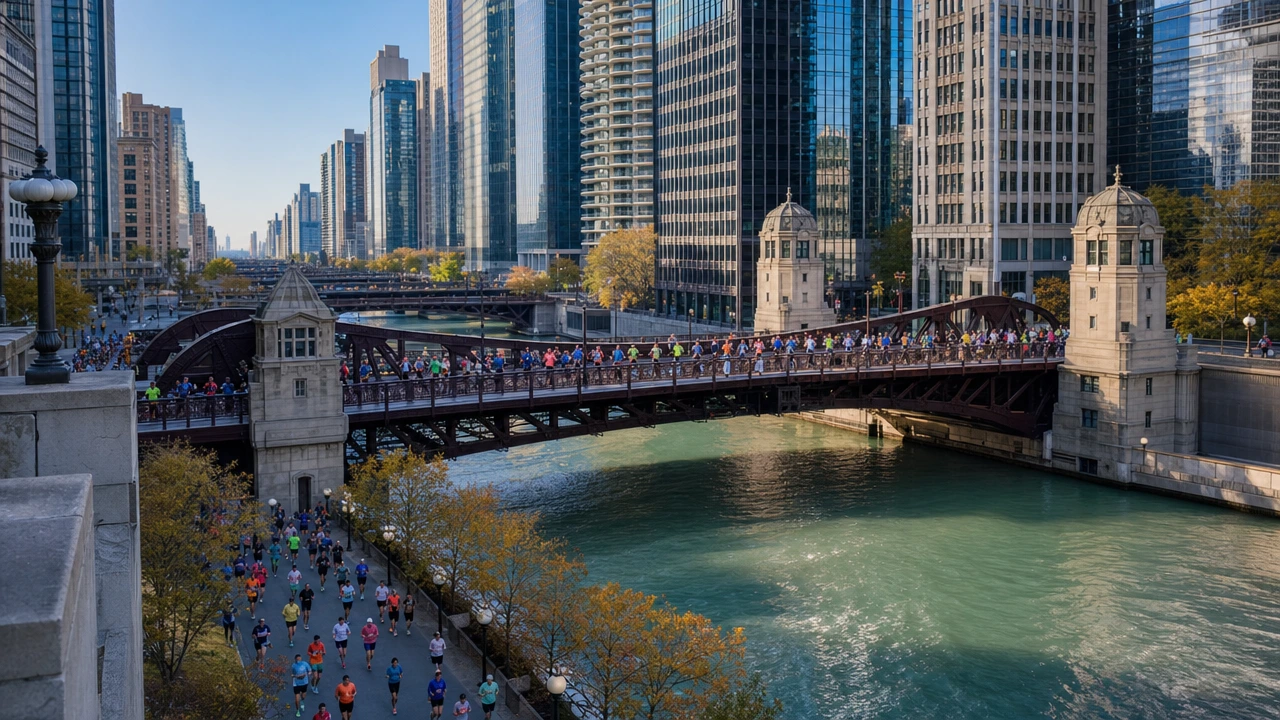
Chicago · 2026-10-11
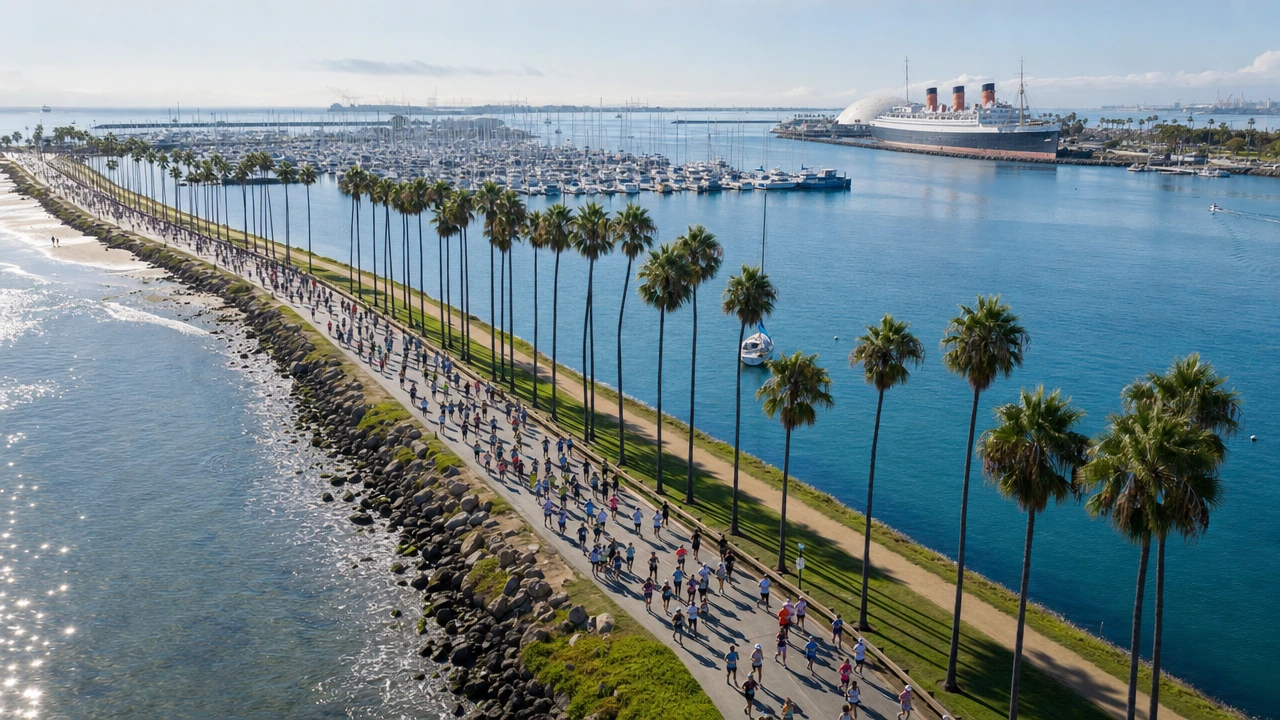
Long Beach · 2026-10-11
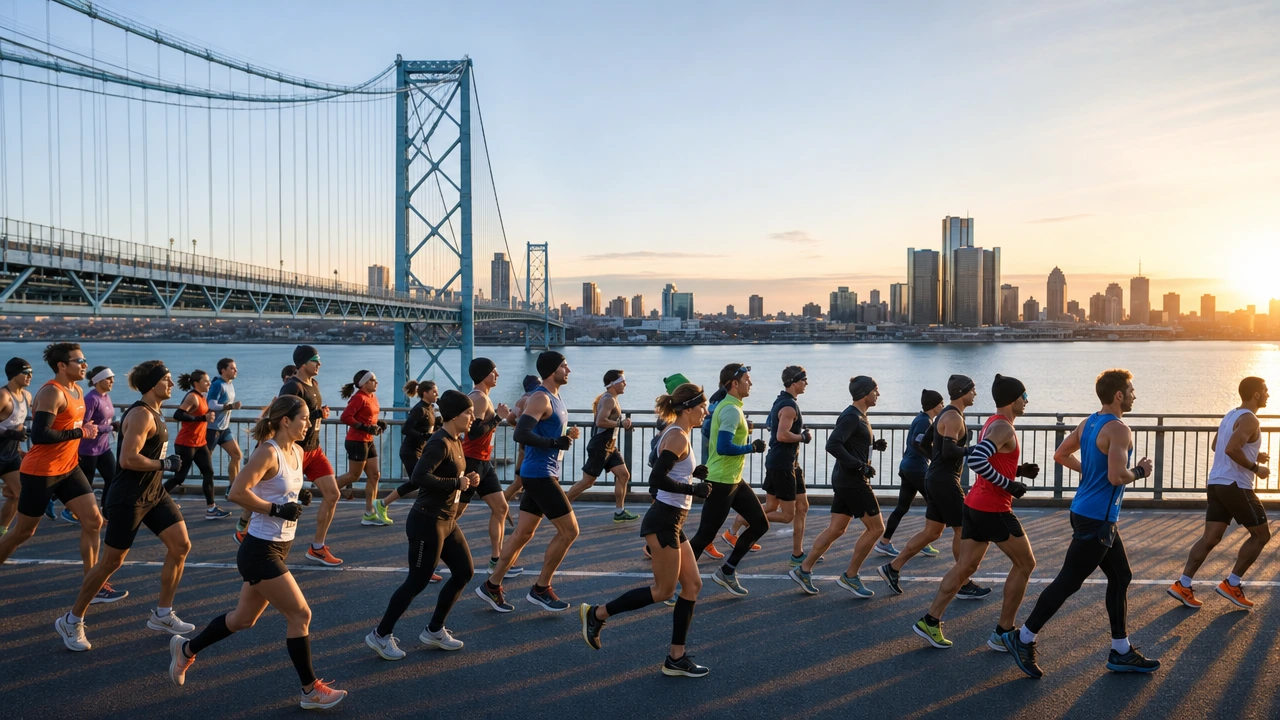
Detroit · 2026-10-18

Columbus · 2026-10-18
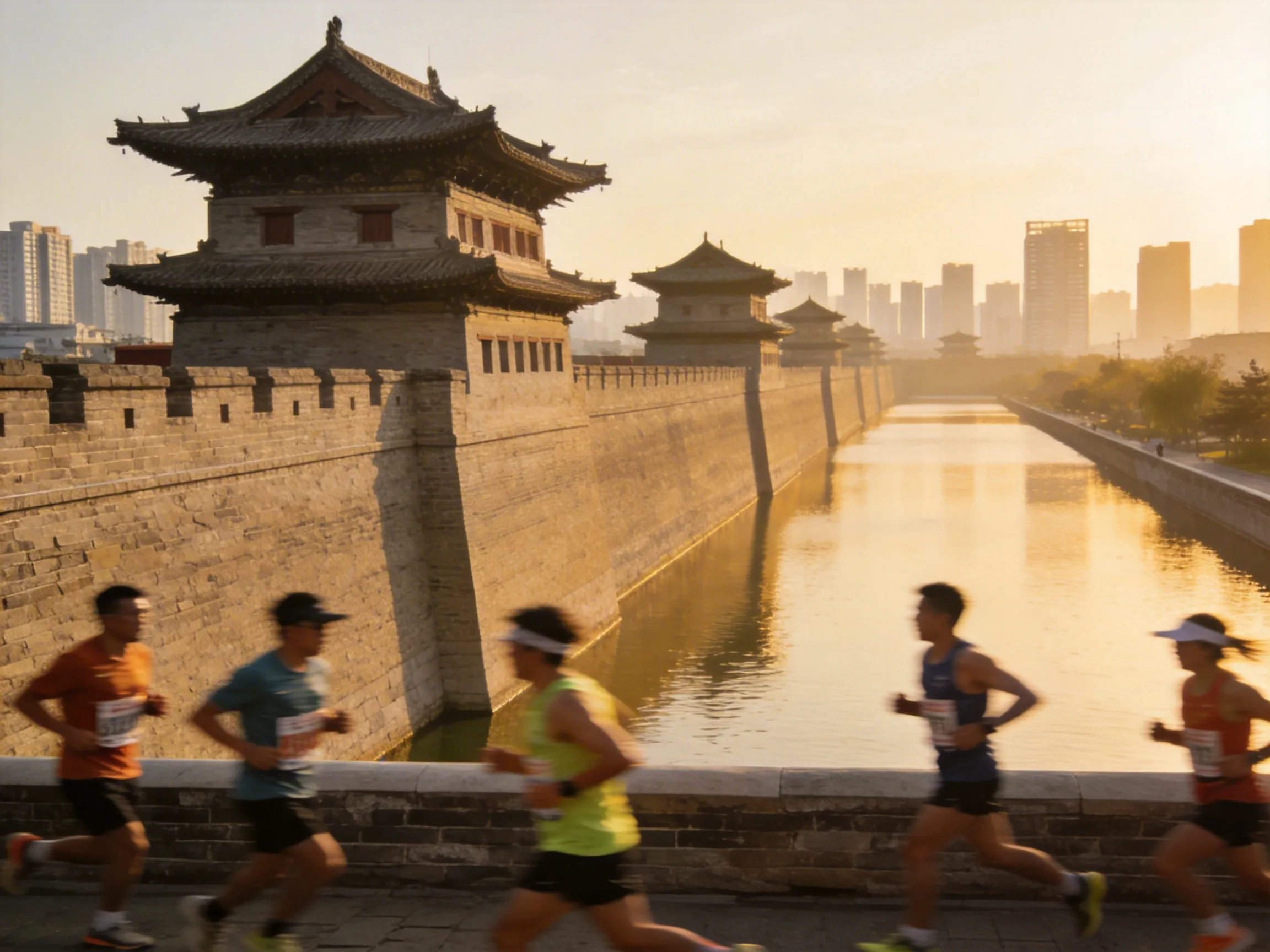
Xi'an · 2026-10-18

Munich · 2026-10-11