Running Pace Calculator — Min/km, Finish Time & Pace Chart
Free running pace calculator for 5K, 10K, half marathon, and marathon. Get min/km or min/mile, your ...
Use Calculator →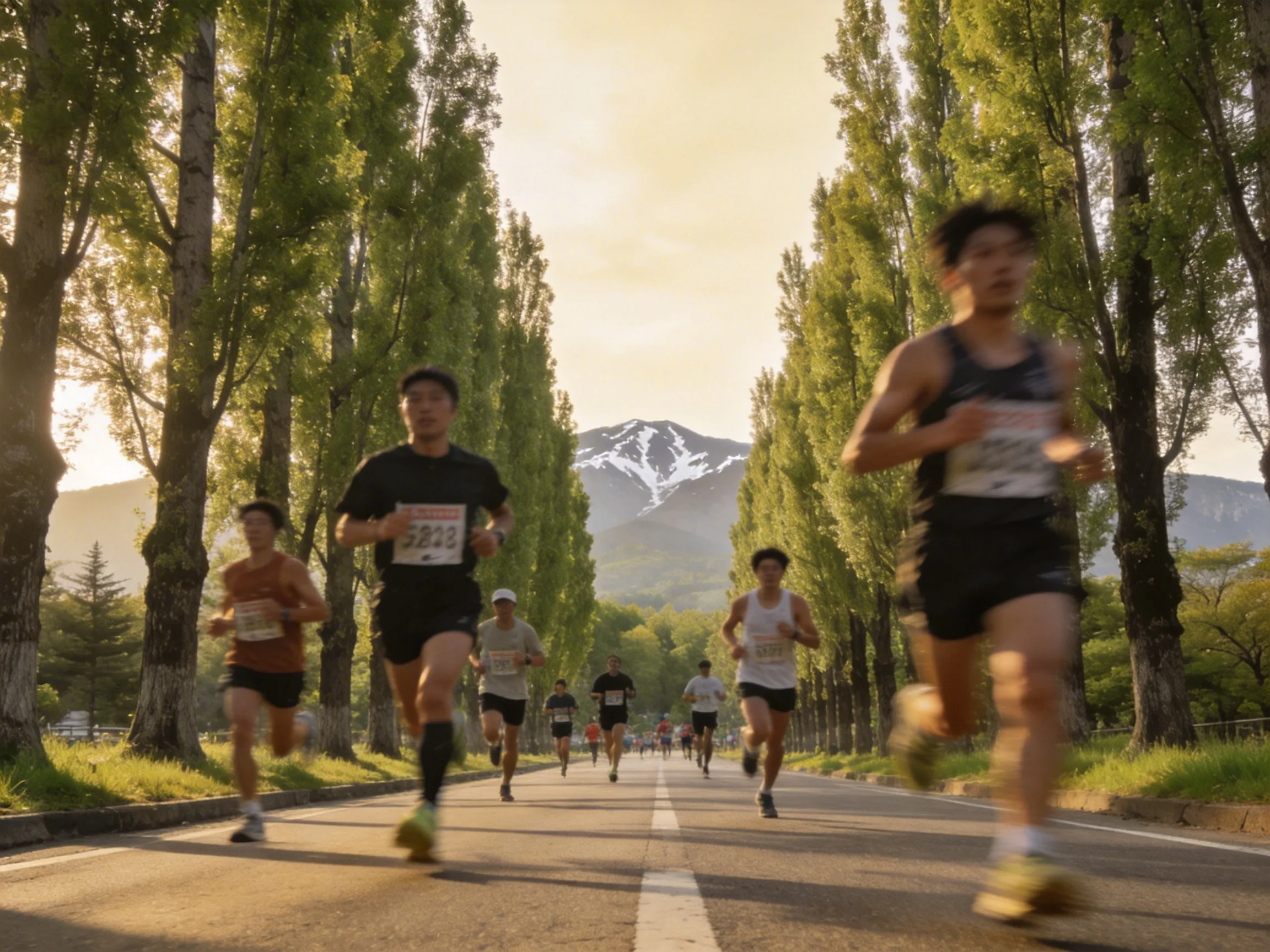
Race Completed
This marathon has finished. Check back for next year's edition.
Finished this one? Turn your result into a keepsake:
Finisher certificate ·
Virtual race bib ·
Achievement card
See entry dates for other marathons →
| Race | 2026 Hokkaido Marathon - Aug 30 |
|---|---|
| City | Sapporo |
| Date | 2026-08-30 at 08:30 |
| Field Size | ~20,000 runners |
| Time Limit | 6 hours |
| Cutoff pace | 8:32/km |
| Timezone | Asia/Tokyo |
| Official Site | Hokkaido Marathon Organizing Committee |
| Fee trend | 2022 ¥16,5002023 ¥16,5002024 ¥16,5002025 ¥16,5002026 ¥16,500(4-yr +0.0%)· below industry avg (+4.1% vs +4.8%/yr) |
| International | ¥22,000 · 1.3× domestic |
| Average Temperature | 19.3°C / 67°F |
|---|---|
| Humidity | 86% |
| Peak Wind | 12.9 km/h |
| Rain Chance | 48% |
| Typical Conditions | Warm, humid late-summer heat |
What to Prepare: This is Japan's only major summer marathon, and heat is the whole story. The 8:30 a.m. start means you run straight into rising temperatures: recent editions have started around 23 degrees Celsius (2024) and spiked past 29-30 degrees in hot years like 2022-2023, with humidity often 70-83 percent. The course offers 19 water stations, 10 sports-drink stations and 4 sponge stations — use every one, pour water over your head and neck, and slow your goal pace by 10-20 seconds per kilometre. If the Wet Bulb Globe Temperature reaches 28 degrees the event can be cancelled, so the heat is taken seriously by organisers too.
Based on historical averages for race week. Use our Weather Score Calculator and What to Wear Guide for personalized advice.
Winds peaking around 12.9 km/h — the typical daily maximum for this date — can affect your pace by 5-15 seconds per kilometer in exposed stretches. Headwinds slow you down exponentially: a 20 km/h wind costs more than twice a 10 km/h wind.
Calculate your wind-adjusted pace →Based on 20 years of race-week weather (2005-2024), MERRA-2 reanalysis
| Cooler | Typical | Warmer | |
|---|---|---|---|
| Temperature | 16.1°C | 19.3°C | 22.6°C |
| Dew point | 12.9°C | 16.6°C | 20.2°C |
Recent actuals: 2022 20.8°C / 2023 26.5°C / 2024 23.4°C (morning avg)
Data: NASA POWER (MERRA-2 reanalysis), NASA Langley Research Center
| Course Type | Loop |
|---|---|
| Elevation Gain | 80m |
| Terrain | Paved city roads |
| Profile | A flat, fast loop that starts and finishes at Odori Nishi 4-chome on Sapporo's Ekimae-dori Avenue. Net elevation change is only about 10 metres, with one gentle early rise (roughly 30 metres) before a long downhill toward 10 km, then almost entirely flat. The route runs through Sapporo's tree-lined avenues and out along the Shindo and riverside sections, where shade is intermittent — the difficulty is the August heat, not the terrain. |
| Boston Qualifier | Yes — Check your BQ time |
The Hokkaido Marathon is held every year on the last Sunday of August, and the next edition runs on Sunday, August 30, 2026, starting at 8:30 a.m. from Odori Nishi 4-chome on Sapporo's Ekimae-dori Avenue. It is a loop course — start and finish are in the same downtown location — covering the full 42.195 km through the streets and riverside roads of Sapporo, the largest city on Japan's northern island of Hokkaido.
Two things define this race. First, it is the only major summer marathon in Japan (真夏のマラソン). While almost every other big Japanese marathon runs in the cool of winter or early spring, Hokkaido runs at the end of August, when even Sapporo — Japan's coolest big city — can hit the high 20s or low 30s in degrees Celsius. Second, the course itself is flat and fast: net elevation change is only around 10 metres. The challenge here is almost entirely the heat, not the hills.
The race is a serious, World Athletics, AIMS and JAAF-certified course that doubles as an elite selection event (an MGC Series G2 race for the Japanese national team). For everyday runners it is Boston-qualifying eligible, but most people come for a different reason: to test themselves in conditions no other Japanese major offers, and to use the brutal heat as preparation for a faster autumn marathon.
Heat is what makes this race famous and what makes it hard. Start-line temperatures vary wildly by year: 2024 started around 23 degrees Celsius with 83 percent humidity, a relatively kind day, while 2022 and 2023 saw the high 20s to over 30 degrees during the race. The finish rate tracks the weather almost exactly — about 79 percent in the hot 2022 edition, 81 percent in 2023, and 85.6 percent in the cooler 2024 race (15,160 finishers from 17,705 starters). For comparison, cool-weather Japanese marathons routinely finish 95 percent or more.
The organisers build the day around heat safety. The course has 19 water stations, 10 sports-drink stations and 4 sponge stations — far denser hydration support than a typical marathon — and there is a hard safety rule: if the Wet Bulb Globe Temperature (WBGT) reaches 28 degrees Celsius, the event can be cancelled outright. Smart runners treat every station as mandatory: drink early and often, pour water over the head and neck, and grab a sponge whenever offered.
The practical takeaway is to reset your goal before the gun. Slowing your target pace by 10-20 seconds per kilometre is normal here, and is far better than blowing up at 30 km in the sun. Plan conservative, heat-adjusted splits with our Heat Pace Adjustment tool and build a hydration plan in advance with our Hydration Calculator.
If the weather is kind, this is a genuinely quick course. The route starts at Odori Nishi 4-chome in the heart of Sapporo and makes a single large loop back to the same point. There is one gentle climb in the opening kilometres — a rise of roughly 30 metres — followed by a long, easy downhill toward the 10 km mark. After that the course is almost completely flat, with net elevation change of only about 10 metres over the whole 42.195 km.
The day takes you along Sapporo's wide, tree-lined avenues and out along the Shindo highway and riverside sections before returning downtown. Shade is intermittent rather than constant, so on a hot year long open stretches expose you to direct sun. This is the central paradox of the race: the terrain practically invites a personal best, but the August conditions usually take it away. On the rare cool, overcast day, it is one of the better courses in Japan to chase a fast time.
Hokkaido has a reputation as a strict marathon, and the numbers back it up. The overall time limit is 6 hours, measured from the second wave start at 8:45 a.m. That was actually relaxed from a 5-hour limit in earlier years, but the multiple intermediate gates remain demanding for a summer race.
The official checkpoint cutoffs are: 10 km at 1 hour 30 minutes, 20 km at 2 hours 50 minutes, 29.8 km at 4 hours 10 minutes, and 34.7 km at 4 hours 50 minutes, with the finish line closing at 6 hours (gates close at fixed clock times, so first-wave starters carry a 15-minute buffer). The 34.7 km gate is the one that ends most runners' days — making it takes an average of roughly 8:21 per kilometre to that point, which is hard to hold when the heat has already drained you. By comparison, Tokyo and Osaka both allow 7 hours, so Hokkaido's combination of a tighter limit and summer conditions makes the cutoff a real planning factor, not an afterthought. Map your gate-by-gate buffer in advance with our Finish Time Calculator.
Pacing. Run this race by effort and temperature, not by a pre-set goal pace. Bank no time early — going out fast in cool morning air feels great and is the classic Hokkaido mistake, because the temperature climbs through the late miles just as your reserves fall. A controlled, slightly negative-effort approach, with disciplined fuelling and constant cooling, gets far more people to the finish. Build heat-adjusted splits with our Pace Calculator and dial in race-day fuelling with our Carb Loading Calculator and Electrolyte Calculator, since heavy sweating in the heat makes sodium loss a real risk.
Why runners choose it. Many use Hokkaido deliberately as heat training for an autumn target race: survive 42 km in Sapporo's August humidity and a cool October or November marathon feels almost easy. It is also Boston-qualifying eligible on a flat course, so on a cool year it is a legitimate place to chase a BQ time — check where your goal sits with our Boston Qualifier & Good For Age tool.
Entry. The full marathon is capped at 20,000 runners and fills on a first-come basis (先着), not a lottery. General entry typically opens in late March via the official app and the RUNNET platform — and it sells out fast (the 2026 general entry closed within about three weeks of opening). The entry fee is 16,500 yen for residents of Japan and 22,000 yen for overseas runners, plus small processing fees. Overseas residents enter through a separate first-come allocation (about 500 places) via the Run Japan service or an official travel package, so book early and watch the official site for opening dates.
Use our free training tools to get race-ready:
Free running pace calculator for 5K, 10K, half marathon, and marathon. Get min/km or min/mile, your ...
Use Calculator →Free printable pace band for marathon, half marathon, or custom distance. Choose even, negative, or ...
Use Calculator →7 AM race, wake at 3:45 AM? Enter the gun time; we work backward through meal, gear, bathroom, warm-...
Use Calculator →Free running shoe finder quiz. Answer 6 questions, get 3 spec-matched picks from 15 brands (155 SKUs...
Use Calculator →Free marathon predictor — convert your 5K, 10K, or half marathon time into race-day estimates from R...
Use Calculator →Predict your race finish time from pace, or set a goal time to find required pace. Free instant calc...
Use Calculator →The 2026 Hokkaido Marathon is on Sunday, August 30, 2026. The race starts at 8:30 a.m. for the first wave and 8:45 a.m. for the second wave, from Odori Nishi 4-chome on Sapporo's Ekimae-dori Avenue. The race is always held on the last Sunday of August, which is why it earns its reputation as Japan's only major summer marathon.
The difficulty is the summer heat, not the terrain. The course is essentially flat, with net elevation change of only about 10 metres. But it runs at the end of August with an 8:30 a.m. start, so you run into rising heat and humidity — recent editions have seen start temperatures from about 23 degrees Celsius in cooler 2024 up to nearly 30 degrees in 2022 and 2023, with humidity often 70-83 percent. That heat drives the finish rate down to roughly 79-86 percent depending on the year, far below the 95 percent-plus typical of Japan's cool-weather marathons.
The overall time limit is 6 hours, measured from the second wave start at 8:45 a.m. Along the way there are 10 intermediate gates, closing at 1 hour 30 minutes at 10 km, 2 hours 50 minutes at 20 km, 4 hours 10 minutes at 29.8 km, and 4 hours 50 minutes at 34.7 km among others. The 34.7 km gate is the one that catches most struggling runners, requiring about an 8:21-per-kilometre average to that point. Tokyo and Osaka both allow 7 hours, so Hokkaido's limit is comparatively tight for a summer race.
The entry fee is 16,500 yen for residents of Japan and 22,000 yen for overseas runners, plus small processing fees (and an optional bib-name option of about 880 yen). The full marathon field is capped at 20,000 runners. Note that the fee rose substantially from earlier years, so confirm the current amount on the official site before you budget.
Entry is first-come (先着), not a lottery. General registration typically opens in late March through the official app and the RUNNET platform, and it fills quickly — for 2026 the general entry closed within about three weeks of opening once the 20,000-runner cap was reached. There are also charity-entry and travel-package routes that may remain open after general entry sells out.
Overseas residents enter through a separate first-come allocation rather than the main domestic pool. The two common routes are the Run Japan service (about 500 international places, opening in late March) and official travel packages that bundle the entry with accommodation. The overseas entry fee is 22,000 yen plus processing fees. Because these allocations are small and first-come, sign up the moment registration opens and check the official English overview page for exact dates.
It can be. The course is certified by JAAF, AIMS and World Athletics and is Boston-qualifying eligible, and the flat profile is genuinely fast. The catch is the weather: on a hot August day the heat will cost you minutes, so it is only a realistic BQ attempt in a cool, overcast year. Many runners instead treat it as heat training for a cooler autumn marathon where a qualifying time is more reliable. Check where your goal sits against the standards with our Boston Qualifier tool.
Treat hydration and cooling as part of the race plan, not an emergency. Slow your goal pace by 10-20 seconds per kilometre from the start, drink at every one of the 19 water and 10 sports-drink stations, and use the 4 sponge stations to pour water over your head and neck. Start conservatively — banking time in the cool early miles is the classic mistake, because the temperature rises as your energy falls. Build heat-adjusted splits with our Heat Pace Adjustment tool and a fuelling plan with our Electrolyte Calculator to offset heavy sweating.
Xi'an · 2026-10-18

Munich · 2026-10-11
Amsterdam · 2026-10-18

Lisbon · 2026-10-10

Beijing · 2026-10-18
Yokohama · 2026-10-25