Running in Lanzhou: Yellow River Routes & Altitude Guide
Complete Lanzhou running guide: 20km Yellow River Scenic Line loop, Yantan Park trails, and Lanshan mountain paths. Sub-plateau altitude tips and mara...
Read City Guide →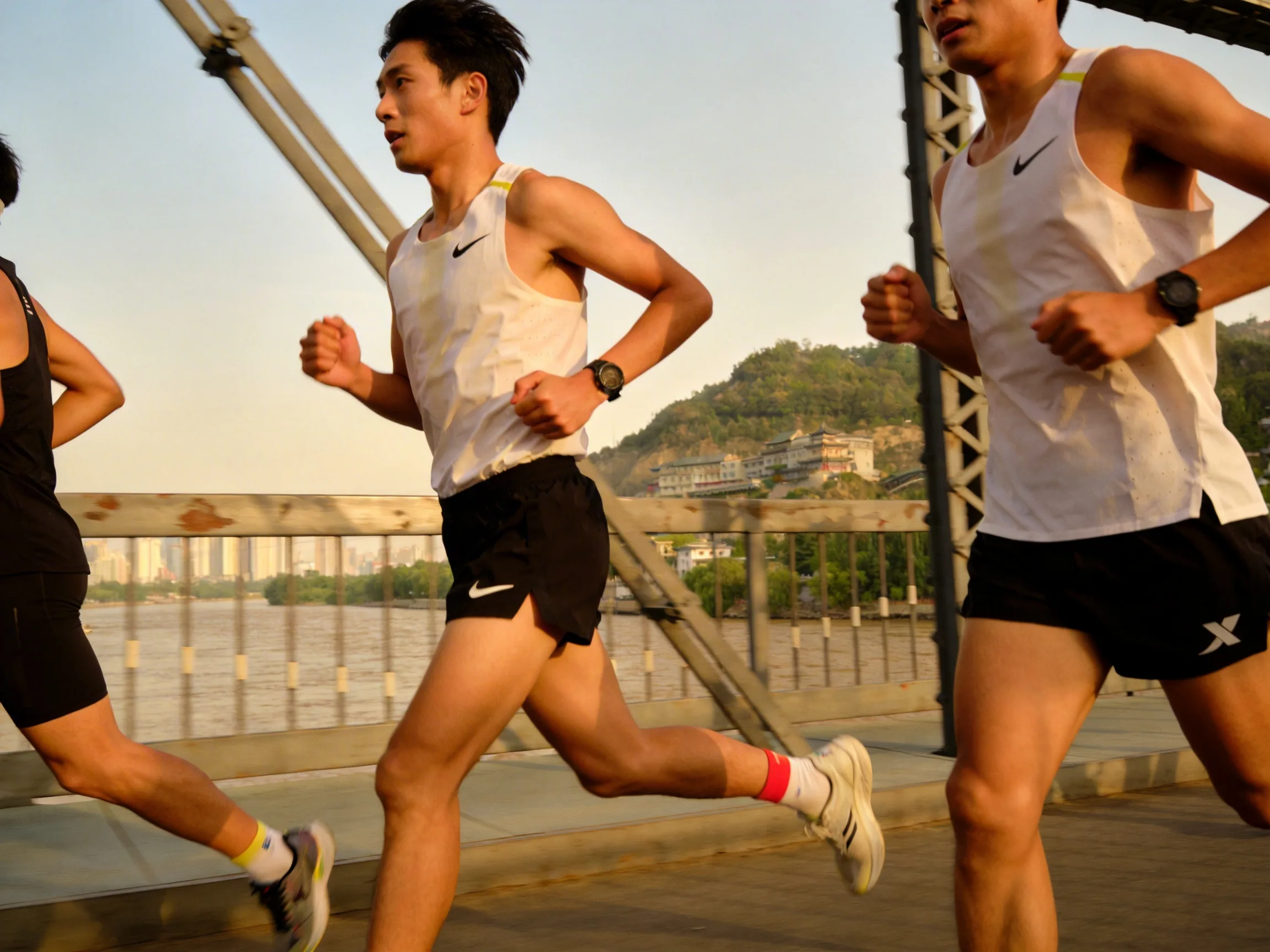
Race Completed
This marathon has finished. Check back for next year's edition.
Finished this one? Turn your result into a keepsake:
Finisher certificate ·
Virtual race bib ·
Achievement card
See entry dates for other marathons →
| Race | 2026 Lanzhou Marathon - May 24 |
|---|---|
| City | Lanzhou |
| Date | 2026-05-24 at 07:00 |
| Field Size | ~20,000 runners |
| Time Limit | 6 hours |
| Cutoff pace | 8:32/km |
| Timezone | Asia/Shanghai |
| Official Site | Lanzhou Municipal Sports Bureau |
| Average Temperature | 15°C / 59°F |
|---|---|
| Humidity | 51% |
| Peak Wind | 20.9 km/h |
| Rain Chance | 40% |
| Typical Conditions | Warm and dry at sub-plateau altitude |
What to Prepare: At 1,520m altitude, oxygen levels are approximately 15% lower than sea level — reduce your target pace by 3-5%. The dry air (humidity around 40%) accelerates dehydration, so drink at every aid station even if you do not feel thirsty. Sun intensity is strong due to altitude and minimal tree cover on the course.
Based on historical averages for race week. Use our Weather Score Calculator and What to Wear Guide for personalized advice.
Winds peaking around 20.9 km/h — the typical daily maximum for this date — can affect your pace by 5-15 seconds per kilometer in exposed stretches. Headwinds slow you down exponentially: a 20 km/h wind costs more than twice a 10 km/h wind.
Calculate your wind-adjusted pace →Based on 20 years of race-week weather (2005-2024), MERRA-2 reanalysis
| Cooler | Typical | Warmer | |
|---|---|---|---|
| Temperature | 10.7°C | 15.3°C | 18.6°C |
| Dew point | -1.3°C | 3.5°C | 7.8°C |
Data: NASA POWER (MERRA-2 reanalysis), NASA Langley Research Center
| Course Type | Out-and-back |
|---|---|
| Elevation Gain | 237m |
| Terrain | Road |
| Profile | Out-and-back course along the Yellow River at 1,500m altitude. The Silk Road-inspired route offers unique high-altitude running experience with dry climate. |
| Boston Qualifier | Yes — Check your BQ time |
The Lanzhou Marathon is China's only major marathon run entirely along the Yellow River, following the famous "Hundred-Mile Yellow River Scenic Line" at an average elevation of 1,520 meters. As a World Athletics Gold Label event since 2018, it attracts 33,000 runners (25,000 full marathon, 8,000 half) for the 2026 edition. The out-and-back course starts and finishes at Lanzhou Olympic Sports Center, tracing both banks of the Yellow River through the heart of the city.
Lanzhou is widely considered the hardest Gold Label marathon in China for achieving a personal best. The combination of sub-plateau altitude (1,520m), intense UV radiation, dry air, and temperatures that can reach 29C by race end creates a uniquely challenging environment. Even elite domestic champions typically finish 3-5 minutes slower than their personal records here. However, the relatively flat terrain (approximately 237m total elevation gain, mostly from bridge crossings), spectacular Yellow River scenery, and famously enthusiastic local crowds make it one of the most memorable race experiences in China.
The race begins at 7:00 AM from Lanzhou Olympic Sports Center (Aoti Zhong Lu). Runners head east along South Binhe West Road for the opening kilometers, following the south bank of the Yellow River. The early pace feels deceptively easy — the road is flat, wide, and the morning temperature around 12-15C is comfortable.
Between 5-15 km, the route passes through the most scenic section of the south bank: Water Wheel Expo Park, the iconic Yellow River Mother sculpture, and views of Zhongshan Bridge (the first modern bridge over the Yellow River, built in 1907). Student cheering squads line this stretch, creating an electric atmosphere.
At approximately 18 km, runners cross the Gold Goose Bridge (Jin Yan Da Qiao) to the north bank. The bridge has a gentle gradient that is barely noticeable at this stage. The first half is a confidence builder — enjoy the scenery but maintain discipline. The real challenge comes later when altitude fatigue and rising temperatures compound.
After crossing to the north bank, the route heads west along North Binhe Road. This section is more exposed — fewer trees, less crowd support, and the Yellow River stretches wide beside you. The turnaround point near Shen'an Yellow River Bridge (approximately 25 km) marks the farthest point from the finish.
The return leg retraces east along the north bank before crossing back via Yintan Yellow River Bridge around 35 km. By this point, temperatures typically climb to 25-29C, UV intensity is high due to altitude, and the dry air means sweat evaporates so quickly you may not realize how dehydrated you are. The 6 ice-water cooling stations positioned from 12.5 km onward become critical in the second half.
The final 7 km on the south bank back to the Olympic Sports Center is where most runners face their toughest moments. Altitude-induced oxygen debt accumulates throughout the race, making the last stretch feel significantly harder than equivalent flat-course marathons. Mental preparation for a difficult final 10 km is essential.
Start conservatively: Go out 10-15 seconds per kilometer slower than your sea-level marathon pace. The altitude effect is cumulative — you will not feel it in the first 15 km but will pay dearly in the final 10 km if you start too fast. Experienced Lanzhou runners recommend treating it as a training run for the first half.
Hydration discipline: Drink at every single aid station starting from 5 km. The 40% humidity means perspiration evaporates almost instantly, masking fluid loss. Supplement electrolytes at the energy stations (positioned at 12.5, 17.5, 22.5, 27.5, 32.5, 35, 37.5 km). Use the cooling sponges and ice provided at cooling stations.
Sun protection: Apply high-SPF sunscreen before the race and wear a cap or visor. The UV intensity at 1,520m is approximately 20% stronger than at sea level, and the course has limited shade, particularly on the north bank section.
Bridge pacing: The three bridge crossings (Gold Goose, Shen'an area turnaround, Yintan) introduce minor elevation changes. Do not accelerate on the descents — maintain steady effort throughout.
Use our Pace Calculator to plan your target splits and our Marathon Predictor to set realistic goals accounting for altitude.
Arriving early? Explore daily running routes and local tips.
Complete Lanzhou running guide: 20km Yellow River Scenic Line loop, Yantan Park trails, and Lanshan mountain paths. Sub-plateau altitude tips and mara...
Read City Guide →Use our free training tools to get race-ready:
Free running pace calculator for 5K, 10K, half marathon, and marathon. Get min/km or min/mile, your ...
Use Calculator →Free printable pace band for marathon, half marathon, or custom distance. Choose even, negative, or ...
Use Calculator →7 AM race, wake at 3:45 AM? Enter the gun time; we work backward through meal, gear, bathroom, warm-...
Use Calculator →How much will hills slow you down? Enter elevation gain, loss, and distance to see adjusted pace, di...
Use Calculator →Convert uphill or downhill running pace to flat-equivalent GAP in one click. Free grade adjusted pac...
Use Calculator →Is it safe to run outside right now? Enter your AQI to get EPA/WHO-based safety ratings, max exercis...
Use Calculator →Registration opened February 26 to March 4, 2026 through the official website lzmarathon.com or the GuoDong (果动) app. The 2026 edition received 361,356 pre-registrations for 33,000 spots, yielding an overall acceptance rate of about 9.1%. For the full marathon specifically (25,000 spots), the acceptance rate was approximately 14.4%. Lottery results were announced March 6. There are no performance-based direct entries — all applicants go through the lottery. Lifetime bib holders (8+ completed editions) receive automatic entry. Use our Lottery Calculator to estimate odds.
The 2026 full marathon cutoff is 6 hours from the 7:00 AM gun time (finish by 13:00). Intermediate timing mats are placed every 5 km with progressive cutoffs. For reference, the 2025 edition enforced: 5 km in 1 hour, 10 km in 1 hour 40 minutes, 15 km in 2 hours 20 minutes. After each checkpoint closes, timing mats stop recording and roads reopen to traffic. Runners who fall behind pace must exit the course and board sweep buses.
At 1,520m altitude, expect to run 3-5% slower than your sea-level personal best. For a 4-hour marathoner, this translates to roughly 7-12 minutes slower. Elite domestic champions at Lanzhou typically finish 3-5 minutes behind their personal records. The effect is magnified by heat (temperatures can reach 29C by midday) and UV exposure. If arriving from a low-altitude city, allow 2-3 days of acclimatization before race day. Use our Altitude Pace Calculator for personalized adjustments.
The 2025-2026 editions significantly upgraded heat countermeasures: 6 ice-water cooling stations (at 12.5, 17.5, 22.5, 27.5, 32.5, 37.5 km) provide chilled sponges and edible ice; 16 mist cannon trucks and 7 spray shower stations from 9 km onward; chemical cold packs available from 27.5 km. Regular water stations every 5 km, with sports drink stations between them. Energy gels and salt tablets are provided at supplementary aid stations.
The 2026 Lanzhou Marathon introduces several significant changes: (1) Only full marathon and half marathon on race day — the fun run and family run have been moved to a separate pre-race event on May 23 (per China Athletics Association requirements); (2) Earlier start time of 7:00 AM (previously 7:30), giving runners an extra 30 minutes of cooler conditions; (3) New multi-tier lottery system that considers consecutive unsuccessful applicants, not just random selection; (4) Total scale reduced from 40,000 to 33,000 (25,000 full + 8,000 half), making it a more competitive field.
Take Metro Line 1 to Aoti Zhongxin (Olympic Sports Center) station, exit from gates 3 or 6, then walk approximately 1.3 km to the start area. Baggage drop closes at 6:45 AM, so arrive early. From Lanzhou Zhongchuan Airport, a dedicated race shuttle runs to the Olympic Sports Center. Alternatively, set your taxi or ride-hail destination to "Lanzhou Aoti Ruyi Liujing Hotel" main entrance for the closest drop-off point. Gear check and bib pickup happen 2-3 days before race day at the expo venue.
The total elevation gain is approximately 237 meters across 42.195 km, concentrated in the three bridge crossings. The only noticeable gradients are the three bridge crossings (Gold Goose Bridge, Shen'an Bridge area, and Yintan Bridge), each with gentle slopes of less than 3%. The difficulty comes entirely from altitude, heat, and dry air — not from terrain. The course surface is well-maintained asphalt throughout with wide lanes.
Long Beach · 2026-10-11
Detroit · 2026-10-18
Columbus · 2026-10-18
Xi'an · 2026-10-18

Munich · 2026-10-11
Amsterdam · 2026-10-18